Rose, William Morris
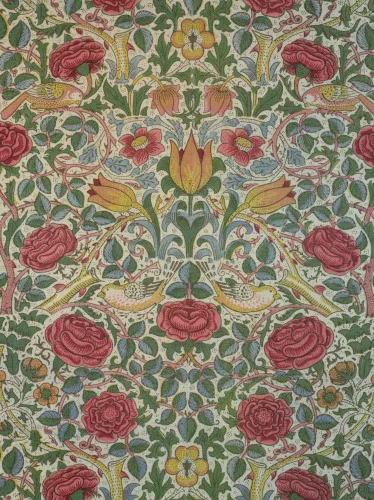
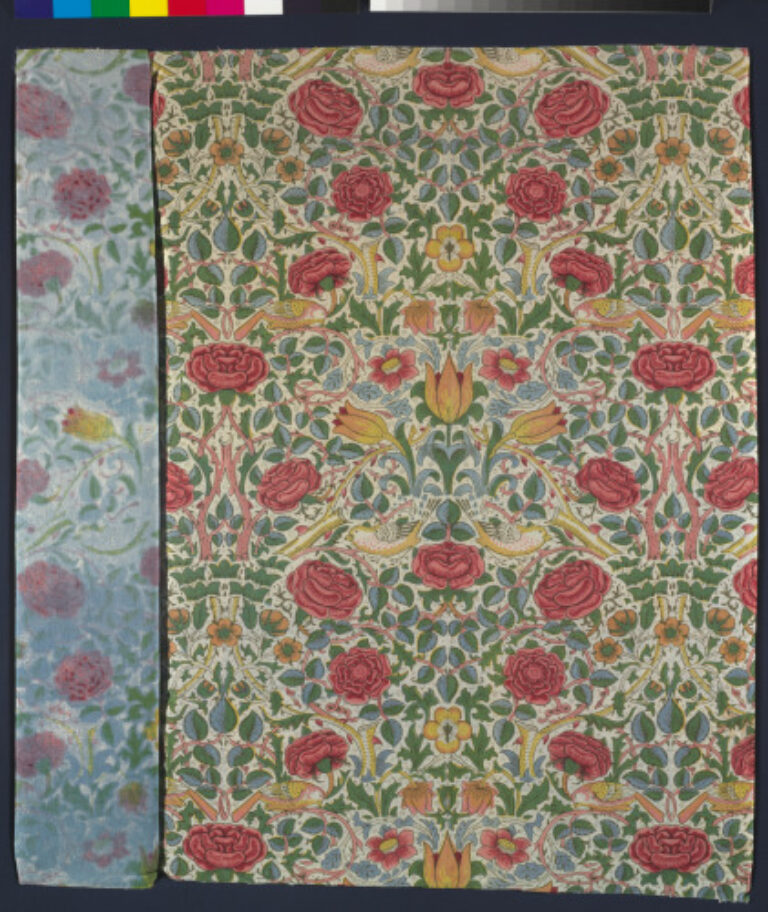
“I do not want art for a few any more than I want education for a few, or freedom for a few.” For William Morris (1834–1896), art was a vital part of life. He believed that everyone should have equal access to art that would enrich their lives and bring beauty to everyday activities. William was a part of the British Arts and Crafts movement, which began in the 1860s and flourished through the 1920s. The movement emphasized the beauty and usefulness of art while taking influence from the natural world. In this textile, manufactured by William’s design firm Morris & Company, brightly colored birds, flowers, leaves, and branches intertwine to create a repeating pattern. Morris & Company patterns were used on decorative artworks, or artworks that serve a function, such as fabric, wallpaper, furniture, and embroidery to decorate homes and public buildings. In addition to working as a designer, William was a staunch environmental and social activist. He and other Arts and Crafts artists were against the rise of industrialization, or the widespread use of heavy machinery and factory work to mass-produce goods. They believed that industrialization hurt both the environment and workers due to its dependence on burning coal and the unsafe working conditions of many factories. To combat these dangers, William encouraged handcraftsmanship and the use of natural materials and dyes at Morris & Company.
Classroom Activities
- Workers in Arts and Crafts firms like Morris & Company collaborated to create artwork. For the Rose textile, William designed the original sketch, then other artists wove and dyed threads to produce the final product. Invite students to create their own collaborative artwork. Ask students to divide into small groups and one at a time, draw a pattern on a piece of paper. Continue this until the page is filled with different patterns, then have students share their artworks with the class. Combine all of the drawings to create a class tapestry.
- Arts and Crafts designers often took inspiration from nature to create their designs. Artists like May Morris (1862–1938), the daughter of William Morris, advocated that artists should study nature up close. She often sketched branches, leaves, and flowers from real life to use in her designs. Invite students to explore the natural world around their school and take note of what plants they can find. To encourage close looking, have students select a plant, or part of a plant, and sketch it. Ask students what they can learn about the plant from close observation and have them share their sketches and observations with the class.