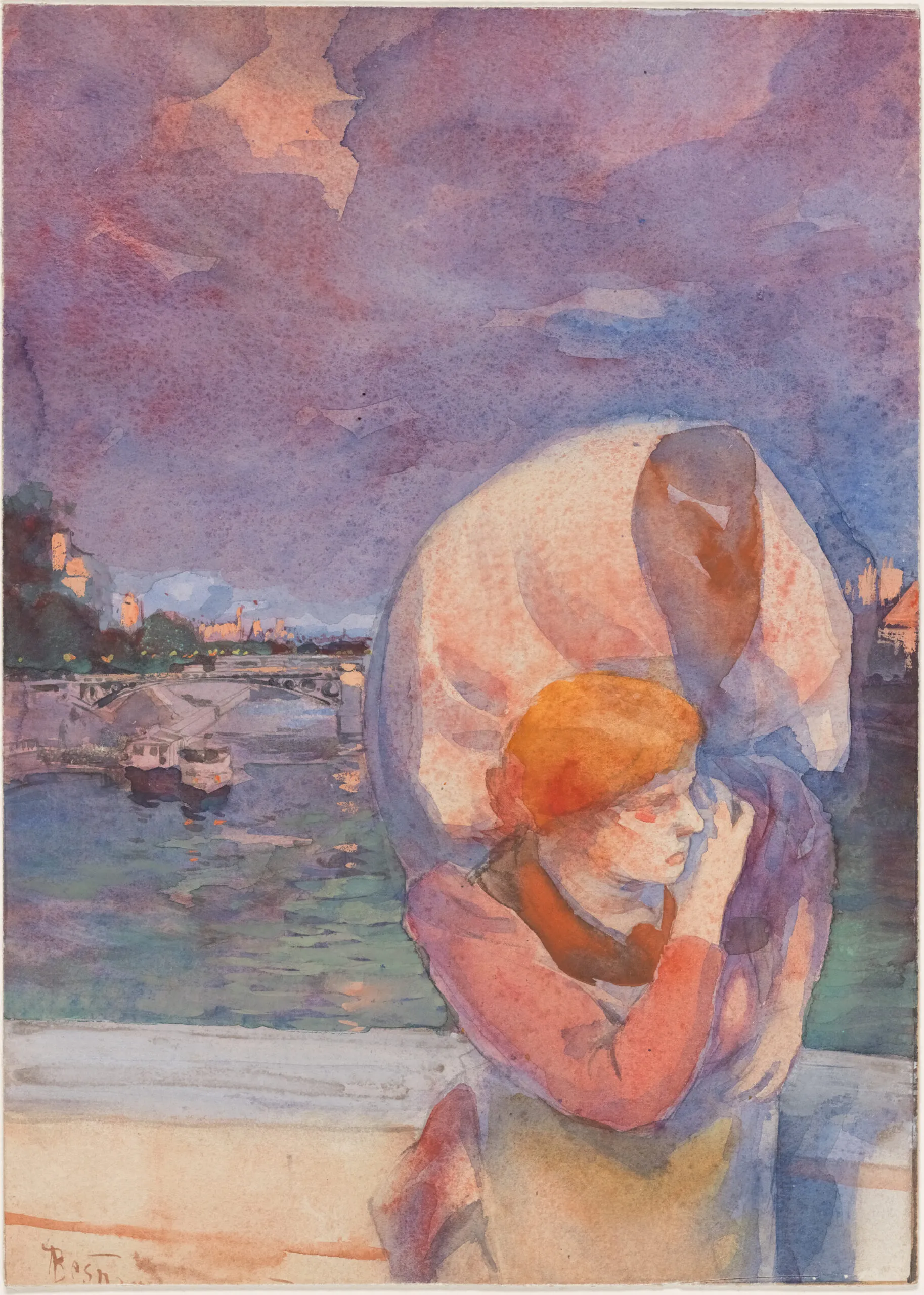
Have you heard the expression, “the best of both worlds”? It describes a situation where you get the benefits of two different things without the downsides. In Crossing the Bridge by French artist Albert Besnard (1849–1934), we see this idea at work: the harmonious union between traditional academic art-making and an experimental style of art called Impressionism.
Known as a “Master of Light and Shadow” by his peers, Albert was a painter and engraver. He started his training in an art academy where students learned to follow strict rules and studied the works of famous artists from the past. They were often instructed to create art that looked as real as possible. However, this did not speak to Albert’s bold imagination. He broke away from his academic teachings and became interested in Impressionism, an artistic style where artists try to capture the feeling or “impression” of a moment rather than making a perfectly detailed image. Impressionists were fascinated by how light changes what we see. Albert blended two worlds—applying techniques from his academic studies with his interest in light and experimental color—to create a unique style all his own.
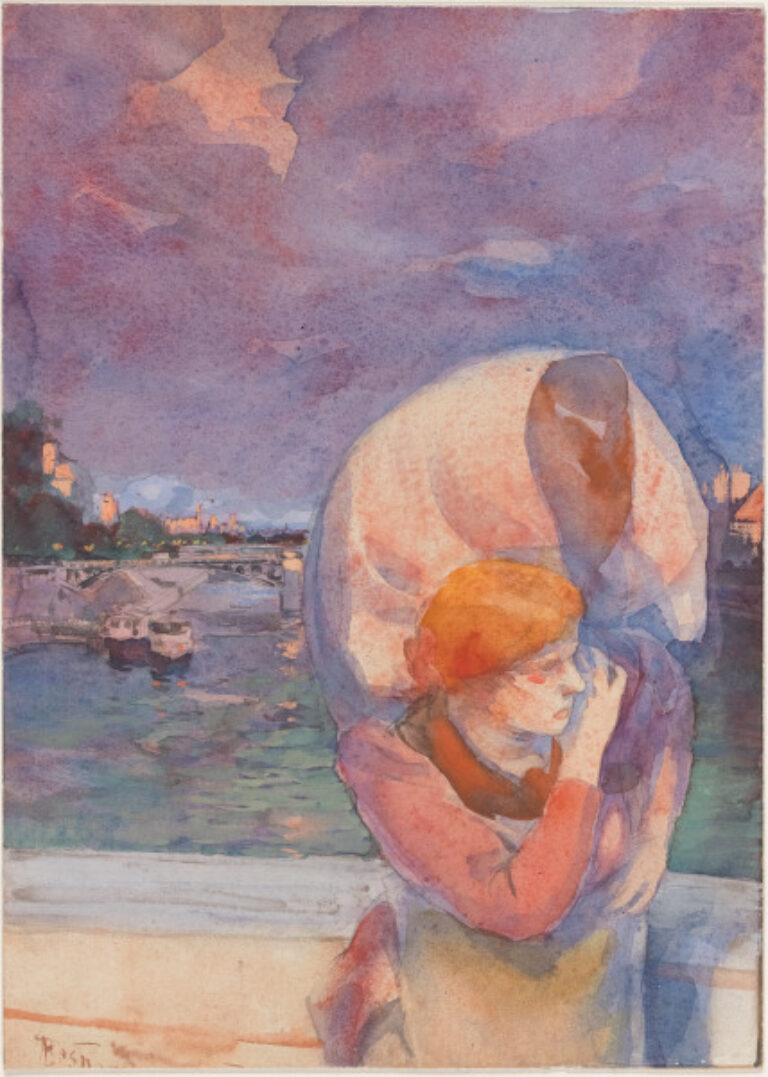
Crossing the Bridge shows a laundress walking across a bridge, illuminated by a soft, radiant glow. Albert’s creative use of color captures a dreamy, peaceful feeling. On the surface, it looks like a beautiful moment of everyday life. However, beneath the delicate colors of this backdrop there are remnants of a less-than-ideal truth. We can imagine the heavy bundle on her back and the hard work that fills her day. If you’re unfamiliar with the lives of laundresses, look at the September 2025
Art-to-Go to learn more.
Activities
- The way light affects color is a key characteristic of Impressionist art. Artists often depicted the same scenes in different lighting. As a class, observe what the classroom looks like with the lights on. Ask students to describe what they see and how it makes them feel. Turn the lights off and do the same. Have students compare their feelings between lights on and off, encourage them to share their observations.
- Have students write an Impressionist story. Invite students to make observations about the artwork. Then encourage them to write a short story focusing on how the painting makes them feel versus what they see.