


Grade Level: Elementary School (Grades 3–5)
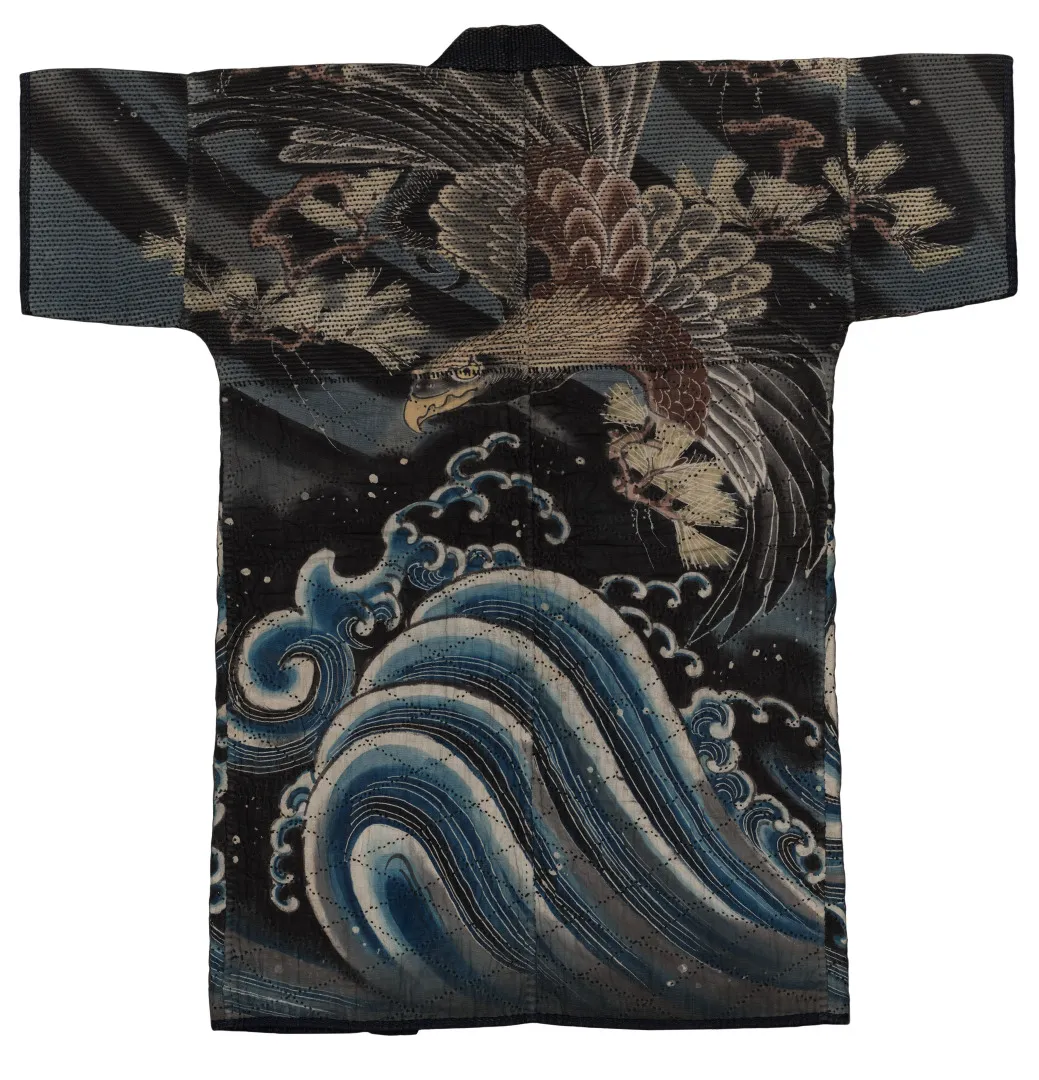
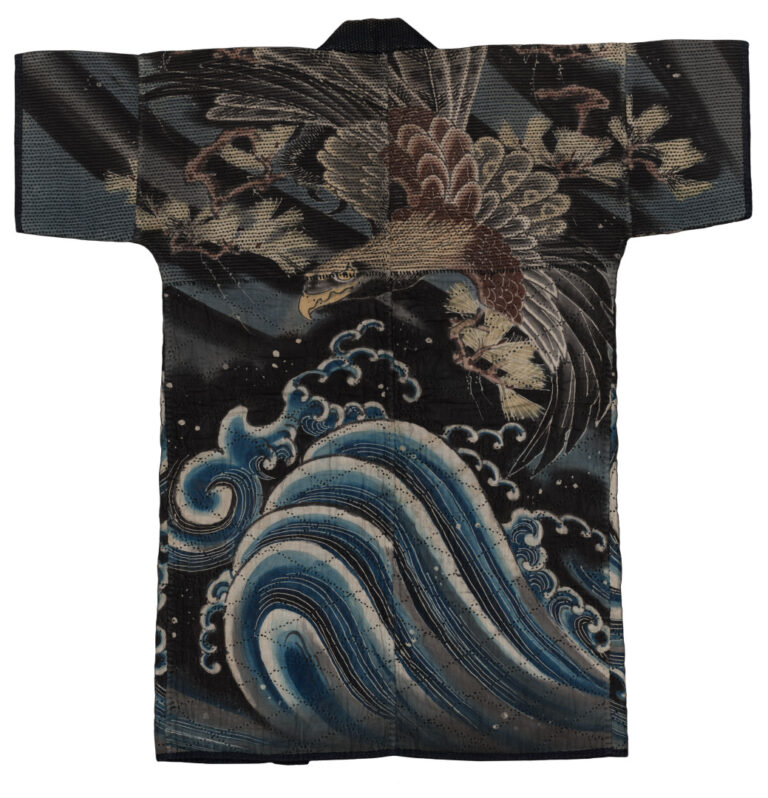
Firefighter’s Coat (hikeshi-banten) with Hawk and Waves, Unidentified Artist(s
How would you put out a fire? Today, common methods include using water, fire extinguishers, or smothering the flames. For large fires, we often see firefighters using big water hoses. In late 19th- and early 20th-century Edo (present-day Tokyo), Japan, firefighters wouldn’t pour water on the flames, they would pour water on themselves!
During this period, Japanese houses were built out of wood and paper and were lit with oil lamps and candles. This, combined with dry weather, strong winds, and crowded cities, made fires common—and they spread fast.
When a house or structure caught on fire, firefighters would tear down surrounding buildings to prevent the fire from spreading to more homes. For protection, firefighters wore hikeshi-banten (reversible coats) like this one that were made of layers of cotton fabric stitched together. As firefighters disassembled the houses and removed the
burning pieces, other crew members kept their coats wet, making it safer to handle the flames and work close to the fire.
Though the outside of the coat was usually one color—the outside of this coat is a dark blue color, dyed with indigo—the inside of each coat was often decorated with Japanese symbols of protection and bravery. The inside of this hand-made coat, pictured here, depicts depicts a hawk with wings outstretched over large rolling waves, curls of sea foam, and drops of water splashing underneath the pine branches held by the hawk. Many Japanese people admired hawks for their powerful presence and hunting skills. Here, the animal is a symbol of bravery, strength, and courage; water symbolizes good luck, resilience, and the power of the ocean; pine represents endurance and is a symbol of longevity.
While fighting fires, the plain side was worn outside. After the fire had been put out, the firefighters would turn their coats inside out to display the symbolic images, signaling they had successfully protected the city from the fire.
Activities
Have students create personal symbols. Begin by explaining what symbolism is: using objects, people, colors, or situations to represent something else. Share examples like, a heart for love, a dove for peace, or a stop sign for warning, etc. Discuss how symbols can have different meanings and how they add depth to stories or art.
Ask students to think about things that are important to them:
- Favorite hobbies or activities.
- Things that make them happy.
- Personal strengths or qualities.
Then, discuss what objects or images could represent these ideas. Provide students with materials like paper, pencils, markers, crayons, or collage materials. They can draw, collage, or use a combination of techniques to create their symbol. Once students have created their symbols, invite them to share their work with the class. Encourage them to explain what the symbol represents and why they chose it.
- Invite students to research present day firefighter’s uniforms and the uniforms worn in 19th-century Japan. Create a Venn diagram as a class to highlight the differences and similarities that students have observed.