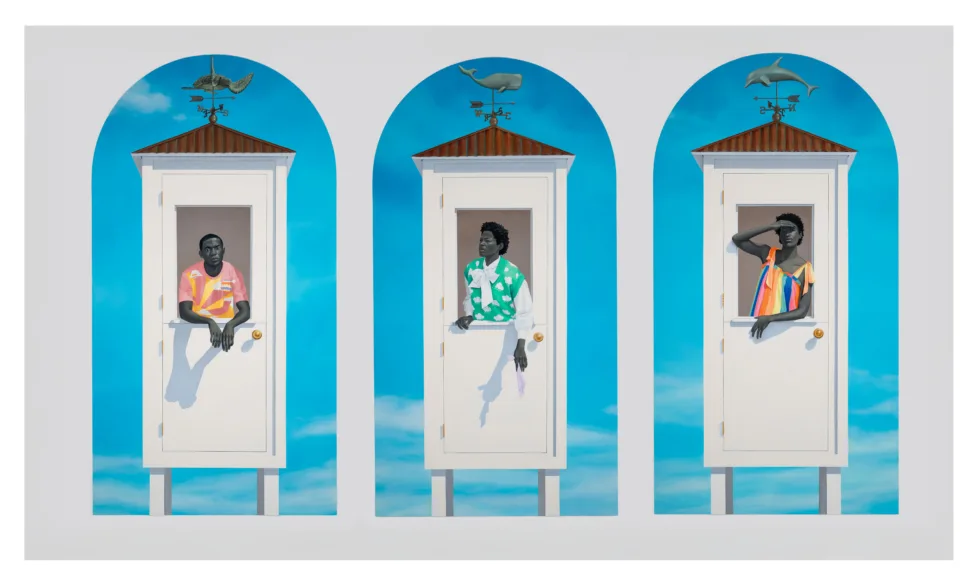





For Love, and for Country
Amy Sherald
2024
On View


Born in Columbus, Georgia, and now based in the New York City area, Amy Sherald documents contemporary African American experience in the United States through arresting, intimate portraits. Sherald engages with the history of photography and portraiture, inviting viewers to participate in a more complex debate about accepted notions of race and representation, and to situate Black life in American art.
Sherald received her M.F.A. in painting from Maryland Institute College of Art and her B.A. in painting from Clark-Atlanta University. Sherald was the first woman and first African American to ever receive the grand prize in the Outwin Boochever Portrait Competition from the National Portrait Gallery in Washington, D.C. In 2018, she was selected by First Lady Michelle Obama to paint her official portrait for the National Portrait Gallery in Washington, D.C.
The same year, she was also awarded the Pollock Prize for Creativity by Pollock-Krasner Foundation, as well as the David C. Driskell Prize from the High Museum of Art. Sherald’s work is held in public collections such as Baltimore Museum of Art; Los Angeles County Museum of Art; Nasher Museum of Art, Durham, N.C.; San Francisco Museum of Modern Art; National Museum of African American History and Culture, Washington, D.C.; National Portrait Gallery, Washington D.C.; and Whitney Museum of American Art, New York.
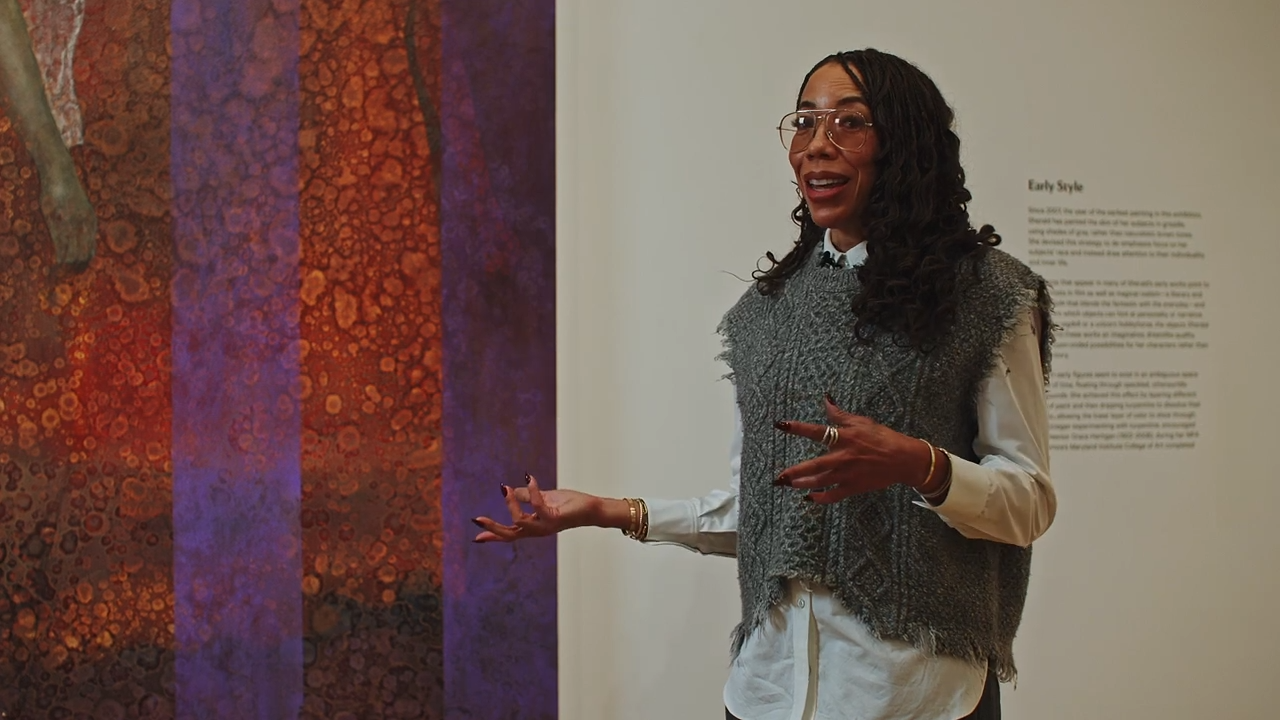
Hangman is the earliest painting featured in Amy Sherald: American Sublime. Created in 2007 during Sherald’s time at the Maryland Institute College of Art and featuring a Baltimore-based model, this work offers an early glimpse into the artist’s developing practice. Watch as Sherald reflects on this formative period and explains how Hangman contributed to the development of her now-signature use of grayscale skin tones.
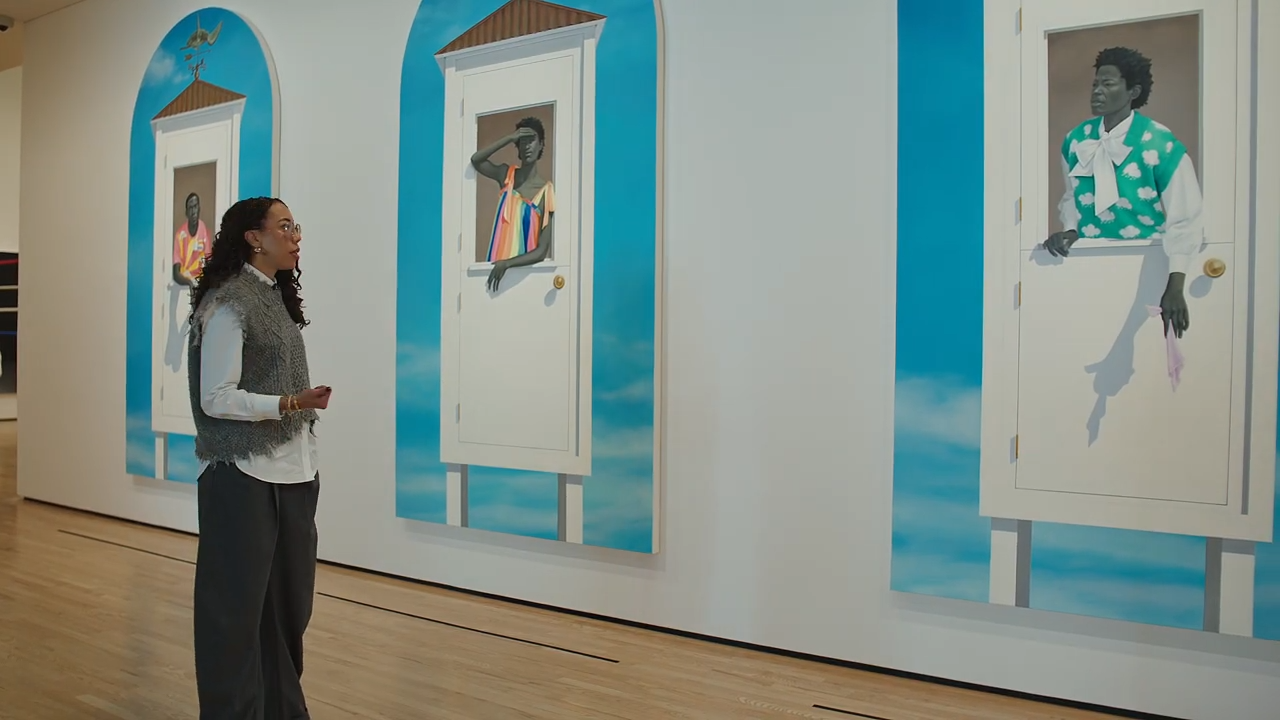
Amy Sherald’s striking triptych Ecclesia (The Meeting of Inheritance and Horizons) greets visitors at the entrance to Amy Sherald: American Sublime. Inspired by a scene from Wes Anderson’s film The Grand Budapest Hotel, the work unfolds across three panels, each telling a distinct story. Sherald invites viewers to imagine their own narrative: What is happening here? What are these subjects looking at and where might they be?