Kurumba
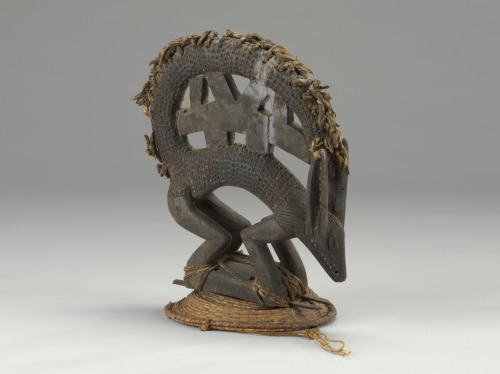
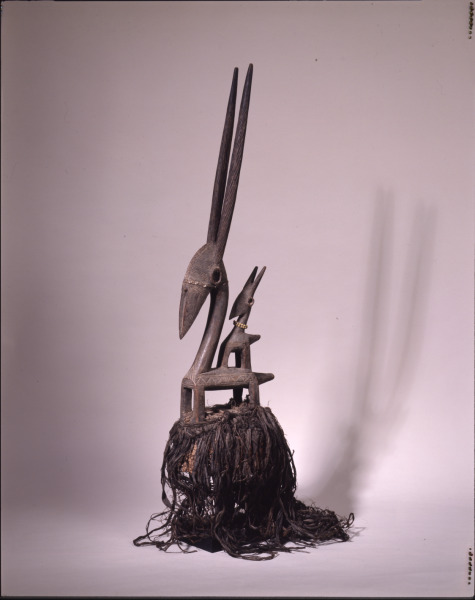
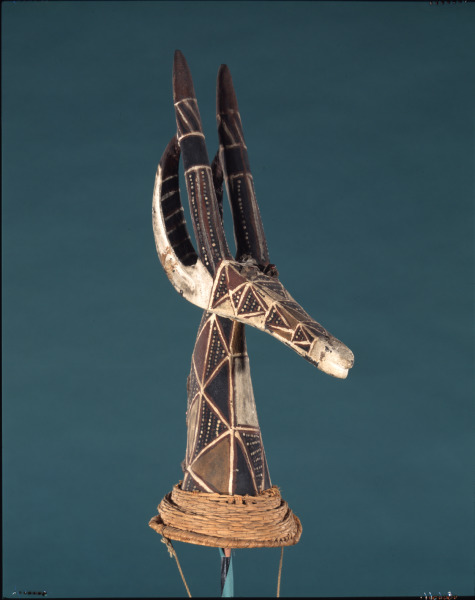
Antelope Headdress (Adoné)
Kurumba, 1900-1965
Scroll
Kurumba
Antelope Headdress (Adoné)
Kurumba, 1900-1965
Physical Qualities
Wood, plant fiber, seeds, pigment, string, 18 1/2 x 6 11/16 x 10 1/4 in. (47 x 17 x 26 cm.)
Credit Line
Gift of Alan Wurtzburger
Object Number
1954.145.9
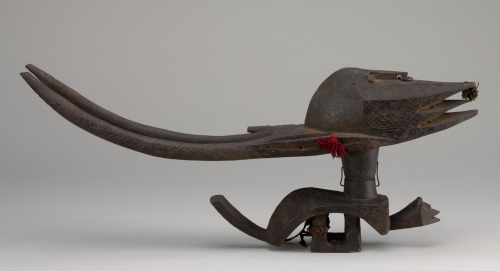
Normally maintained on their altars in ancestral spirit houses, antelope masks were ocassionally removed to participate in community events. Masks appeared during the burials of elders and embodied the spirit of the deceased. Later in a ceremony during the dry season, often long after the actual burials, the masks helped usher the deceased into the world of the ancestors.
Frederick John Lamp, "See the Music Hear the Dance: Rethinking African Art at the Baltimore Museum of Art." New York: Prestel, 2003, p.18, ill.
BMA. "African Spirit Series" brochure 2003-2004. ill.