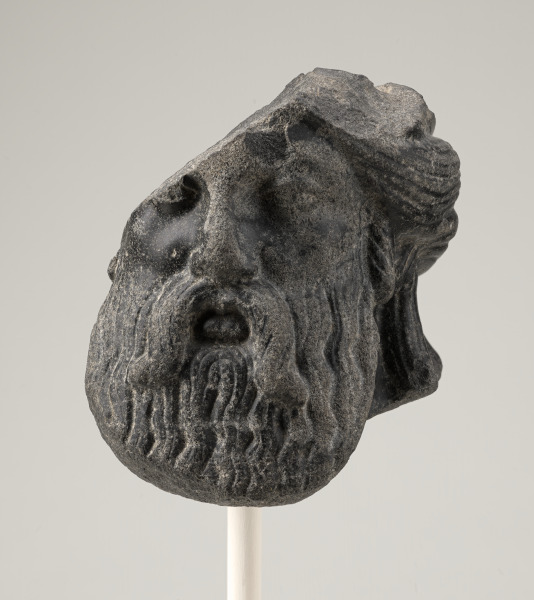
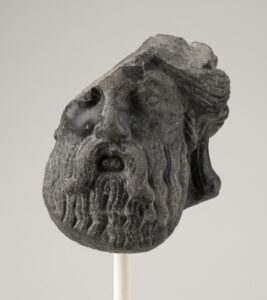
Bearded Male Head of Dionysos
101-200
Scroll
Bearded Male Head of Dionysos
101-200
Physical Qualities
Stone, 6 x 5 x 6-1/4 in.; base: 6 x 4 x 4 in.
Credit Line
Antioch Subscription Fund
Object Number
1937.125
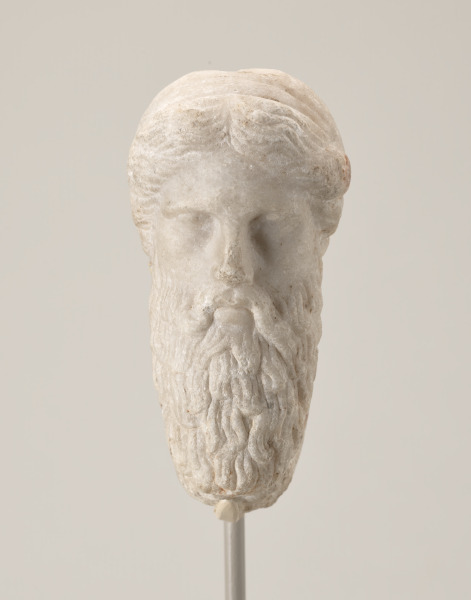
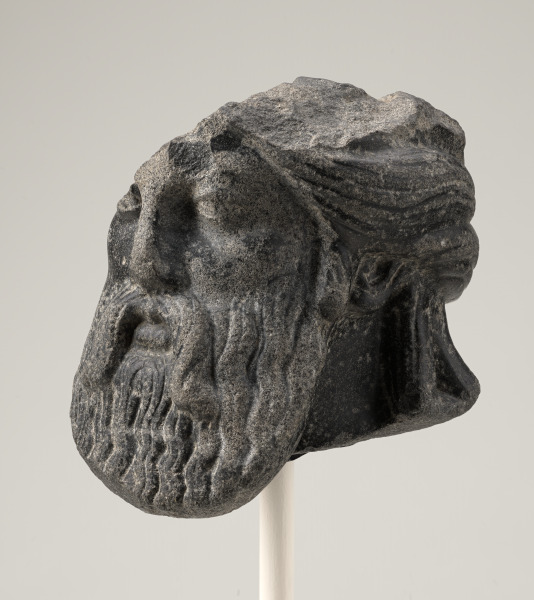
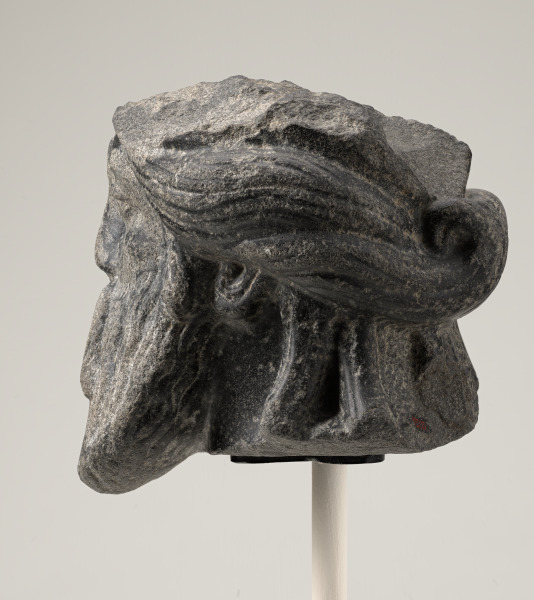
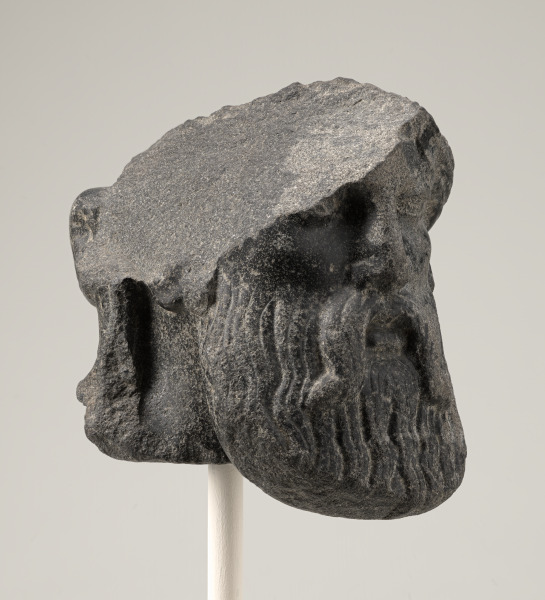
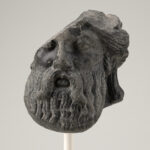
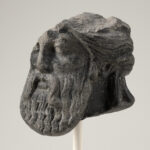
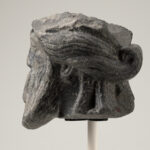
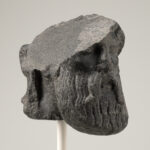
The upper part of the face above the left eye and most of the top of the head are missing, but enough remains to associate the head with a well-known series. The severity and symmetry of his countenance, the sleepy eyes, and the regular linear markings of the long beard and moustache, with ends turned up, are matched by the bearded male heads found on several double-headed herms. The combination of a young beardless head joined at the back to an older bearded one was a favorite conceit of the Roman imperial period. These heads have been identified as either Dionysos or Hermes, but a degree of uncertainty remains. The iconographic confusion is due in part to the fact that one type, similar to this head, seems to be a free Roman invention that combines a prototype from the late fifth century B.C.E., namely, the Hermes Propylaios of Alkamenes, with a Dionysos identified with the workshop of Praxiteles. The massing of his wavy hair on the extant right side suggests that he wore a fillet; some sort of turban may also be indicated.
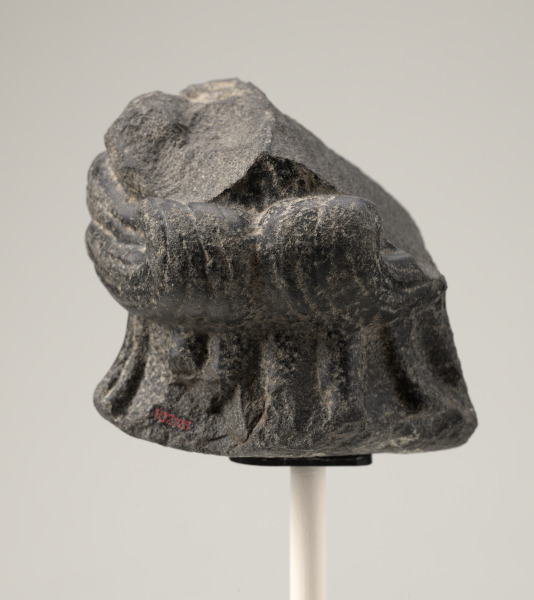
The finishing at the back suggests that the head was not joined to another. The highly polished black surface recalls the darkened appearance of bronze herms found in Campanian domestic settings; it closely recalls the earlier Mahdia and Getty Dionysiac bronze herms. Similar types of double-headed herms and single herms were mounted on marble pillars in Pompeian gardens, such as that of Marcus Lucretius. The miniature scale of this head suggests its use as a table or garden ornament.
Asian Rotations 2024
Richard Stillwell, ed., "Antioch-on-the-Orontes II: The Excavations of 1933-1936," Princeton: Princeton University Press, 1938, no. 232, pl. 22.
Kondoleon, Christine, ed. Antioch: The Lost Ancient City. Princeton, NJ: Princeton University Press in association with the Worcester Art Museum, 2000, p. 179, ill.
 On View at the BMA