Lakota (Sioux)
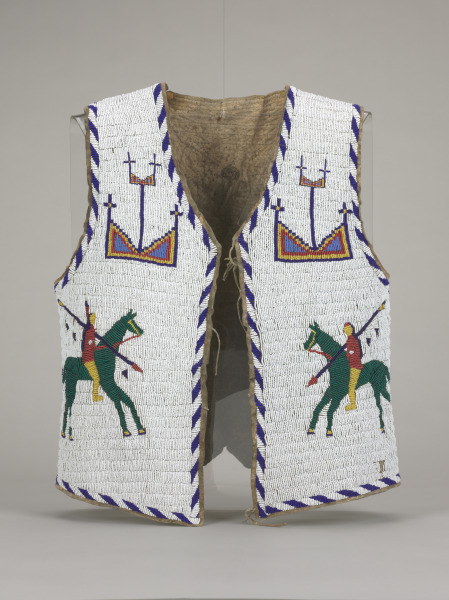
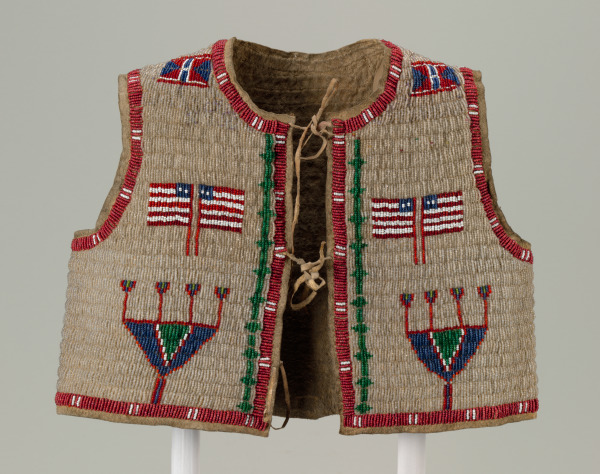
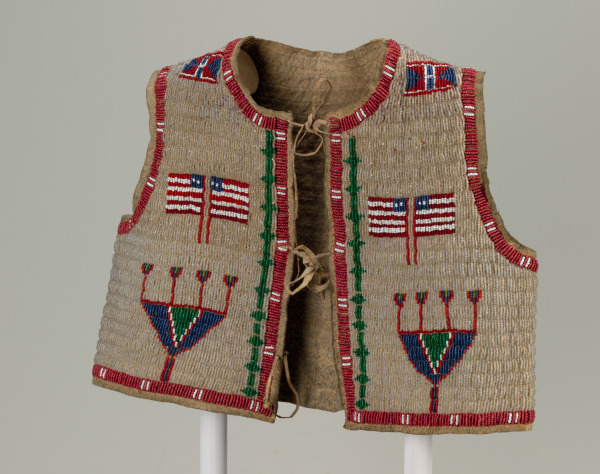
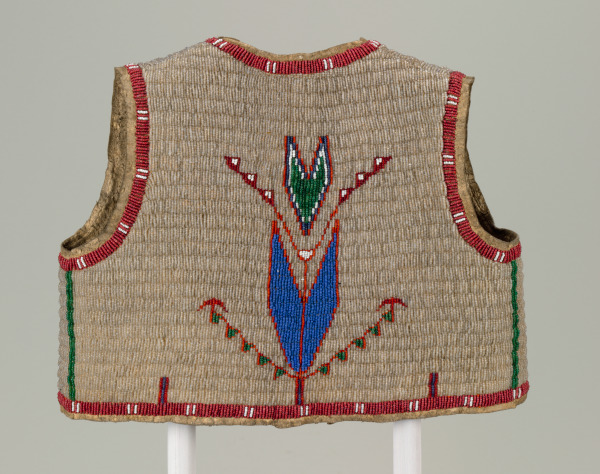
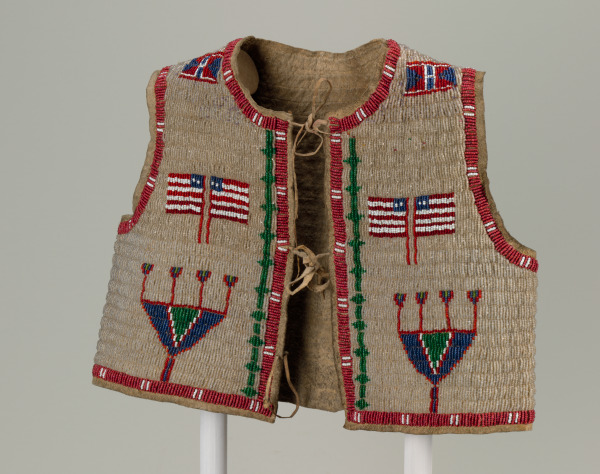
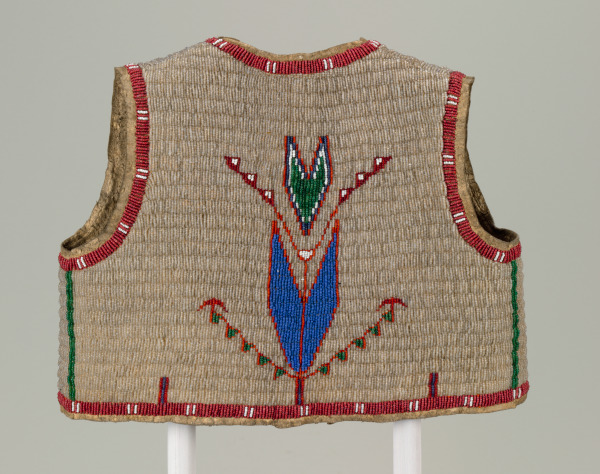
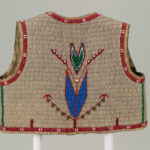
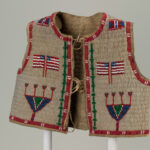
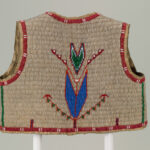
Boy’s Vest
Lakota Sioux, 1894-1904
Scroll
Lakota (Sioux)
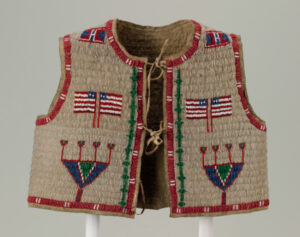
Boy’s Vest
Lakota Sioux, 1894-1904
Physical Qualities
Hide, glass beads, 12 × 10 11/16 in. (30.5 × 27.2 cm.)
Credit Line
Gift of Mrs. Richard W. Case, Sparks, Maryland
Object Number
1985.162
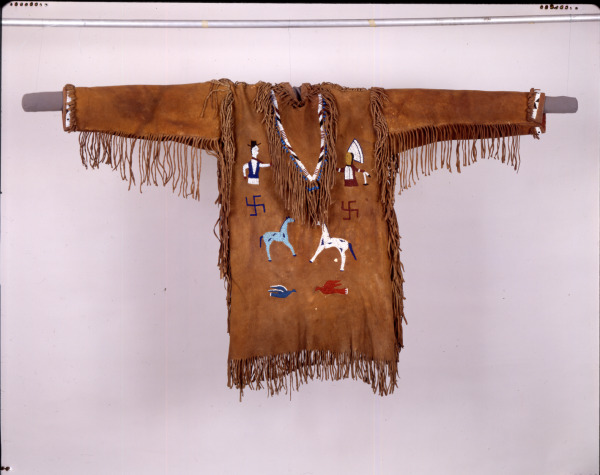
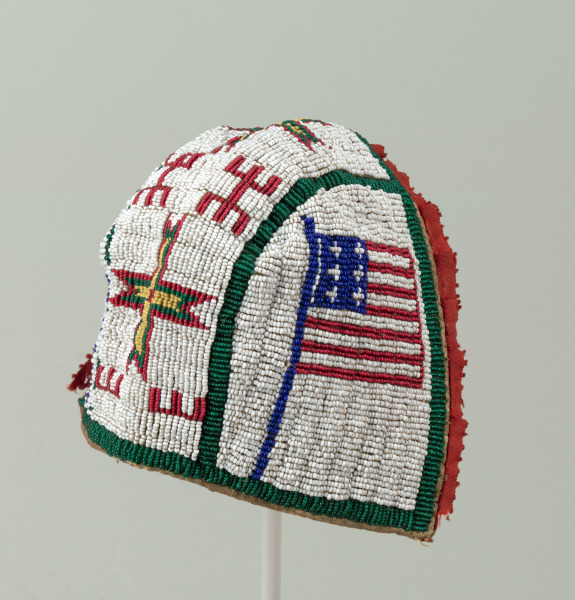
During the height of the Reservation Period (1880–1920), mothers adorned their children’s clothes with stars and stripes to identify them as American. These lavishly beaded items of clothing demonstrated both motherly adoration and artistic achievement. Lakota women transformed typical settler attire, like vests and cowboy boots, to better conform to Native aesthetics by beading them.
While the style of beadwork communicated the children’s Lakota background, the patriotic imagery on the pieces, like the American flag, attempted to |both protect children against negative attention and affirm the children’s emerging American identity. Though Lakota people were forced to sacrifice their nomadic way of life and adapt to conditions on the reservation, women were able to assert and preserve their Native identity through their beadwork.
Ralph Case (father-in-law- of donor) collected beginning probably in early 30s, perhaps earlier. Acted as attorney for the Sioux nation in suit against U.S. Government from 1932 to 1966. Was born on a Sioux reservation (c. 1880s/90s); son of a frontier sheriff. (Information from donor, 1984)
Stripes and Stars: Reclaiming Lakota Independence