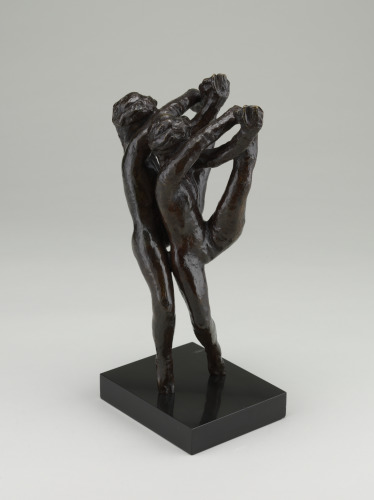
Auguste Rodin and Alexis Rudier, Paris
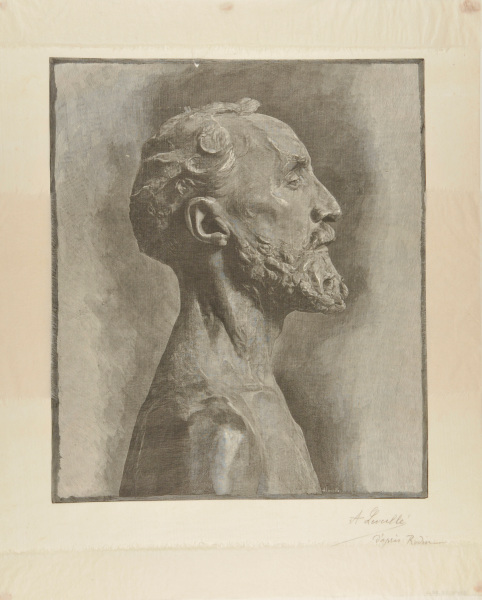
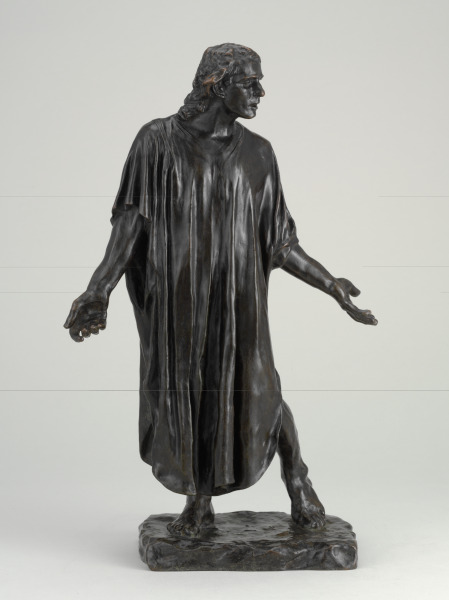
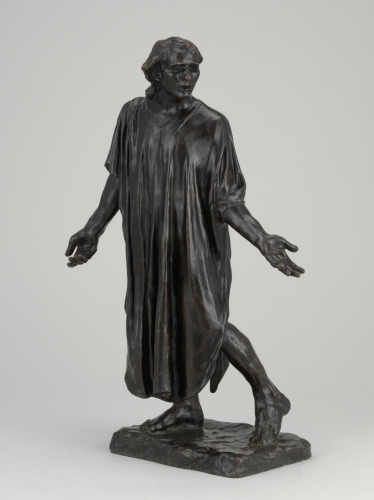
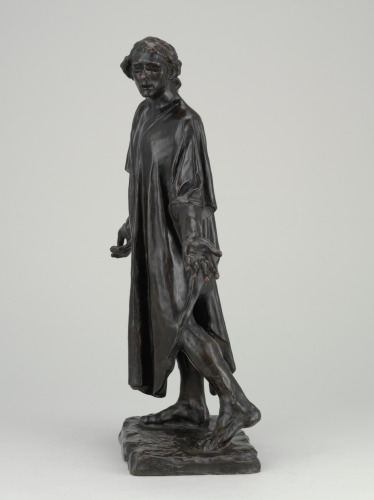
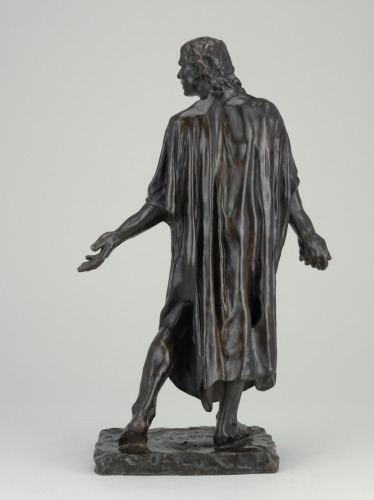
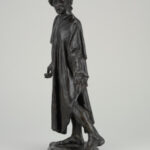
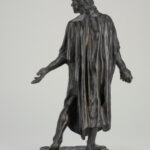
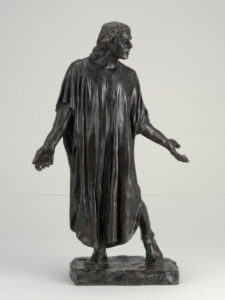
Burgher of Calais (Jean de Fiennes)
1884-1962
Scroll
Physical Qualities
Bronze, 18 1/4 in. (46.4 cm.)
Credit Line
Gift of Wilton C. Dinges
Object Number
1964.26.6
In the fourteenth century during the Hundred Years’ War,
England’s King Edward III laid siege to the French town of
Calais. After enduring eleven months of hardship, the nearly
starved population finally reached an agreement with the king:
he would spare the town on the condition that six of Calais’
leading citizens would deliver themselves to him as hostages.
The six patriotic volunteers were required to walk to the English
camp in sackcloth with rope tied around their necks, bearing
the keys to the city. Although later spared through intercession
of the queen, the men expected to be executed.
Five centuries later, in the wake of the disastrous Franco-Prussian
war, the French government encouraged municipalities to erect
monuments to France’s historical patriots in order to rekindle
national pride. In 1884, the town council of Calais commissioned
Rodin to create a monument honoring its six most famous
citizens. Rodin’s unusual monument depicted the group of
six burghers walking reluctantly away from the city, stoically
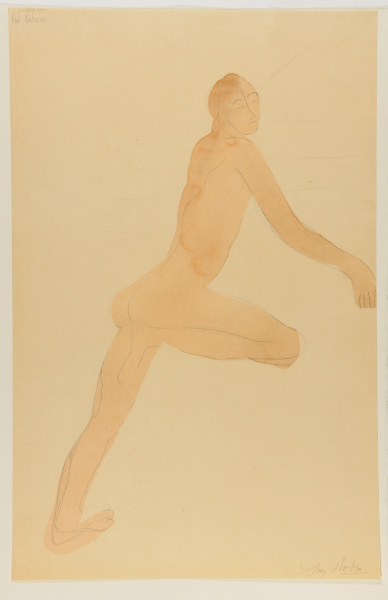
accepting their unjust fate. The BMA’s sculpture is a reduced
version of the youngest of the six burghers, Jean de Fiennes.
The figure perfectly embodies the psychological tension as he
turns back in a gesture of disbelief even though his legs already
propel him towards his uncertain destiny.
Rodin: Expression & Influence