Thomas Hirschhorn
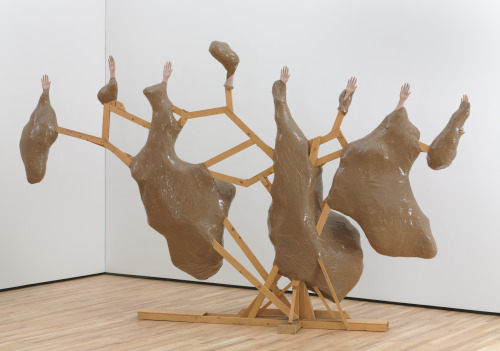
Chandelier with Hands
2005
Scroll
Thomas Hirschhorn
Chandelier with Hands
2005
Physical Qualities
Wood, tape, plastic, paint, and metal, 102 x 166 3/4 x 39 3/4 in. (259.1 x 101 x 423.5 cm.)
Credit Line
Fanny B. Thalheimer Memorial Fund
Object Number
2006.90
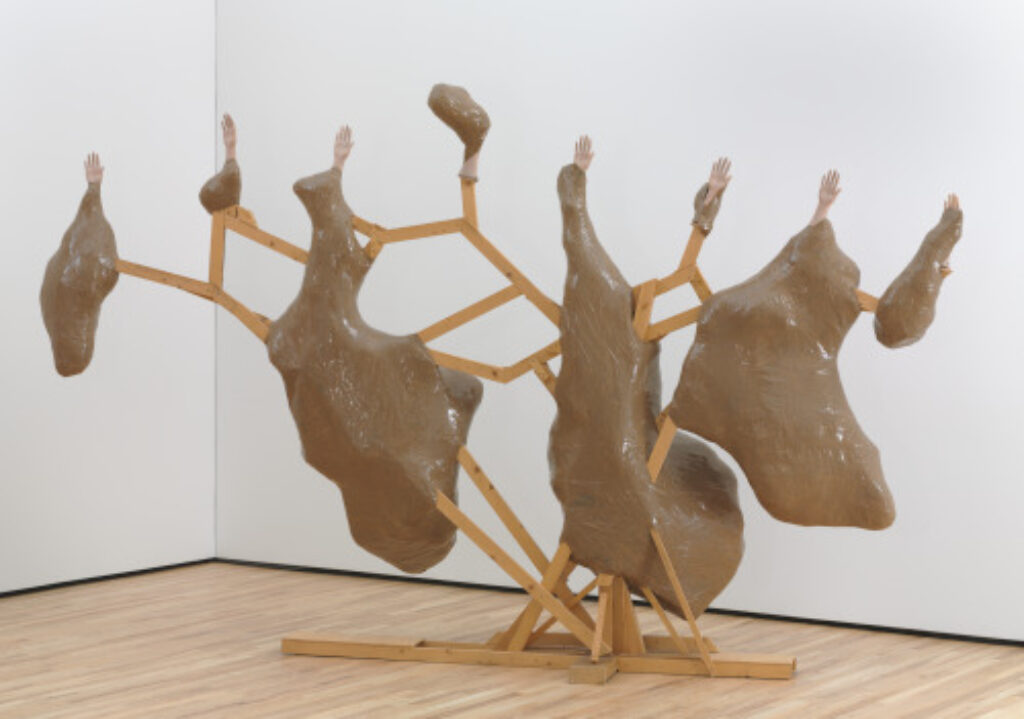
Thomas Hirschhorn merged the anatomical with the geological in Chandelier with Hands, pairing mannequin hands with solid bulbous growths made from packing tape and bubble wrap to create a candelabra-like structure. Through these accumulated forms, he explored the concept of “concretion,” a term in both geology and medicine that refers to the growth of hard, solid masses. The hands, enveloped by these masses, evoke human vulnerability, while the use of disposable, plastic materials resistant to decay suggests humanity’s active role in the deterioration of our environment. Hirschhorn used the metaphor of hardening to explore what he describes as a growing indifference or numbness to crisis and challenges us to consider our own responsibility for the social and environmental crises we face.
The Baltimore Museum of Art by purchase, 2006; Galerie Chantal Crousel, Paris; the artist
The Front Room: Ripple Effect
Contemporary Wing Reinstallation
Crosscurrents: Works from the Contemporary Collection
Contemporary Wing Rotations 2025
Glenn McNatt, "New exhibition explores acquisitions' 'Ripple Effect'," Baltimore Sun, May 30, 2007.


Explore the Collection Further