
Column Capital Decorated with Leaves and Scrolls
751-800
Scroll
Column Capital Decorated with Leaves and Scrolls
751-800
Physical Qualities
Alabaster, 12-7/8 x 13-1/2 x 13 in.
Credit Line
Purchase with exchange funds from Frank J. and Elizabeth L. Goodnow Collection
Object Number
1954.106
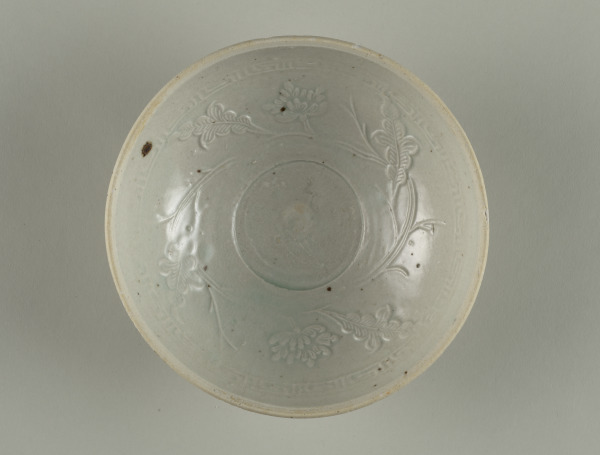
Although originally displayed outdoors, these decorative column capitals reflect the importance of vegetal designs and the presence of Greek and Roman aesthetic elements in the arts of the Islamic world. Leafy vines, formed of S- and C-shaped scrolls, were often used to frame figures in the art of the ancient Mediterranean. Adapted by Islamic artists and artisans, these secondary decorative motifs assumed a primary position in religious and public settings where figural representation was avoided. No longer a subsidiary feature, entwined vegetal ornamentation became increasingly abstract.
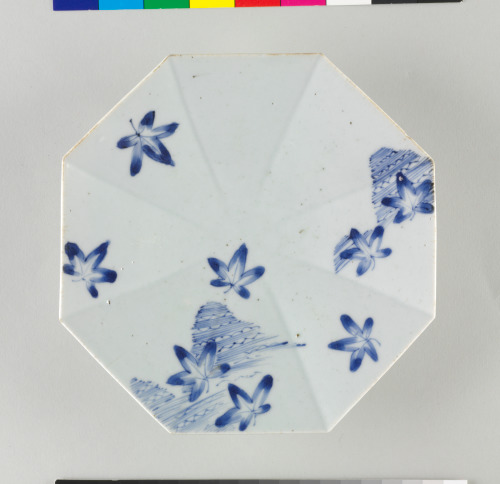
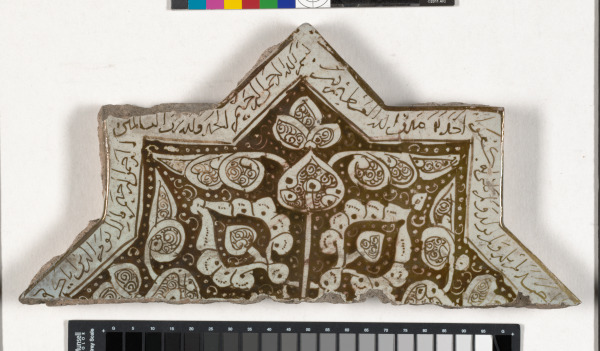
The placement of the two 8th century capitals which decorated the tops
of supporting architectural columns may seem surprising beside decorative
tiles and furnishings made more than 1,000 years later, in the 18th century.
Yet, given the durability of the material and unchanging nature of the
pre-19th century environment, such juxtapositions were not uncommon.
The capitals are decorated with acanthus leaf and scroll motifs derived from
the Greek and Roman vocabulary. Whereas vegetal motifs were secondary
to human figures in Greek and Roman art, in the hands of Islamic artists
and artisans those non-human elements assumed the primary position. An aversion
to idolatry and reluctance to assume anything close to the God’s role as creator
led them to avoid figural depictions.
The Baltimore Museum of Art by purchase, 1954; Maurice de Lorey, Capbreton (Landes), France, by inheritance; , Eustache de Lorey, Le Bostan, Capbreton, France; The Baltimore Museum of Art on loan, 1948 from Eustache de Lorey collection through the estate of Brummer Art Gallery, New York
Art Across Asia: West Asian Connections
Maurice S. Dimand, "Studies in Islamic Ornament: I. Some Aspects of Omiyad and Early Abbasid Ornament," "Arts Islamica," Vol. IV, Washington, D.C.: Freer Gallery of Art and University of Michigan, 1937, citation not paginated, ill. fig. 23.
BMA News, June 1954, p. 2.