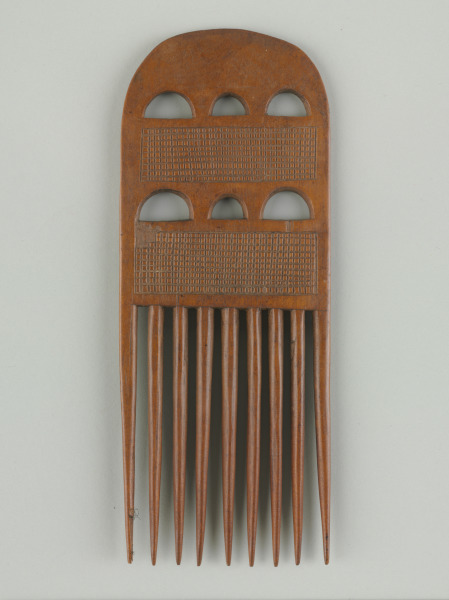
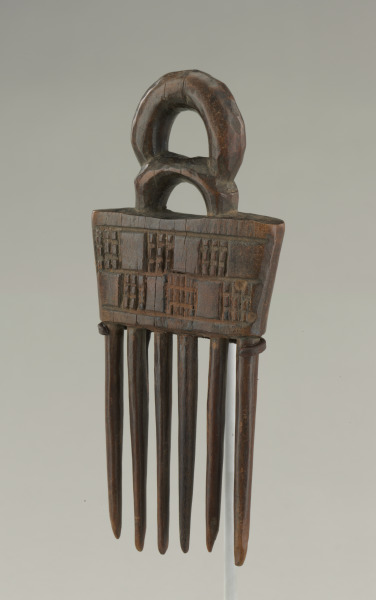
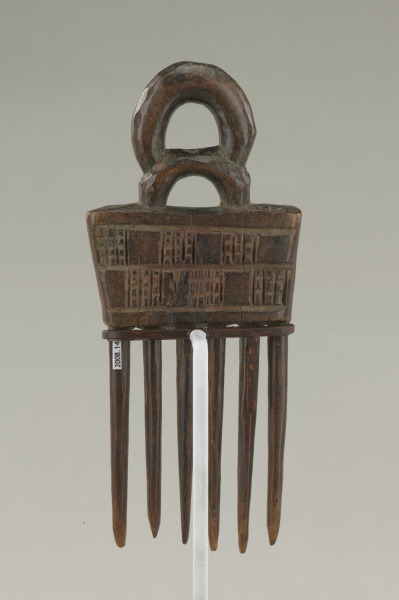
Akan
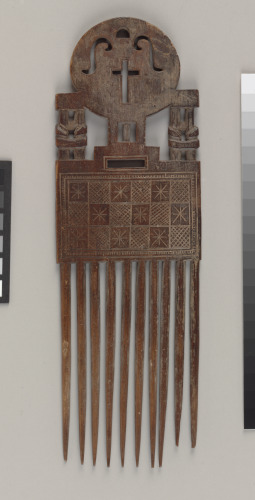
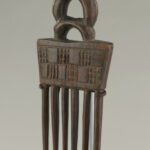
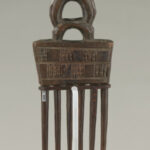
Comb
Akan, 1900-1999
Scroll
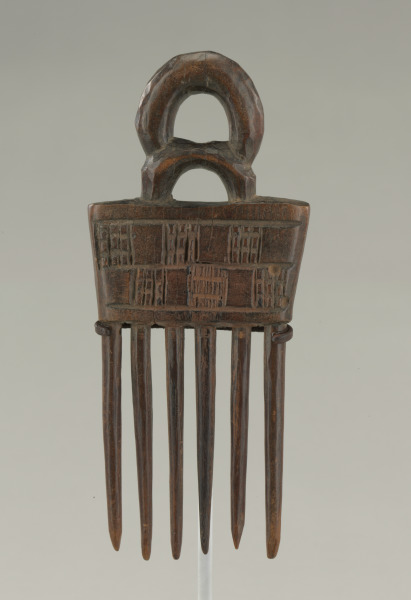
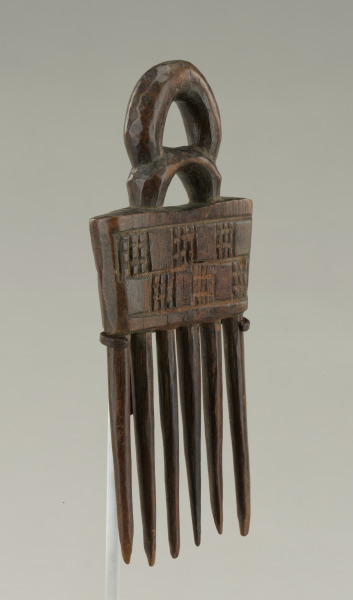
Akan
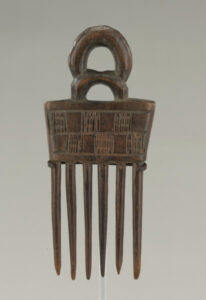
Comb
Akan, 1900-1999
Physical Qualities
Wood, 6 1/2 x 2 3/4 in. (16.5 x 7 cm.)
Credit Line
Gift of Geneviève McMillan in Memory of Reba Stewart
Object Number
2008.146
Akan men often present combs to the women they love. Akan combs demonstrate a variety of symbolic motifs, many of which refer to Akan proverbs. The large comb was probably presented by a male suitor to his beloved. The openwork design portrays an embracing couple whose relationship is rooted in social and romantic ideals. The Golden Stool above the pair symbolizes the Asante Kingdom while the “Sankofa” birds (with heads turned backwards) refer to a proverb meaning, “move forward by learning from the past.” Crosses in the upper corners identify the couple as Christian. Below, a rifle, sword and two linked hearts may suggest male protection or the inscribed adage, translated from the Twi, 'love is death.'
The Baltimore Museum of Art by gift, 2008; Geneviève McMillan, Cambridge, Massachusetts
Hand Held: Personal Arts from Africa
Inscribed: On tooth, in white paint: "C9".