
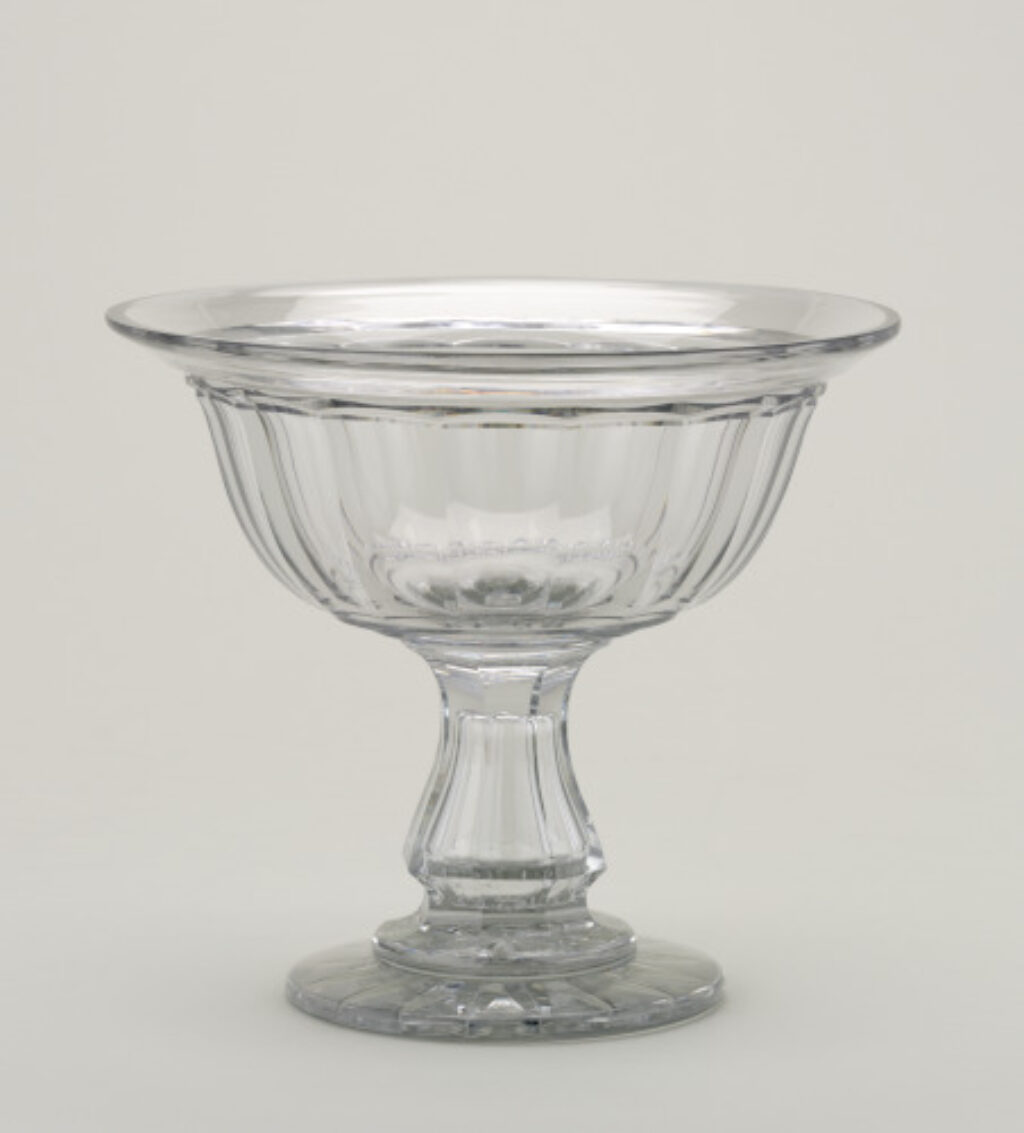
North Wheeling Flint Glass Works
Compote
1844-1854
Scroll
North Wheeling Flint Glass Works
Compote
1844-1854
Physical Qualities
Glass, 10 1/2 × 12 × 12 in. (26.7 × 30.5 × 30.5 cm.)
Credit Line
Gift of John Beverley Riggs
Object Number
2004.60
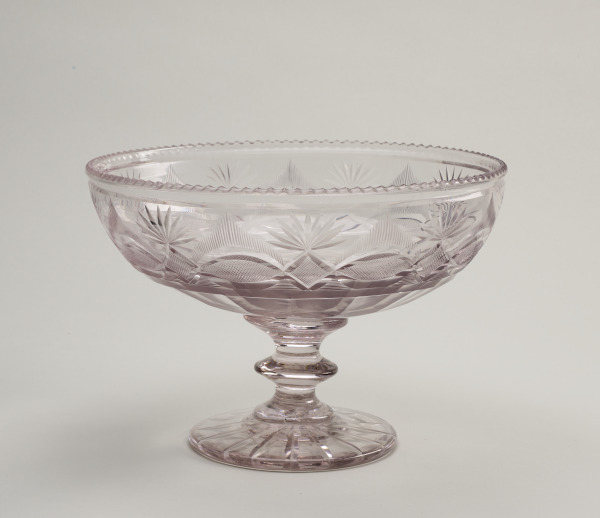
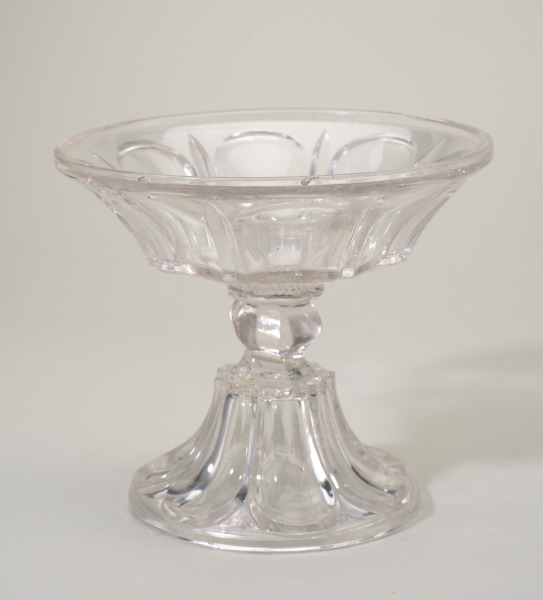
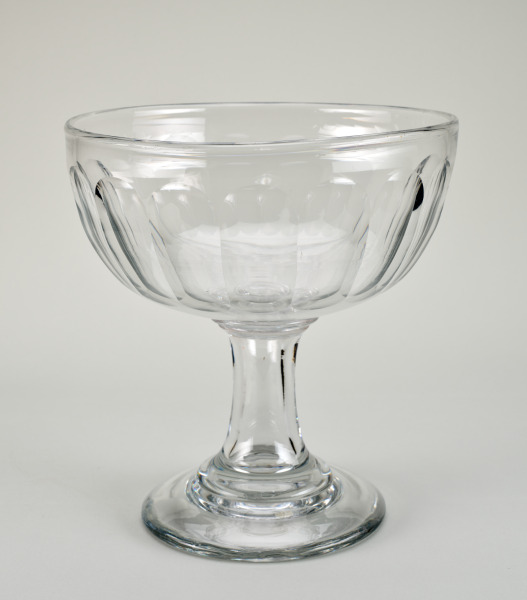
This large glass bowl rests on a stem and was used for serving compote, a dessert of fruits soaked in sugary syrup. A recipe for apple compote in Eliza Leslie’s Miss Leslie’s Complete Cookery, first published in 1837, instructs the cook to boil apples, sugar, and lemon rinds in water and “when the whole is cold, put the apples with the syrup into glass dishes and dispose the wreaths of lemon-peel fancifully about them.” Glass was considered the ideal presentation for this decorative dessert, and the completed dish would have been placed on a sideboard or table in a room for dining.
The North Wheeling Flint Glass Works, owned by Thomas Sweeney, an Irish immigrant turned enslaver and politician, was one of the founding factories in the region. Wheeling, West Virginia, and nearby Pittsburgh, Pennsylvania, were major manufacturers of cut glass in mid-century 19th-century America, shipping products across the United States, to Cuba, and to Europe.
The Baltimore Museum of Art by gift, 2004; John Beverley Riggs (1918-2006), Wilmington, DE
Inscribed: None


 On View at the BMA