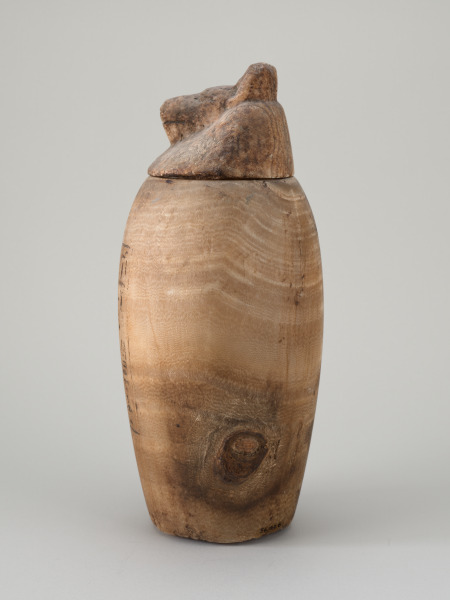
Unknown and Egyptian
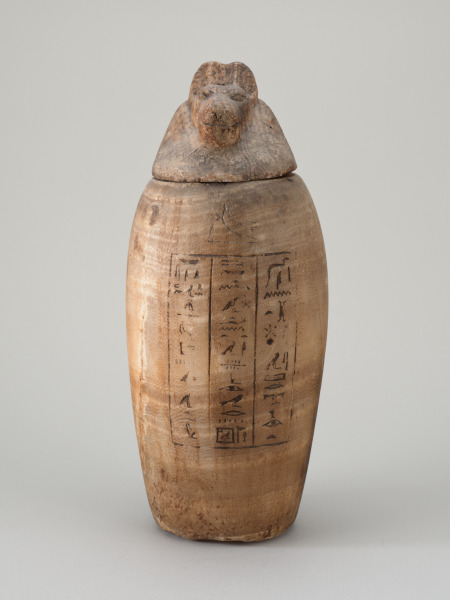
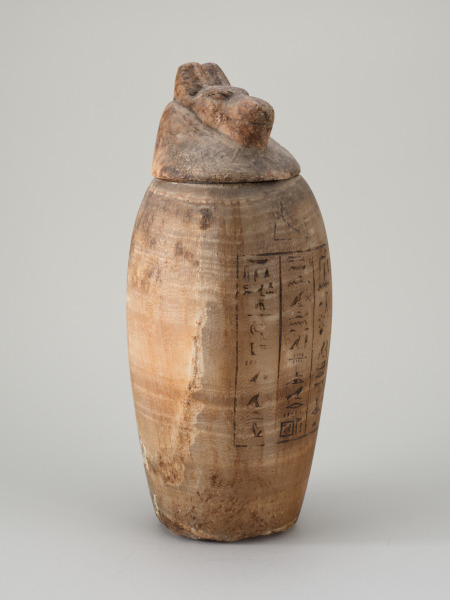
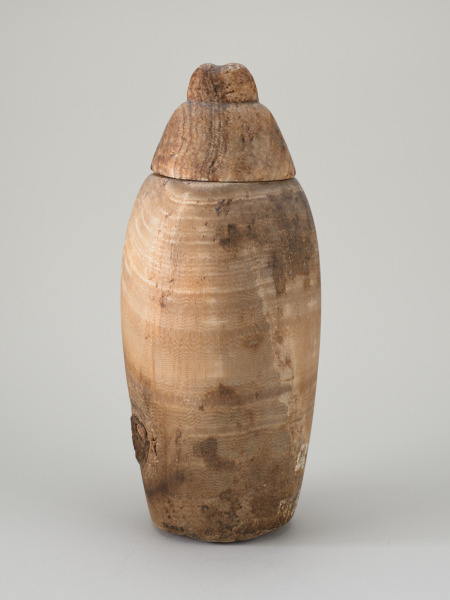
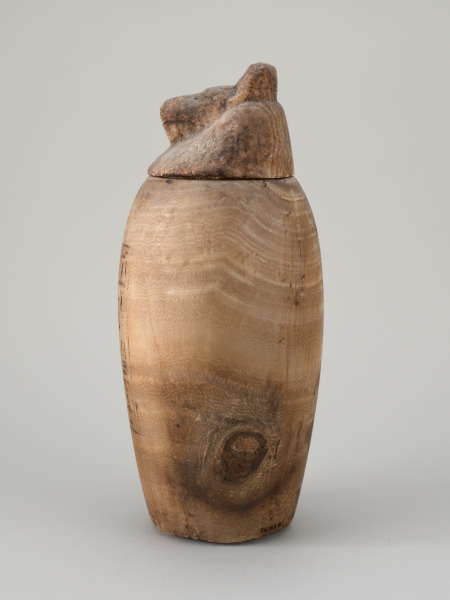
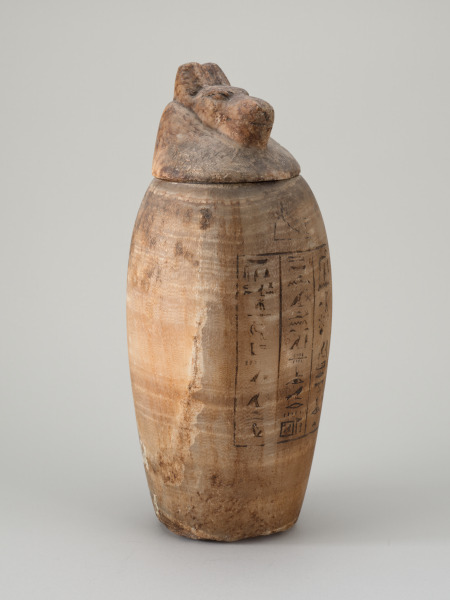
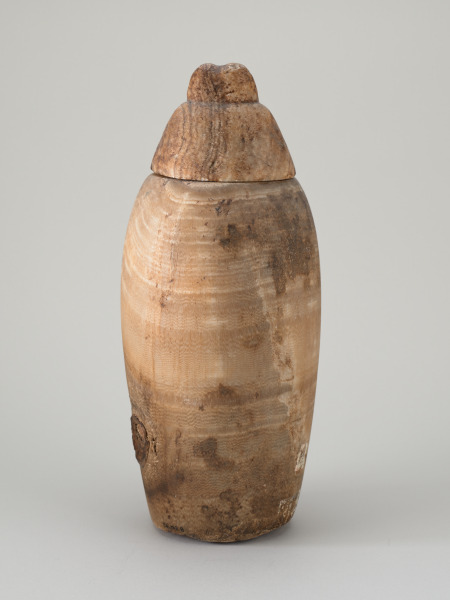
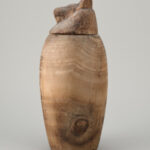
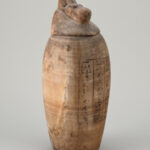
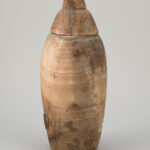
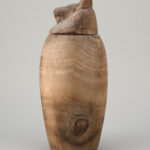
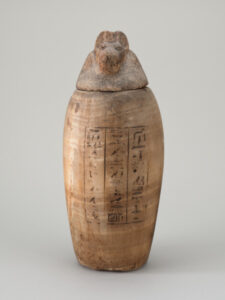
Covered Burial Urn for the High Priest Psamtik
Unknown, 664-525
Scroll
- Artist/Maker: Unknown
- Culture: Egyptian
Covered Burial Urn for the High Priest Psamtik
Unknown, 664-525
Physical Qualities
Alabaster, 12 1/4 × 6 in. (31.1 × 15.2 cm.)
Credit Line
Gift of Robert Garrett
Object Number
1956.132.2
Memorials (group label BMA 1956.132.1–4)
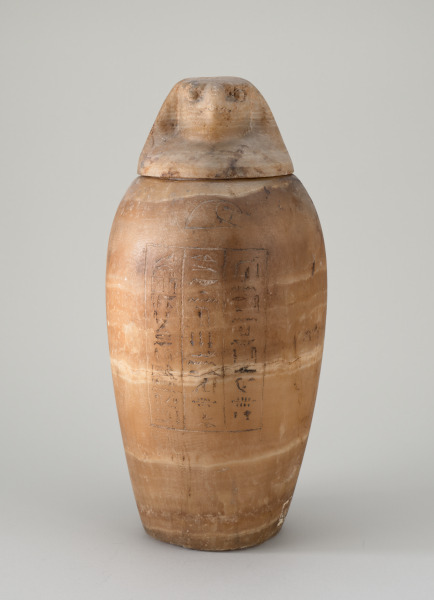
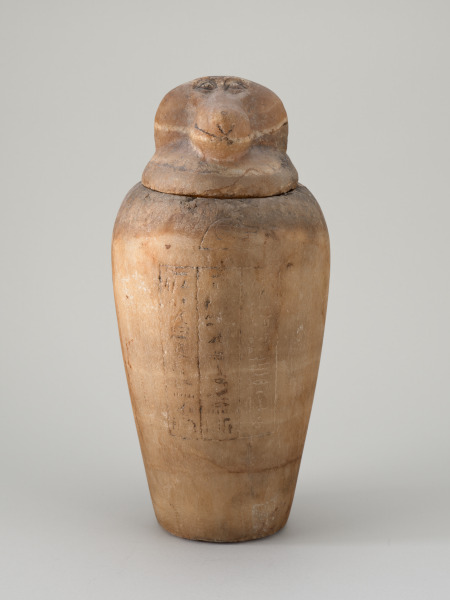
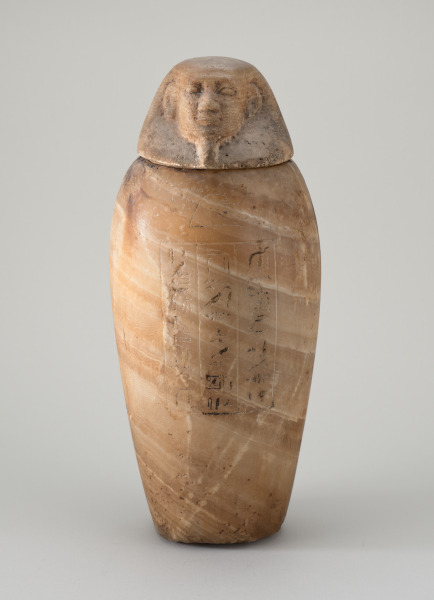
Markings arranged in three columns on each jar identify and honor the individual to whom they once belonged: Psamtik, a high priest of the god Thoth and a priest of the goddess Hathor. Each jar depicts a deity affiliated with protecting the organ contained within: the human head is Imsety, who protected the liver, while Hapy (a baboon) was responsible for the lungs, Duamutef (a jackal) the stomach, and Qebehsenuef (a hawk) the intestines.
Created over 2,500 years ago during Egypt’s early 26th dynasty (664–525 BCE), these four jars were likely buried next to a sarcophagus containing a mummified body. Centuries of looting and excavation mean that knowledge of the original placement of these jars has been lost. The BMA is committed to holding the works in its collection both legally and ethically, and curators continue to research the life history artworks such as these. In the meantime, memories of the deceased are left only via the inscriptions adorning the jars.
Carlee S. Forbes, Wurtzburger Hallway Rotation, July 1, 2025
African Wing Rotations 2024
African Wing Rotations 2025
Frederick John Lamp, "See the Music Hear the Dance: Rethinking African Art at the Baltimore Museum of Art." New York: Prestel, 2003, p.180-181, ill.
Artist/Maker
Unknown
2000-01-01 00:00:00–2000-01-01 00:00:00
 On View at the BMA