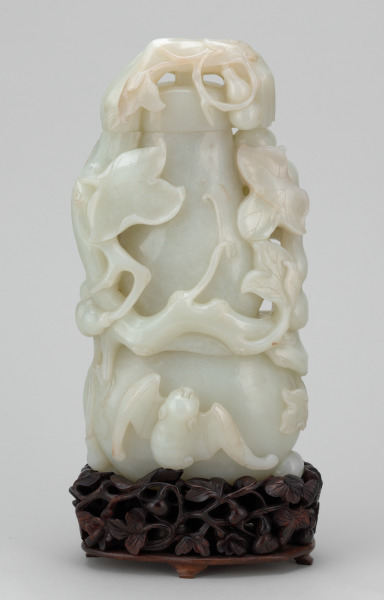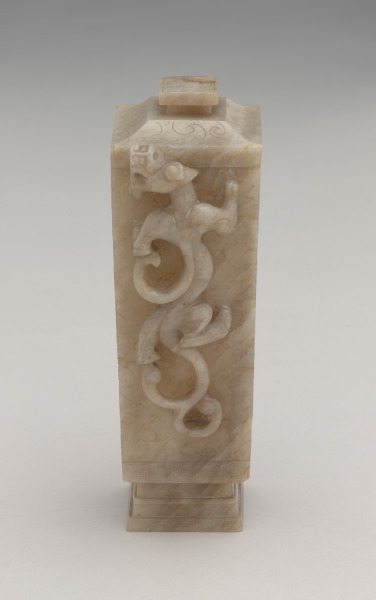
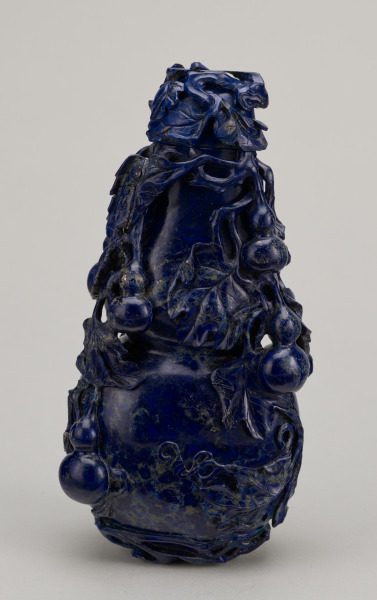
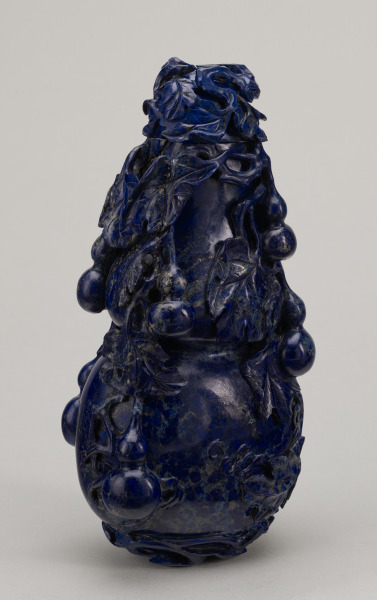
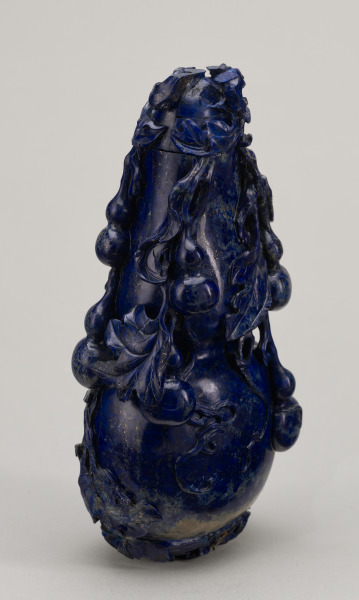
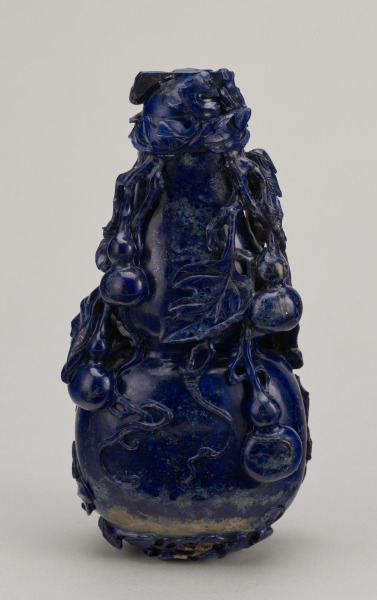
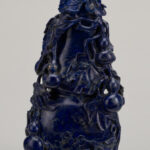
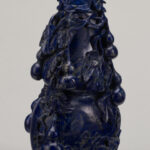
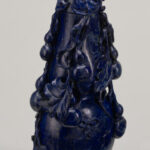
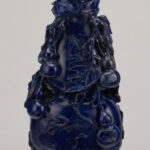
Covered Double Gourd Vase
1735-1794
Scroll
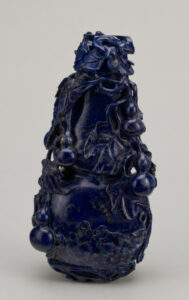
Covered Double Gourd Vase
1735-1794
Physical Qualities
Lapis lazuli, 7 7/8 in.(20 cm.) H
Credit Line
The Mary Frick Jacobs Collection
Object Number
1938.307
This vase made in China was carved from lapis lazuli, a deep-blue stone imported from Afghanistan. While lapis lazuli was later found in other regions, Afghanistan was its global source when this vessel was made in the 1700s. This stone formed when magma—molten rock under the earth’s surface—mixed at high heat with limestone in the Badakhshan Mountains. To reach China, traders transported the resource either by land along the Silk Road trading route through Southeast Asia into western China, or by ship around the coast of India and through Indonesia to the Chinese port of Guangzhou. Lapis lazuli was also ground into pigment and used by painters, including Italian Renaissance artists working between the 14th and 16th centuries.
Baltimore Museum of Art by bequest, 1938; Mary Frick Jacobs, Baltimore, by purchase by 1924
Earth as Medium: Extracting Art from Nature
Cone Wing Rotations 2025
Dr. Henry Barton and Mary Frick Jacobs Papers, Archives and Manuscripts Collections, Baltimore Museum of Art, Series 2, box 7, folder 7, 1924.