
Cheyenne
Cradleboard
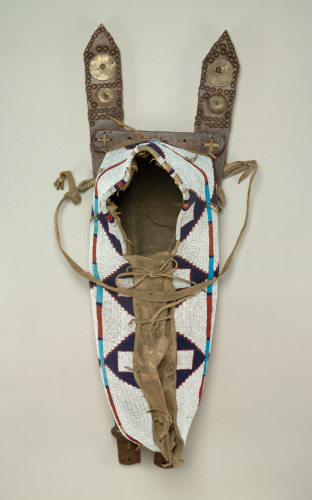
Northern Tsistsistas (Cheyenne), 1869-1878
Scroll

Cheyenne
Cradleboard
Northern Tsistsistas (Cheyenne), 1869-1878
Physical Qualities
Deerskin, wood, brass, cloth, glass beads, metal, Overall: 42 1/2 x 13 1/4 x 10 1/2 in. (108 x 33.7 x 26.7 cm)
Credit Line
The Baltimore Museum of Art
Object Number
1990.93
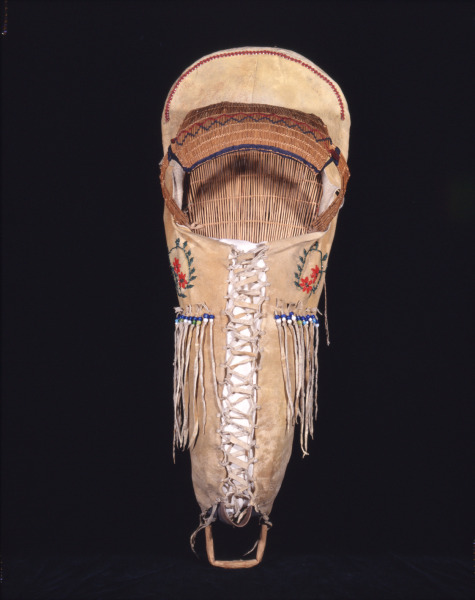
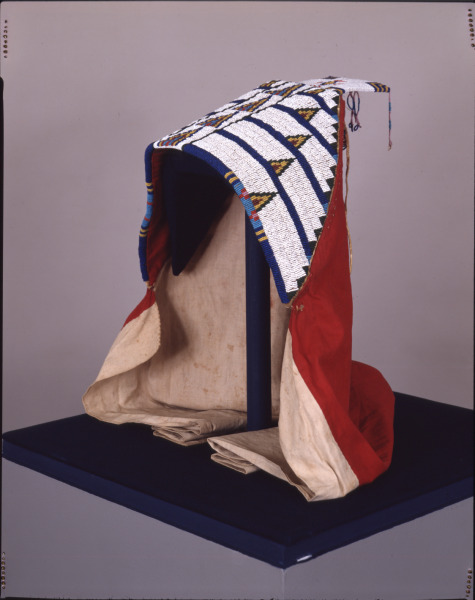
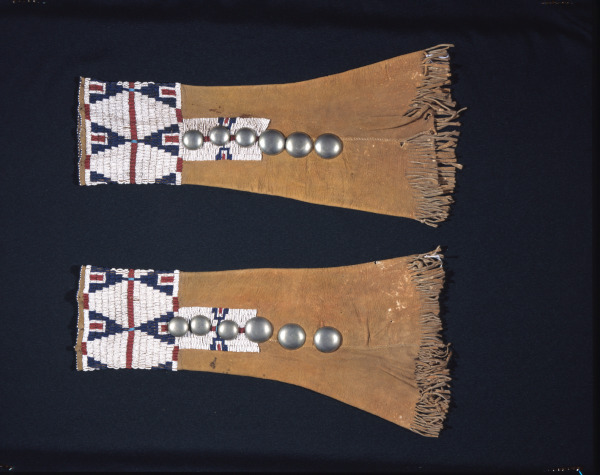
A home for new life, cradles like these protected babies as they rested in tipis. Mothers wore cradleboards with wooden frames on their backs or carefully attached them to horses for transit. Historically, women created such objects of care before a baby’s birth.
Traditionally adorned with patterns crafted from dyed and manipulated porcupine quills, the appearance of cradles transformed as beadwork exploded in popularity in the early Reservation Period, beginning in the late 19th century. When the U.S. government forced tribes to live on reservations, artists lost reliable access to porcupines for their quills. Female artists acquired beads through trade with Euro-American settlers to maintain
artistic practices. Artists make such objects to shroud babies in warmth, beauty, and love to this day.
Preoccupied: Indigenizing the Museum