Iñupiaq
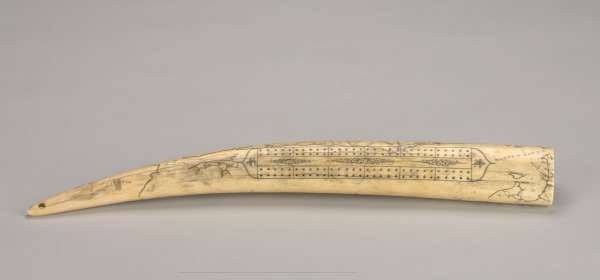
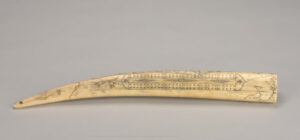
Cribbage Board
Inuit, 1867-1899
Scroll
Iñupiaq
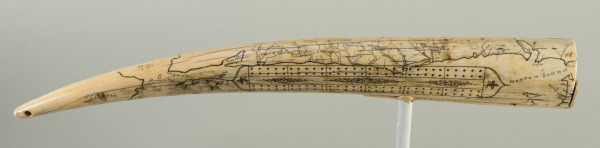
Cribbage Board
Inuit, 1867-1899
Physical Qualities
Walrus ivory, 19 15/16 × 2 5/8 × 1 11/16 in. (50.7 × 6.7 × 4.3 cm.)
Credit Line
John Erikson Collection
Object Number
1955.167.58
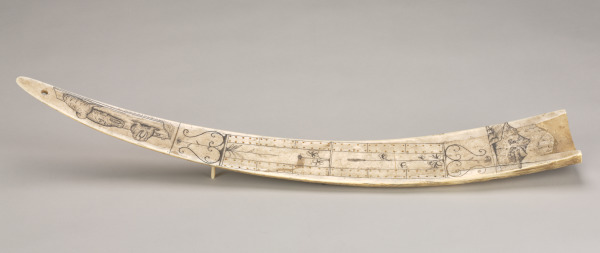
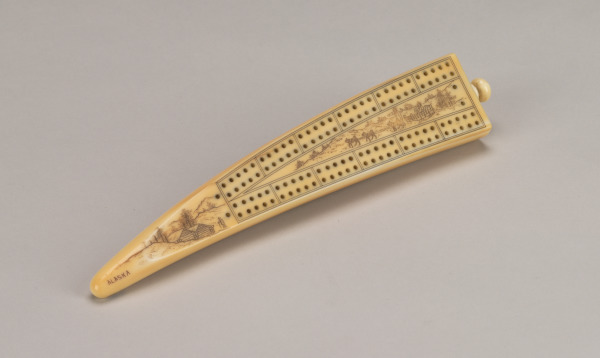
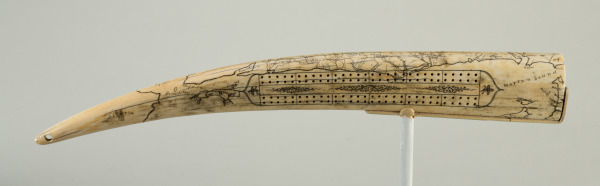
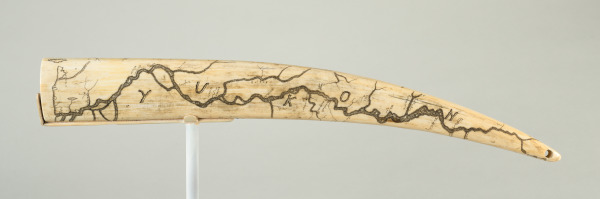
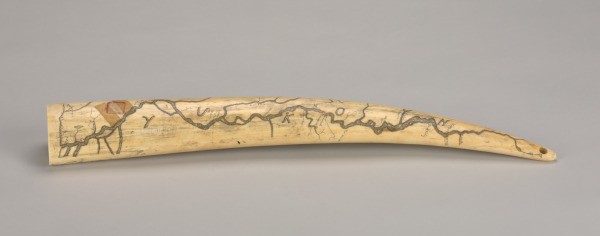
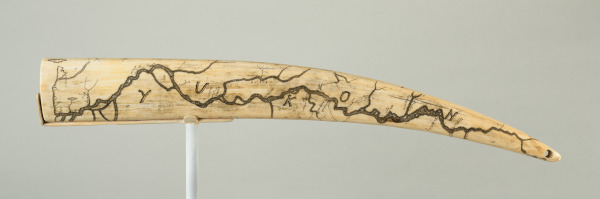
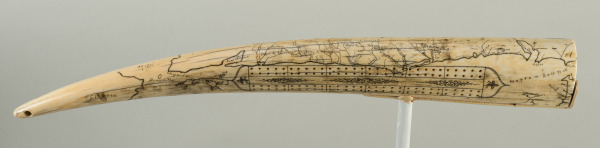
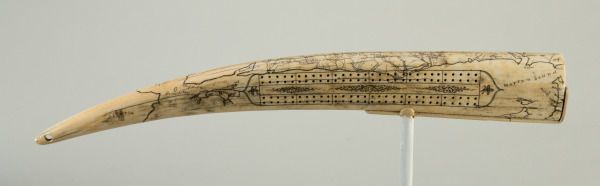
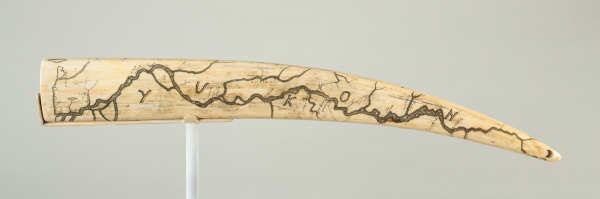
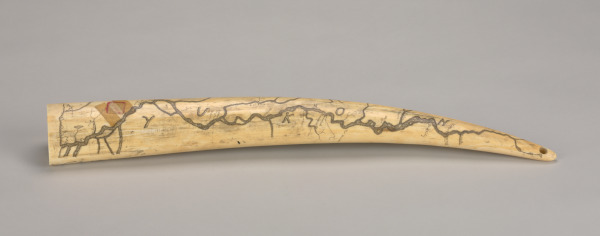
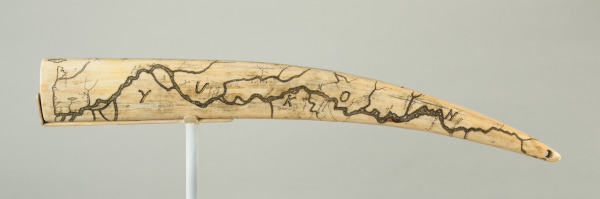
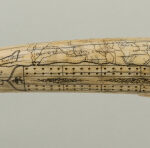
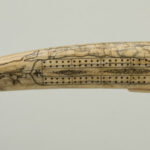
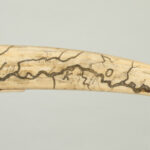
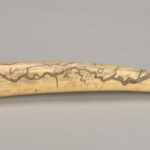
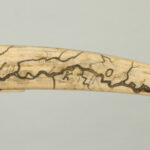
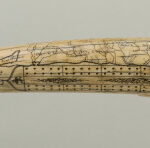
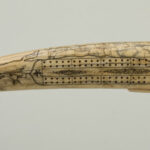
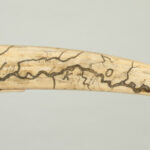
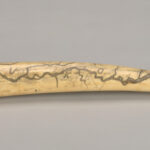
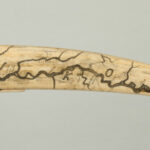
The back of this cribbage board reveals a detailed map of the Yukon River as it reaches from the Alaskan coast deep into the interior of the state. The map extends around the edges to the front, where an image of the hands of an artist, perhaps the maker of this board, engrave a walrus tusk with images of Arctic wildlife. During the late 19th century, an unprecedented number of non-Native explorers, whalers, tourists, and gold prospectors arrived in Alaska. Many of these outsiders sought to purchase artworks, so ivory carvers utilized their skills to create items for sale such as pipes, tableware, walking stick handles, and cribbage boards. Though the game cribbage did not originate in Alaska, boards were wildly popular items for purchase among the new clientele.
Purchased by John Erikson in Alaska ca. 1900
Arctic Artistry
"Arctic Artistry," BMA Today, no. 168, Spring 2022, p. 7, ill.
"Arctic and Eskimo Ivory," Museum of the American Indian, New York, 1980.
American Indian Art Magazine, X, 1, 1984.
American Indian Art Magazine, X, 1, 1984.
Inscribed: white label with red border, red ink, BMA receipt number: '3245-71'.