Christian Herter and Herter Brothers
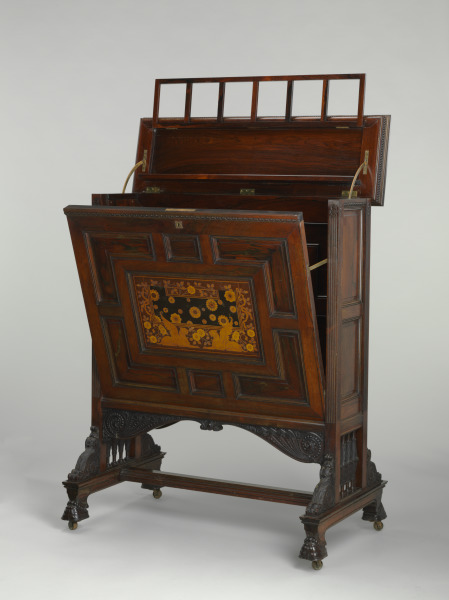
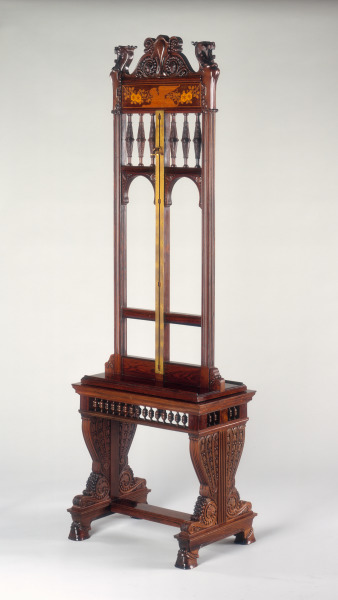
Display Easel
1879-1884
Scroll
Physical Qualities
Rosewood; carved and inlaid with satinwood and various other woods; brass, 77 x 25 1/4 x 17 in. (195.6 x 64.1 x 43.2 cm.)
Credit Line
Decorative Arts Acquisitions Endowment established by the Friends of the American Wing, Middendorf Foundation Fund, Constance D. Bendann Bequest Funds, and Albert H. Cousins Memorial Fund
Object Number
2007.160
The BMA owns many cabinets and case pieces from past centuries. Ordinarily these were used to hold valuable textiles - clothing, bed linens, and the like. But this elaborately carved and inlaid cabinet and easel were created ensuite to store and display works of art. Made to order of the highest quality materials for a lavish New York interior, the two share decorative features that tie them together as a visually powerful pair. Look for carved shells and foliage, Celtic knots, hoofed and beaded feet, Moorish spindles, and roaring lions, echoed by inlaid winged lions couched in beribboned fields of cascading flowers. An enormous tear-drop shape carved in the crest of the easel reappears - miniaturized, turned upside down, and endlessly repeated - as a tiny frieze just below the cabinet's lid. All this might be a bit much in the hands of lesser designers, but the hallmark of Herter Brothers furniture is the precise orchestration and controlled interplay of form, texture, and scale to achieve an impressive whole.
German born, the Herter Brothers were active in New York from 1865 until 1905, but the cabinet and stand date from their heyday as the leading cabinetmaking and decorating firm in the United States. Prestigious clients ranged from President Chester Arthur at the White House in Washington to many a Gilded Age robber barons, including Commodore Vanderbilt and his family in New York. The provenance of the cabinet has been traced to Gertrude Vanderbilt Whitney. As the Herter Brothers stamped cabinet and stand with consecutive numbers, we know that each began life in the same mansion. Yet as is often the case, the pair was eventually separated. The BMA was fortunate to find the cabinet at a small auction house in Maine, and to locate the easel through a New York dealer only a few months later. No such pair is known in another collection.
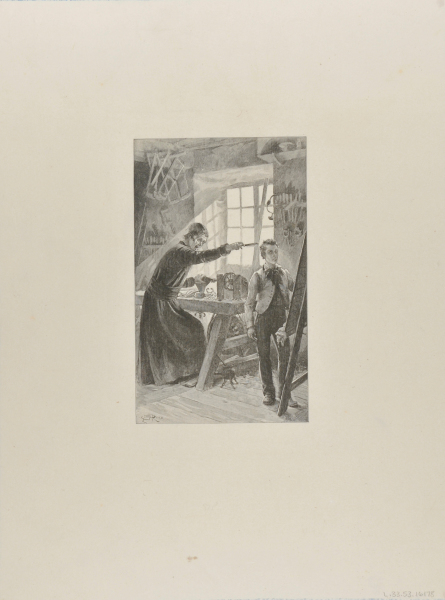
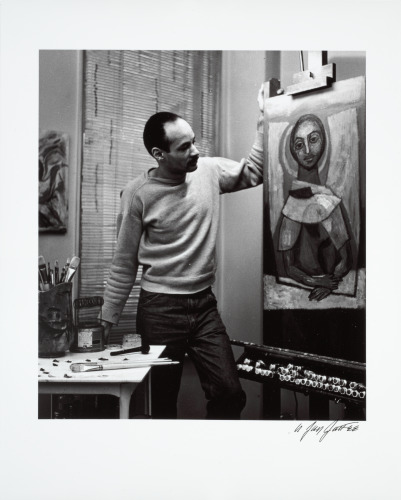
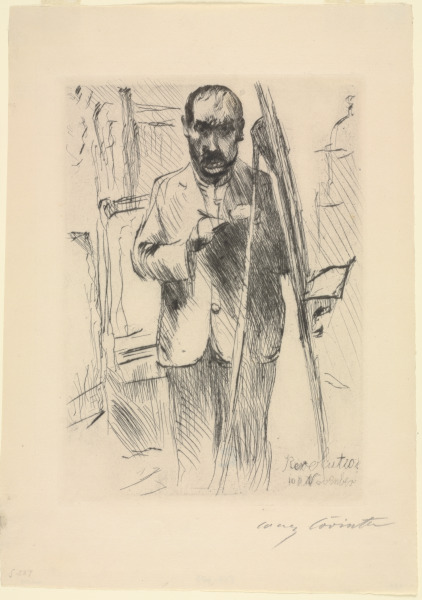
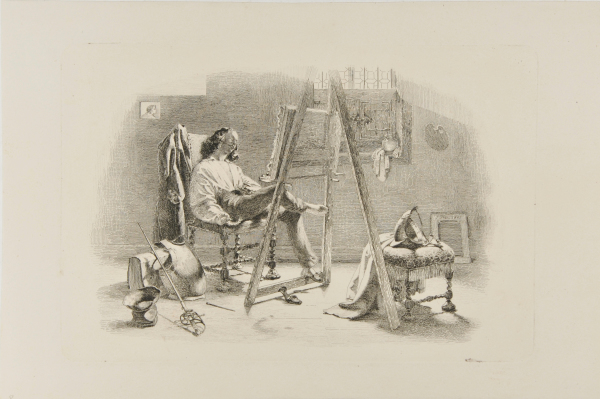
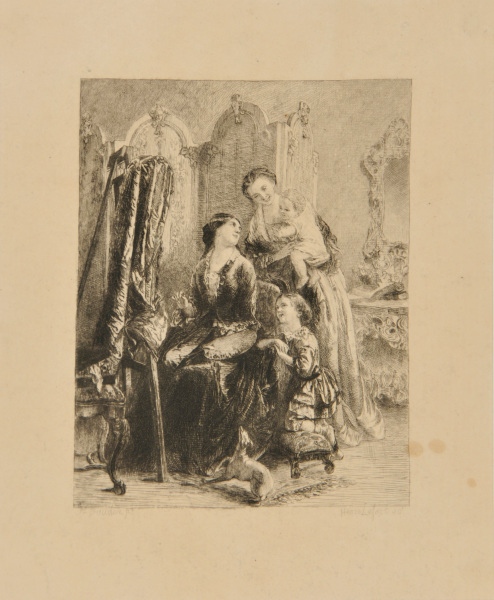
Although the museum's thousands of works on paper would never fit into our beautiful cabinet, the Department of Prints, Drawings and Photographs will exhibit selected works from their extensive holdings on the easel. As works of paper are particularly sensitive to light, they will be rotated from time to time, offering changing glimpses of a deep and comprehensive collection.
The Baltimore Museum of Art by purchase, 2006; Margot Johnson, Inc., New York
AMW Reinstallation 2014
American Wing Rotations 2020
American Wing Rotations 2021
American Wing Rotations 2022
American Wing Rotations 2023
American Wing Rotations 2024
American Wing Rotations 2025
Inscribed: None
Markings: None
 On View at the BMA