André Kertész
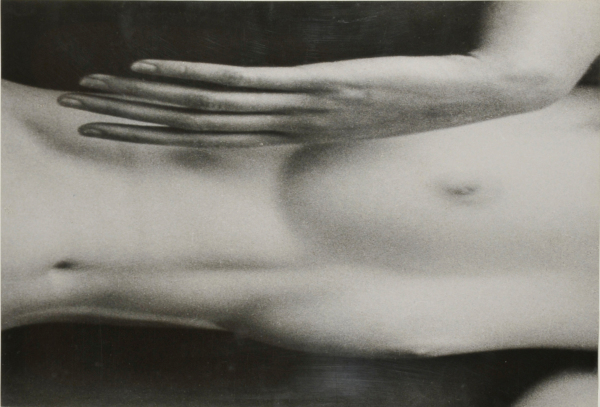
Distortion #6
1932
Scroll
André Kertész
Distortion #6
1932
Physical Qualities
Gelatin silver print, Sheet: 296 x 204 mm. (11 5/8 x 8 1/16 in.)
Image: 296 x 204 mm. (11 5/8 x 8 1/16 in.)
Credit Line
Purchase with exchange funds from the Edward Joseph Gallagher III Memorial Collection; and partial gift of George H. Dalsheimer, Baltimore
Object Number
1988.380
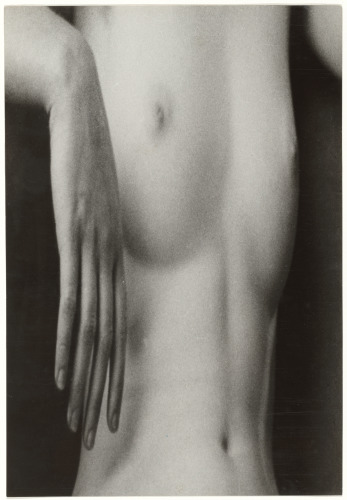
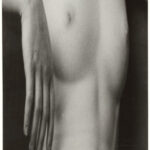
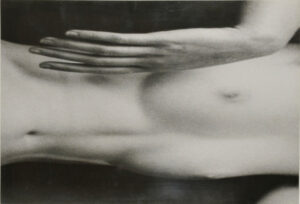
Although André Kertész had experimented with visual distortion in his photographs as early as 1917, it was through a 1933 assignment for the French magazine Le Sourire that he created his most abstract and surreal work. Kertész had proposed posing female nudes in front of fun-house mirrors (which he had discovered a few years earlier at Luna Park in Paris), and over four weeks, he photographed the warped mirror reflections
of two models, trying every possible permutation. The resulting imagery of twisted, deformed, and elongated bodies, many cropped and headless, ranges from the hallucinogenic to the humorous.
The Front Room: Ripple Effect
Looking through the Lens: Photography 1900-1960
Nicholas Ducrot, editor, Distortions: André Kertész, New York: Alfred A. Knopf, 1976, unpaginated, #6 Nicholas Ducrot, editor, André Kertész: Sixty Years of Photography: 1912-1972, New York: Grossman Publishers, 1972, p. 73.
Inscribed: FACE: clean. VERSO: (pencil) u.l. '1933'; u.r. 'SL (V)18'; center 'DISTORTION #6 /(signed in pencil) A. Kertész' UNABLE TO VERIFY INSCRIPTIONS, PHOTO IS MOUNTED. lks 7-8-95