
Jingdezhen kilns
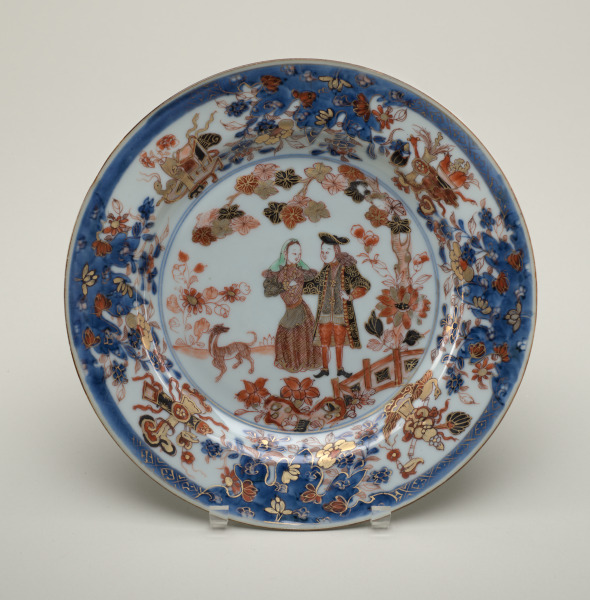
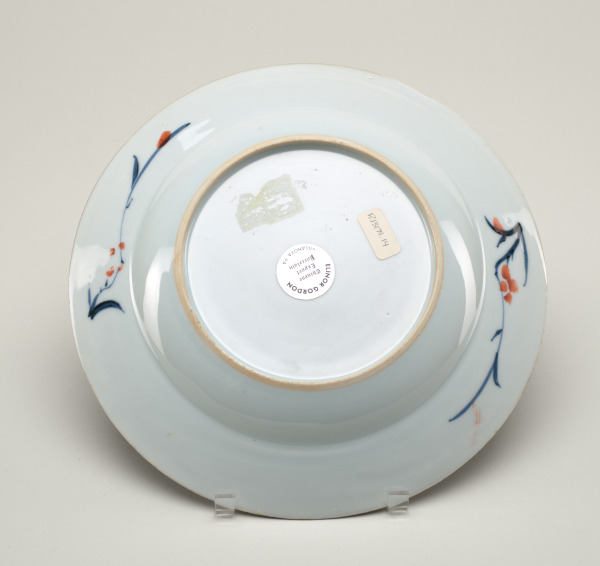
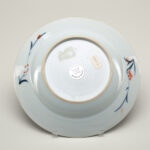
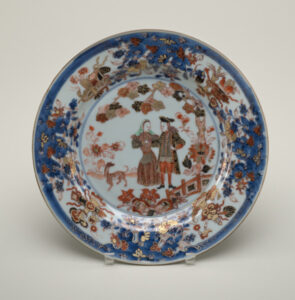
Dutch Market Plate Decorated with a Foreign Couple Walking in a Garden
1719-1729
Scroll
Jingdezhen kilns
Dutch Market Plate Decorated with a Foreign Couple Walking in a Garden
1719-1729
Physical Qualities
Porcelain with underglaze cobalt and overglaze enamel and gold decoration, Each: 9 1/4 in. diam. (23.5 cm.)
Credit Line
Dorothy McIlvain Scott Collection
Object Number
2012.399.4
In the 1500s and 1600s, Chinese, Japanese, and Korean porcelain was coveted by maritime merchants who transported examples to European courts, where porcelain conveyed global knowledge and status. Only Asian workshops knew the recipe for porcelain prior the 18th century. To own works of “true porcelain,” Europeans ordered objects and dinner services, adorned with coats of arms or depictions of Europeans, that had been decorated by women and men in Asian studios. However, even after
Europeans deciphered the formula in the early 1700s, porcelain from Asia was an essential possession for aristocrats who, by this time, were reaping the wealth of global conquest.
B. Luberda, Recasting Colonialism: Michelle Erickson Ceramics Exhibition, May 7 - Oct. 2023
The Baltimore Museum of Art by bequest, 2012; Dorothy McIlvain Scott, Baltimore
Recasting Colonialism: Michelle Erickson Ceramics
Council Tour & Reception, BMA Today, Issue 171, Summer 2023, p. 26
David Howard and John Ayers, "China for the West," London: Sotheby Park Bernet, 1978, no. 127, p. 145, ill.