Embroidered Rumal (Square Amlikar Shawl) with Figures
1829-1849
Scroll
Embroidered Rumal (Square Amlikar Shawl) with Figures
1829-1849
Physical Qualities
Wool ground, silk embroidery threads, 68 x 68 in. (172.7 x 172.7 cm.)
Credit Line
The Cone Collection, formed by Dr. Claribel Cone and Miss Etta Cone of Baltimore, Maryland
Object Number
TNE 3.72
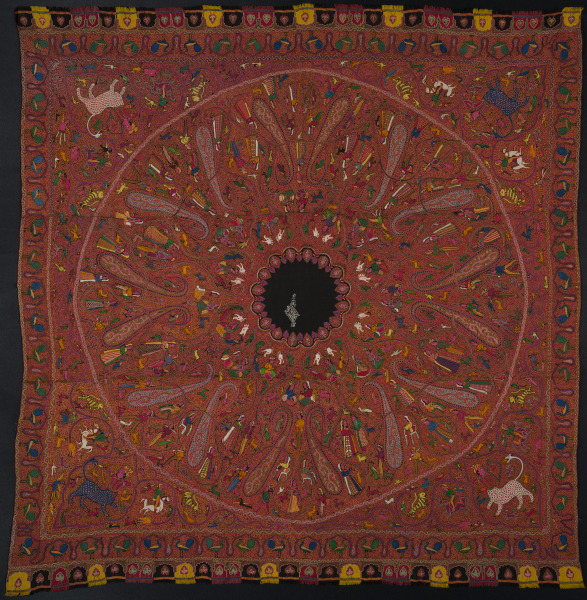
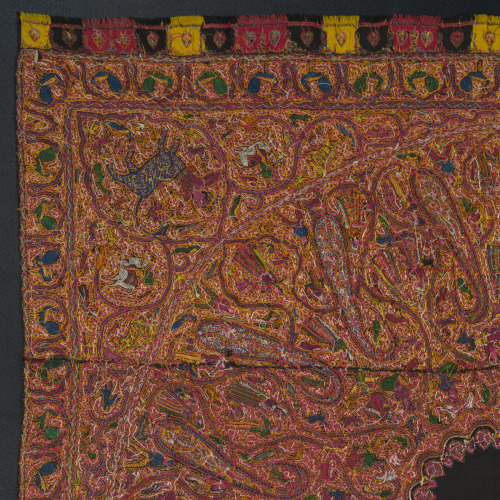
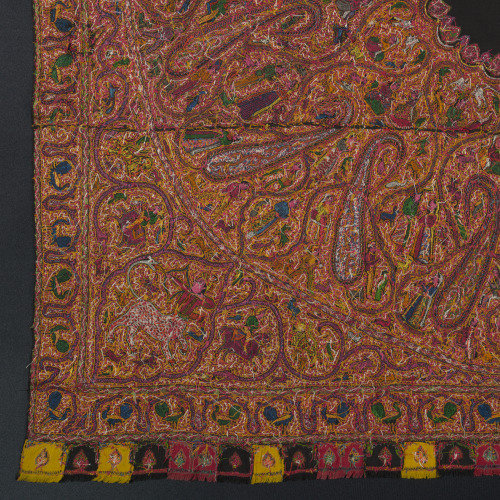
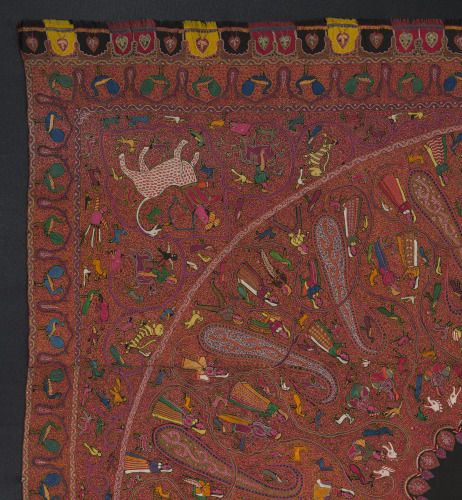
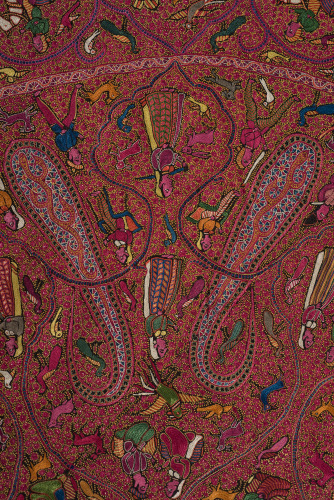
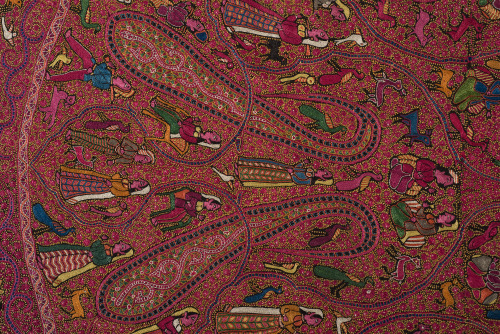
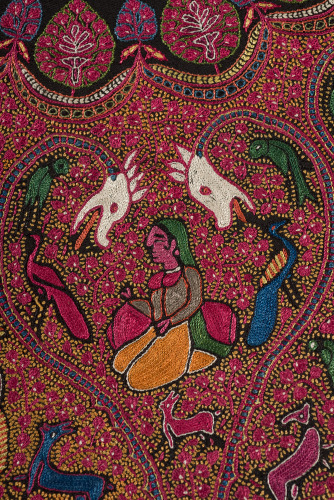
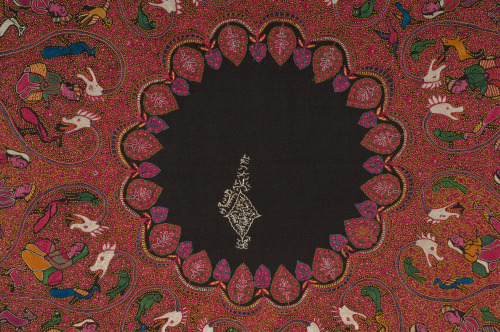
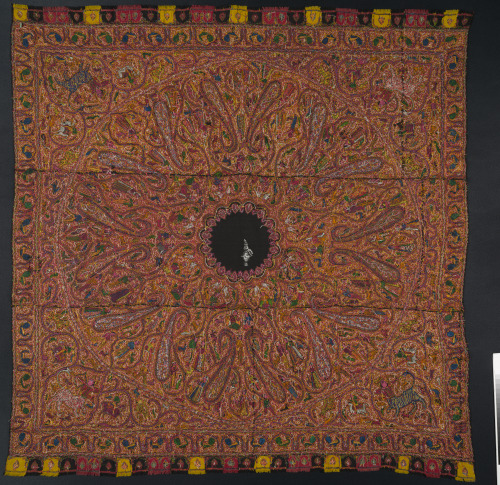
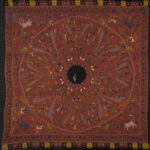
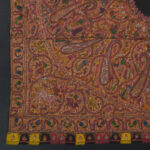
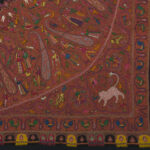
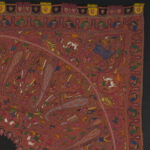
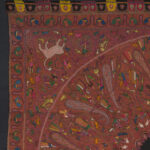
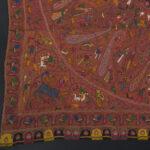
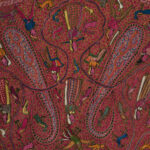
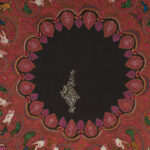
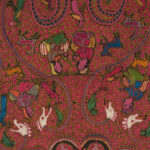
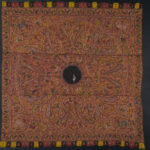
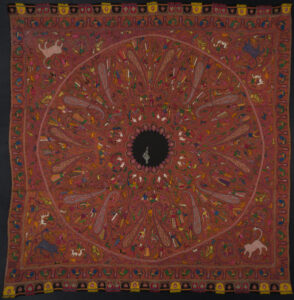
A square shawl or rumal with fine black woolen ground heavily embroidered in multicolored silk threads with figures, animals, floral, and buta designs covering all but a small black circle in the center. Surrounding the center are small largely teardrop shaped floral and/or tree of life designs. A large white embroidered "signature" is worked within the center itself
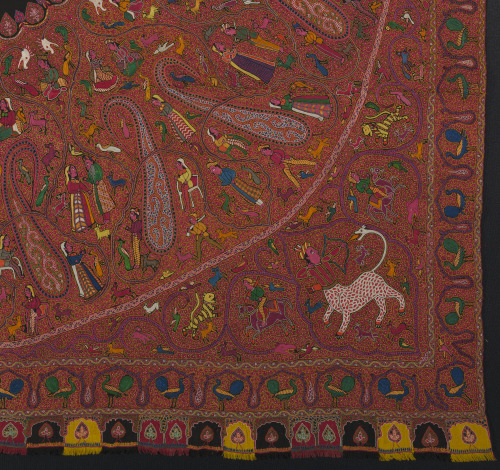
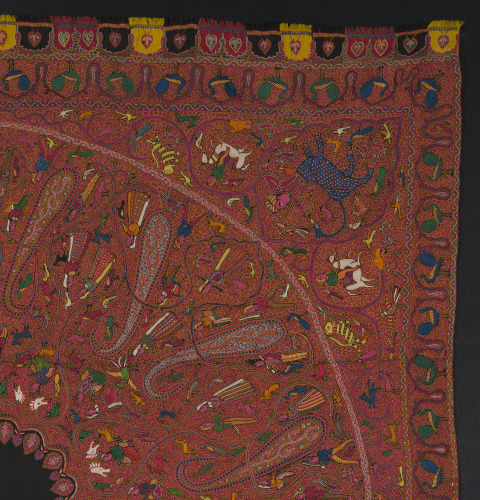
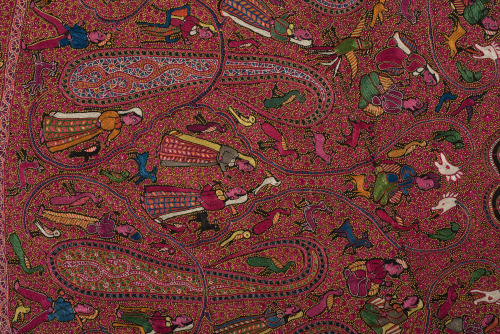
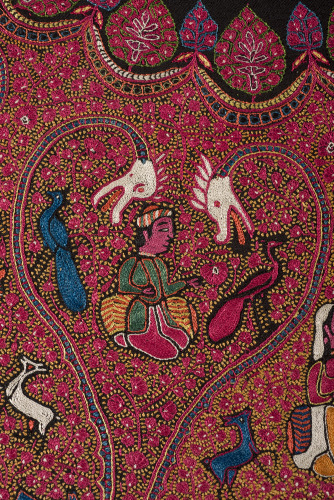
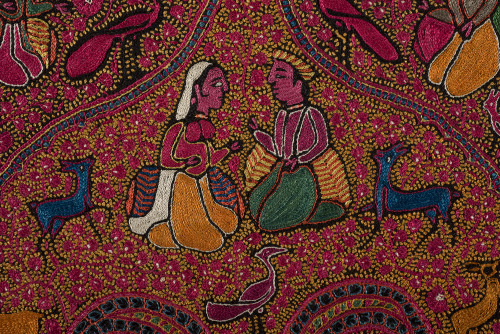
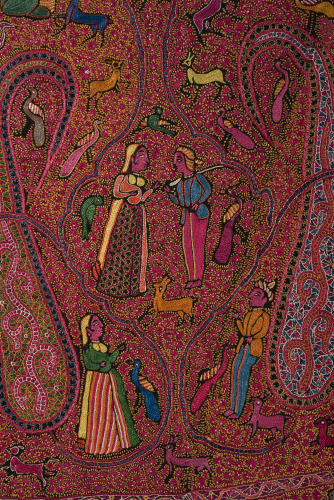
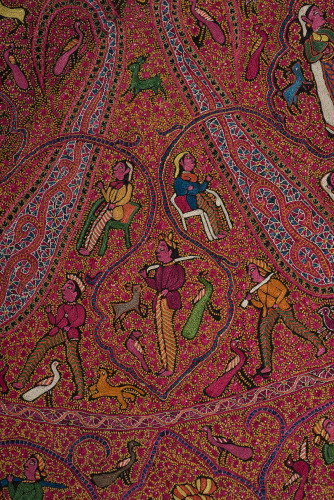
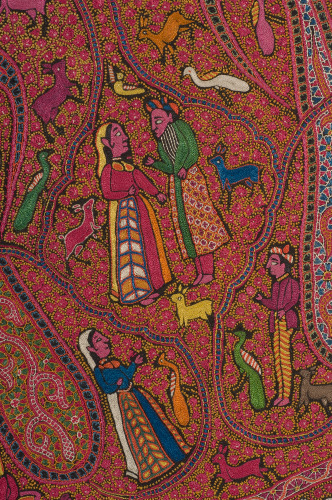
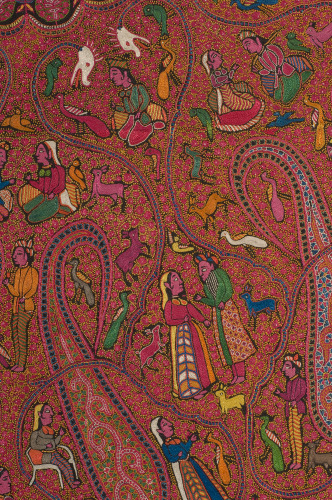
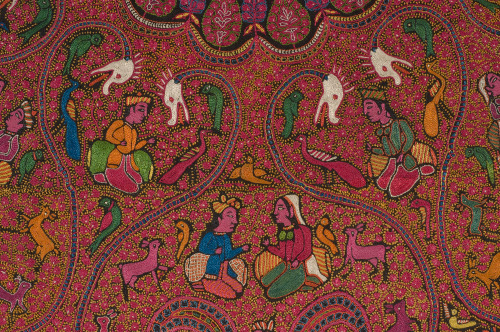
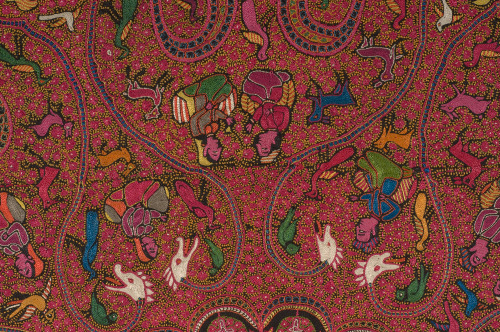
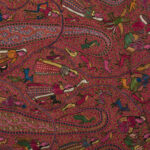
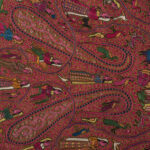
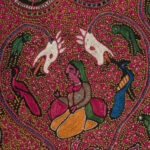
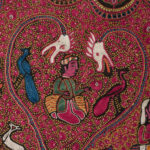
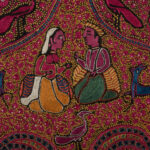
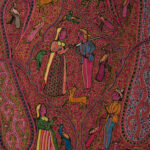
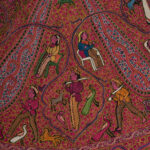
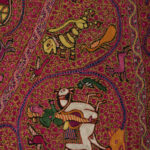
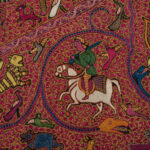
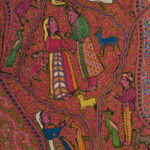
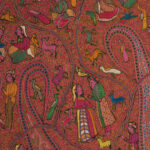
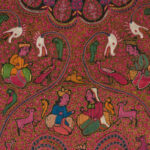
Surrounding the inner circle of designs are complex scenes including people and animals sitting and standing (often singly, but also in pairs in colorful costumes. Large, ornate buta arranged in pairs, often separate one scene from the next. A narrow circular border defines this inner section from the remaining sections of the shawl.
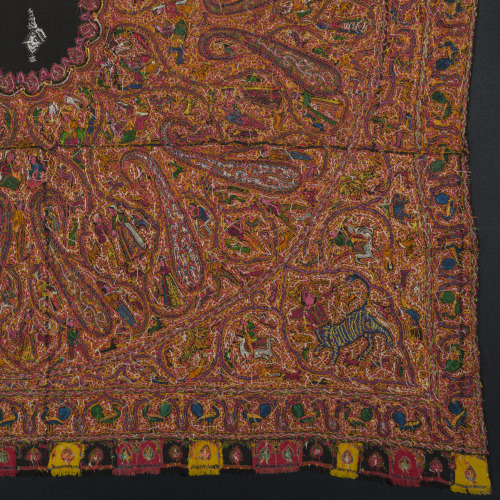
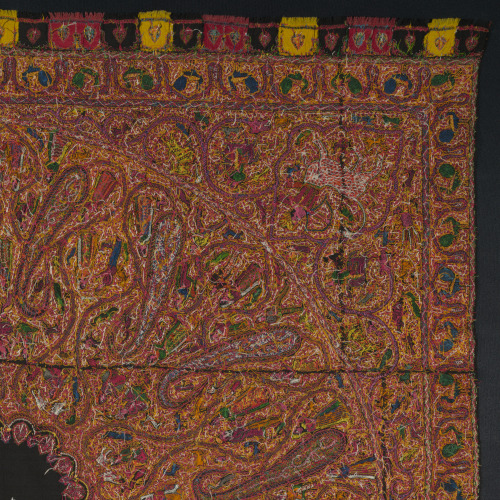
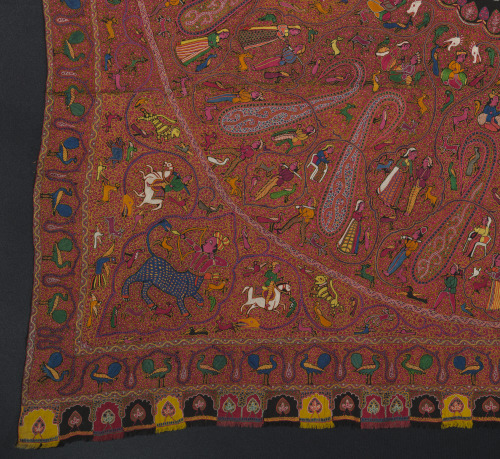
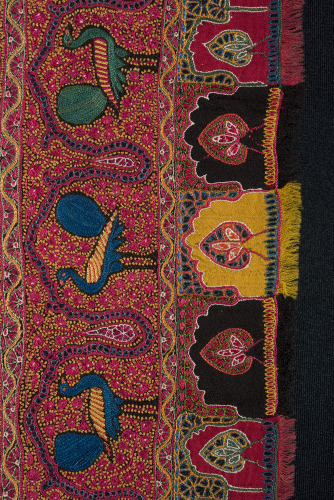
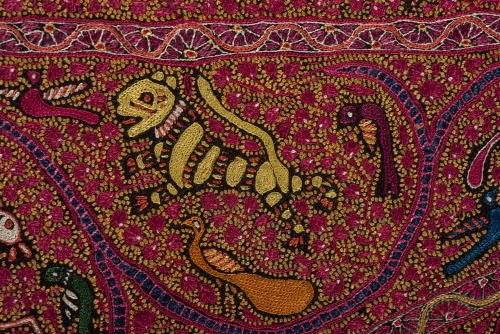
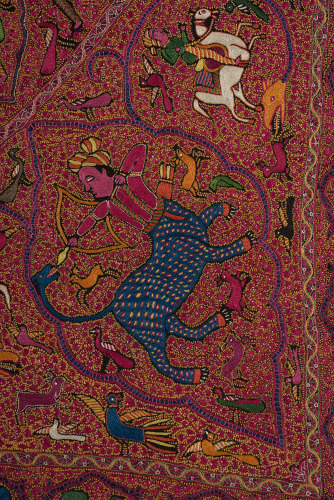
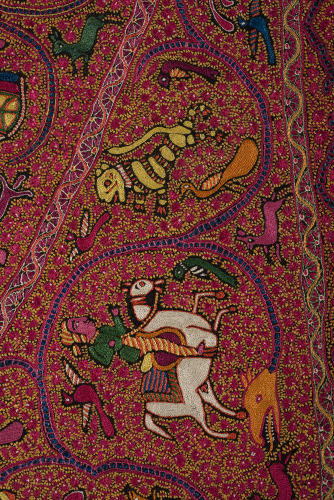
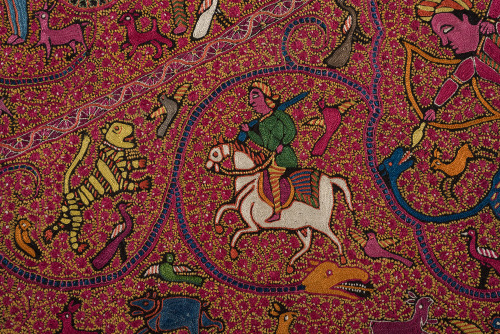
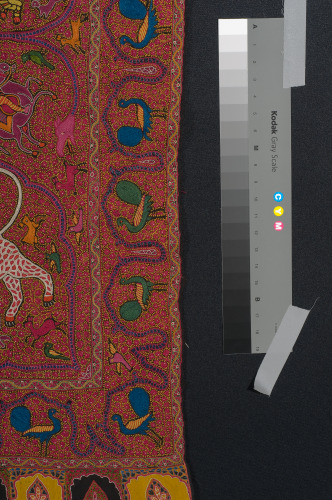
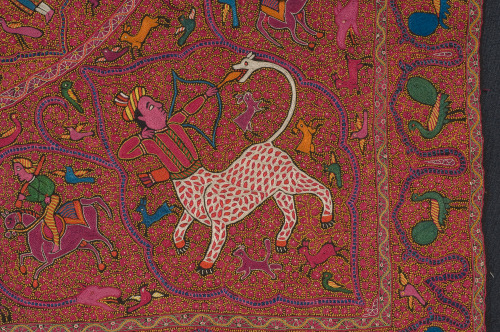
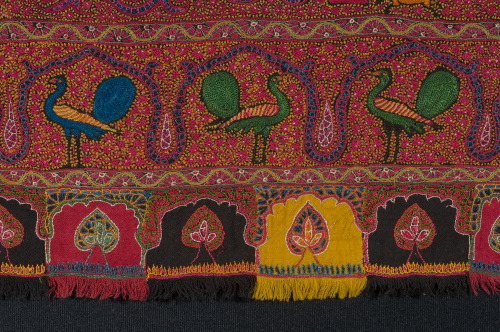
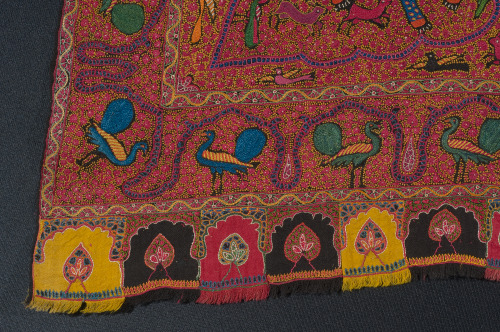
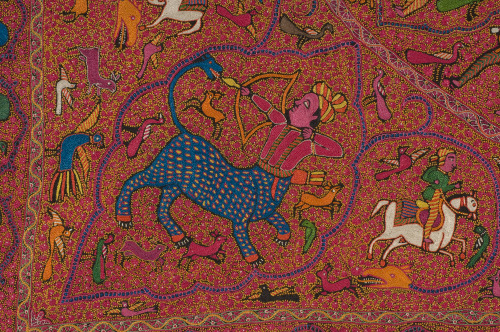
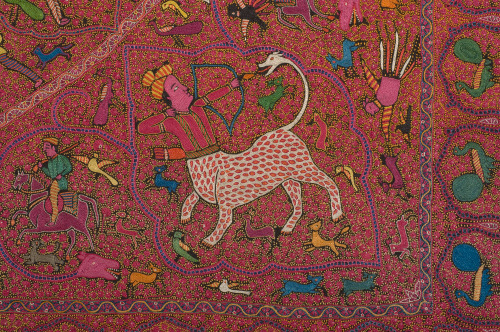
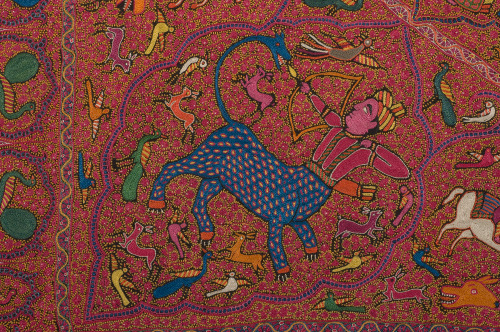
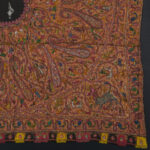
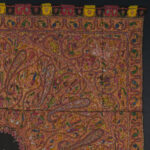
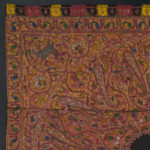
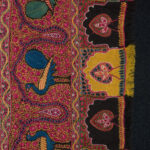
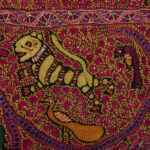
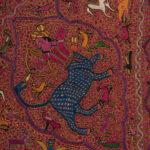
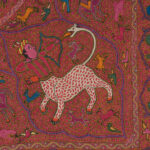
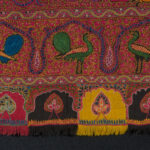
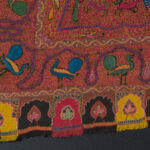
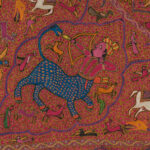
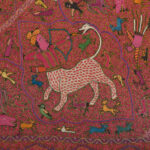
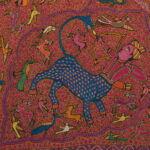
Each corner spandrel is filled with a half-human/half-leopard beast taking aim with bow and arrow at its own snake-headed tail. To the sides of each of these are what might be hunting scenes, including men on horseback, tigers, rabbits, and birds and animals of various types. A narrow ornamental strip separates the spandrels from the inner border surrounding the entire shawl, which consists of colorful peacocks, either blue or green with yellow-gold wings, each standing within a mihrab-shaped arch. The narrow decorative band used before is repeated around all sides. On two edges only, harlequin borders are added, consisting of multicolored square patches, either burgundy, gold, or black, each embroidered with multicolored leaf/tree of life designs.
The shawl is composed of at least three pieces joined and worked almost entirely in chain stitches using multicolored silk threads.
----
Embroidered Indian shawls, which became more prevalent in the second quarter of the nineteenth century, offered the designer freedom to create elaborate artistic patterns, including figural compositions. The subject matter was often taken from Persian literature; however, on this rumal, or square shawl, astronomy was apparently the source for the half-human/half beast creature taking aim with a bow and arrow at its own snake-headed tail. This Islamic representation of the constellation Sagittarius is found in sixteenth-century illustrated versions of immensely popular thirteenth-century treatise Wonders of Creation by physician, astronomer, geographer, and author Zakariya al-Qazwini (1203-1283). Both the figures and the multicolored floral background are almost entirely composed of delicate chain stitches, painstakingly worked in lustrous silk threads.
-The Baltimore Museum of Art: Celebrating a Museum. Baltimore, MD: The Baltimore Museum of Art, 2014.
The Baltimore Museum of Art by gift, Etta Cone.
Andre, Linda, and Jessica Skwire Routhier, eds. The Baltimore Museum of Art: Celebrating A Museum. Baltimore, Maryland: Baltimore Museum of Art, 2014, p.122, ill. p. 123
Ames, Frank.
Inscribed: Inscription embroidered in white in unknown language within center of shawl.