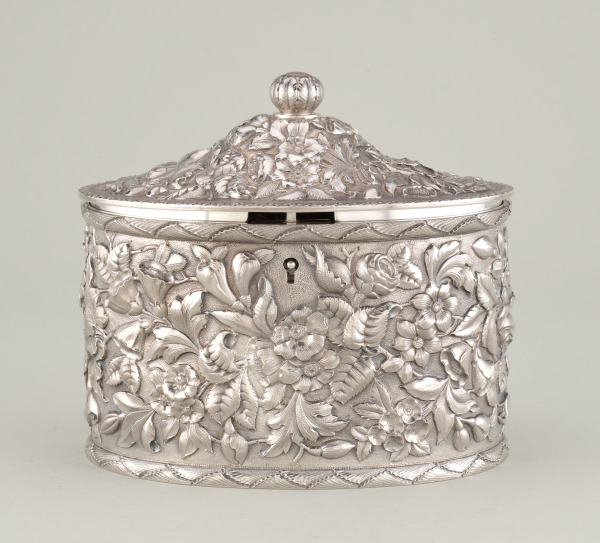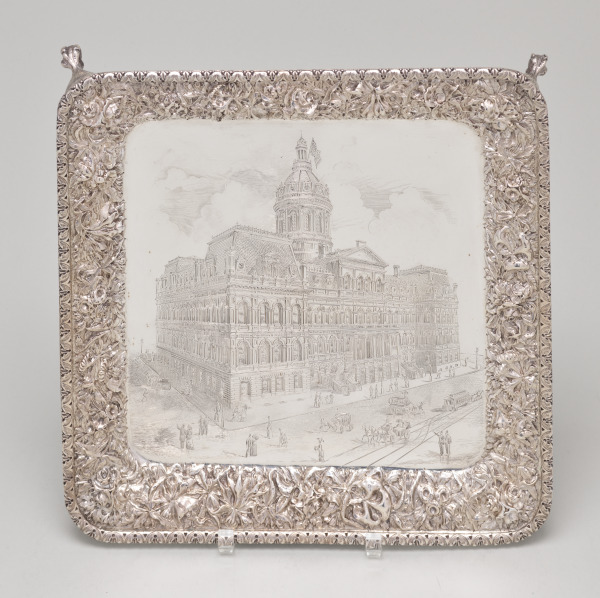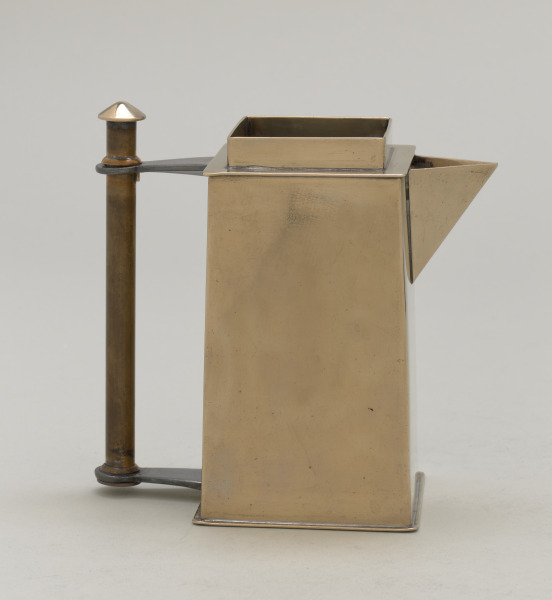

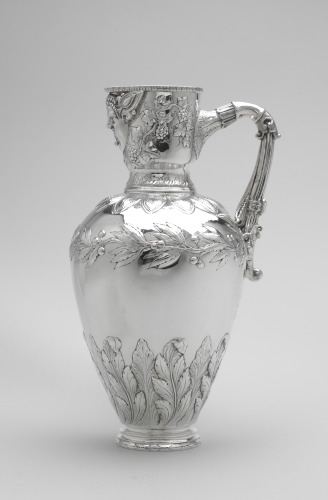
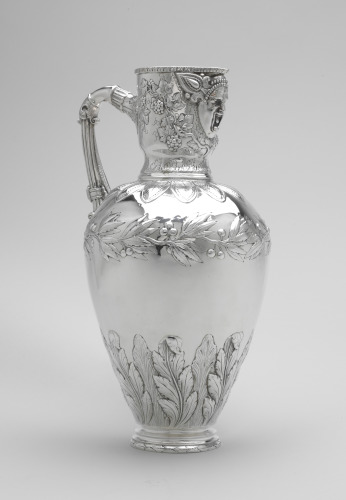
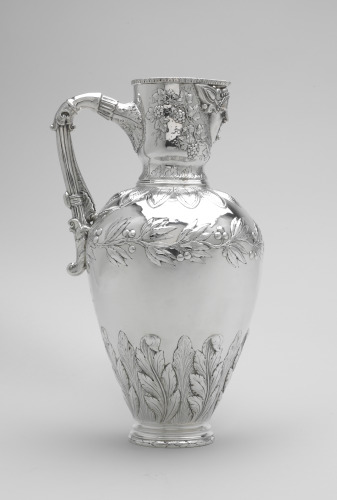
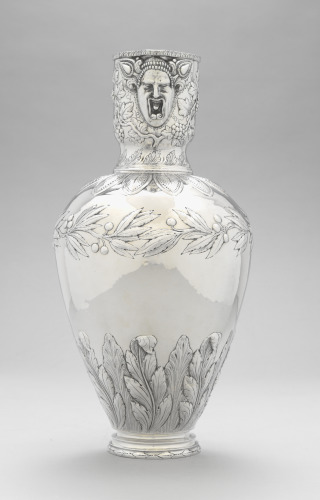
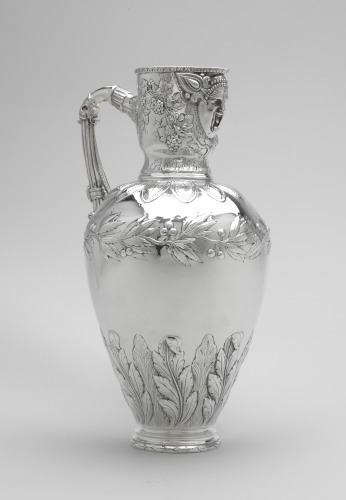
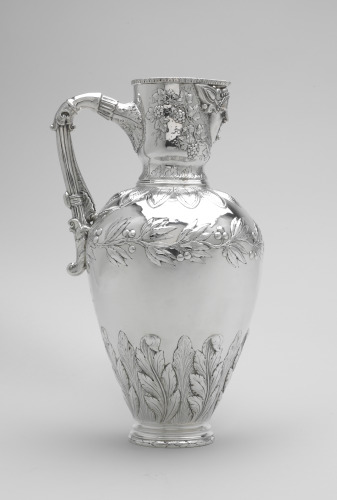
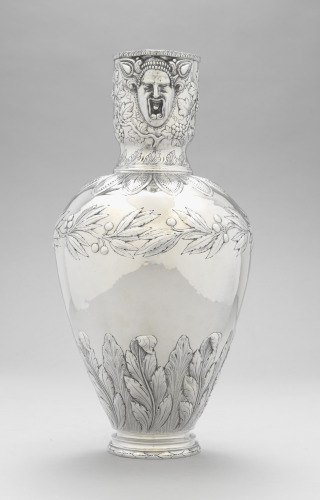
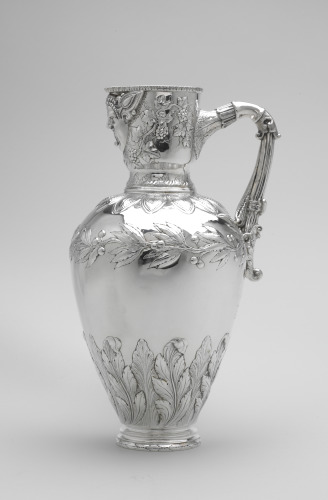
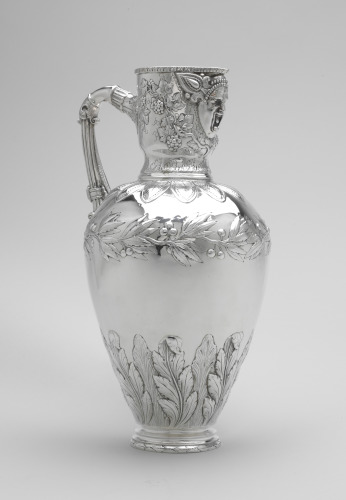
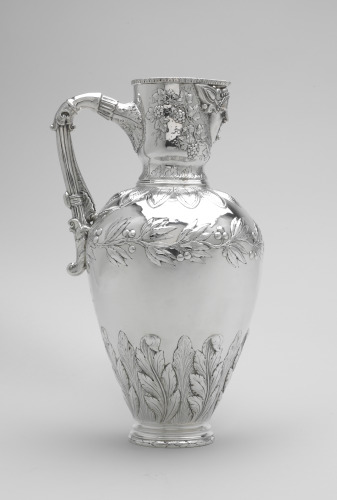
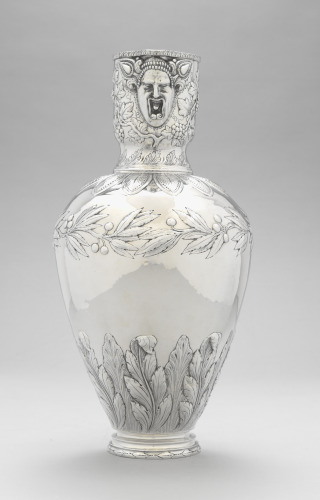
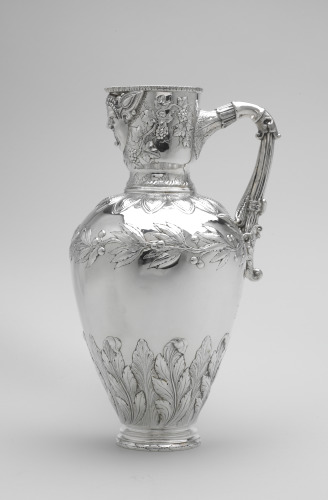
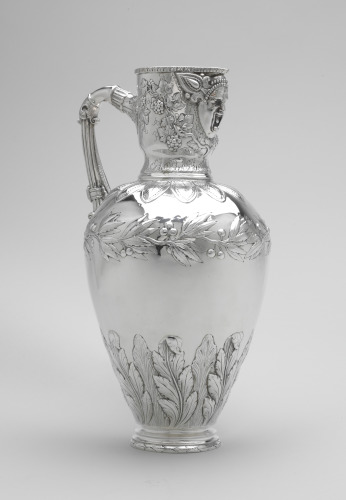
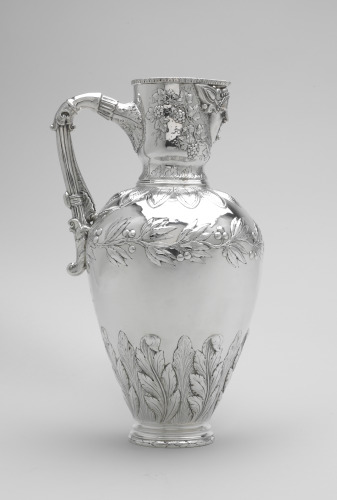
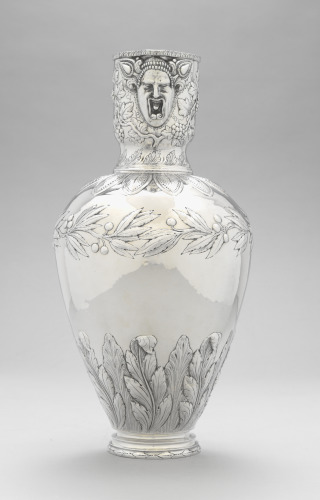
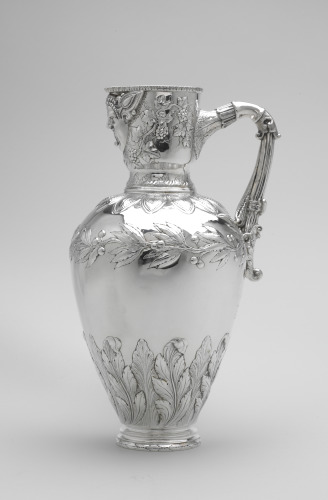
Samuel Kirk & Son
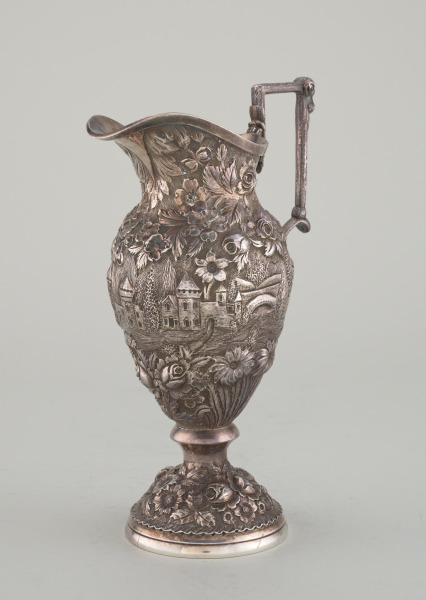
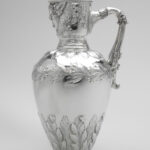
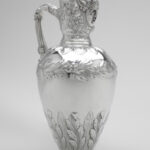
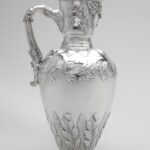
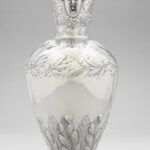
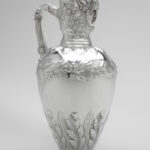
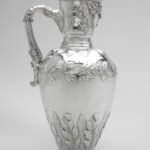
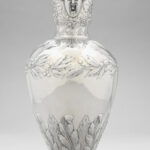
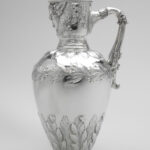
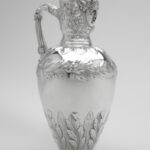
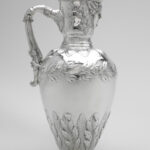
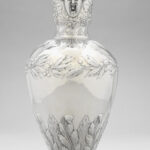
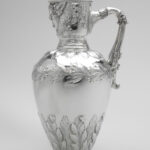
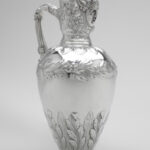
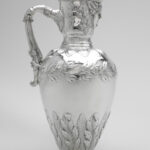
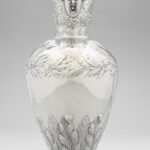
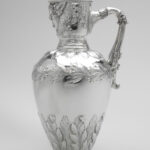
Ewer or Pitcher
1845-1860
Scroll
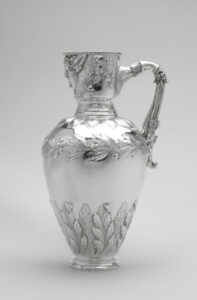
Samuel Kirk & Son
Ewer or Pitcher
1845-1860
Physical Qualities
Silver, 13 x 7 1/2 x 6 1/4 in. (33 x 19.1 x 15.9 cm.)
Credit Line
Purchased as the gift of Sadie B. Feldman, Baltimore, in Memory of her Sister and Brother, Rossetta A. and Samson Feldman
Object Number
1995.25
Large silver pitchers became popular in America during the 19th-century when interest in classical art and archeology stimulated demand for neoclassical design. Each of these ewers, tall vessels for pouring water or wine, is based on an ancient classical form. The magnificent example, given by Philadelphia merchant banker James Cowles Fisher to his grandson Samuel Fox Fisher (1819 – 1886), features animal paw feet, a serpent handle encircling a dog’s head thumb piece, a dolphin finial, and borders inspired by architectural ornament. Fisher’s home, Sedgeley Park, was the first private residence designed by B. H. Latrobe.
AMW Reinstallation 2014
American Wing Rotations 2020
American Wing Rotations 2021
American Wing Rotations 2022
American Wing Rotations 2023
American Wing Rotations 2024
American Wing Rotations 2025
Evans, George Greenlief. "Illustrated history of the United States mint." Philadelphia: 1889, p. 69.
DONATION OF OLD COINS.
Extract from the American Journal of Numismatics, April, 1884.
Under the head of donations, we have from Quartermaster General Meigs, a half-dollar and pistareen of Carolus and Johana of Spain. These pieces were presented to General Meigs at Corpus Christi, Texas, in 1870. The special interest attached to them, is their having been found on the beach of Padre Island, off the southerly coast of Texas. The supposition is that they were washed up from a sunken treasure ship wrecked on the coast, while carrying funds to the Army of Cortez, who entered the City of Mexico in 1519. Their good condition may warrant our accepting this briny romance Cum grano salis. Antiquarian stories must expect to stand the test of the chemist, as well as of the historian. This reminds me, however, of some specimens of the Mint Cabinet, from the wreck of San Pedro, some account of which may not be uninteresting here. “Early in 1815, a naval armament was fitted out in Spain, by Ferdinand VII., for the purpose of reducing the Rebellious Colonies in South America. The military force of this expedition amounted to ten thousand men, of whom two thousand were on board the flag ship “San Pedro.” The vessel was also freighted to a large amount with gunpowder, cannon balls, and specie.”
The account then goes on to state that the fleet touched at the Island of Marguerita near the coast of Venezuela. After leaving the island, the vessel took fire, burnt four hours until the magazine caught and exploded, and the wreck went down with four hundred men. The right of working the wreck, was granted about thirty years after, to a Baltimore Company, known as the “San Pedro Company.” Divers were set to work, and the wreck was found in sixty feet of water on a hard bed of coral. Over this there was a deposit of mud, and again over this a layer of coral, which had to be pierced to arrive at the treasure.
The Spanish dollars recovered were sent to Philadelphia, and (up to September, 1848) about seventy-five thousand dollars had been recovered and re-coined. The dollars were much corroded and encrusted, the coating having first to be removed, to bring the pieces into fit condition for minting; the loss from corrosion was considerable; one dollar with the impression still visible, being reduced to thirty-four cents in value. In the light of these and other facts, it is difficult to conceive how the pieces found in Texas, could have come so clean from their reputed berth, of over three hundred years, but they are worth keeping for all that, and General Meigs has the thanks of the Republic for them.
DONATION OF OLD COINS.
Extract from the American Journal of Numismatics, April, 1884.
Under the head of donations, we have from Quartermaster General Meigs, a half-dollar and pistareen of Carolus and Johana of Spain. These pieces were presented to General Meigs at Corpus Christi, Texas, in 1870. The special interest attached to them, is their having been found on the beach of Padre Island, off the southerly coast of Texas. The supposition is that they were washed up from a sunken treasure ship wrecked on the coast, while carrying funds to the Army of Cortez, who entered the City of Mexico in 1519. Their good condition may warrant our accepting this briny romance Cum grano salis. Antiquarian stories must expect to stand the test of the chemist, as well as of the historian. This reminds me, however, of some specimens of the Mint Cabinet, from the wreck of San Pedro, some account of which may not be uninteresting here. “Early in 1815, a naval armament was fitted out in Spain, by Ferdinand VII., for the purpose of reducing the Rebellious Colonies in South America. The military force of this expedition amounted to ten thousand men, of whom two thousand were on board the flag ship “San Pedro.” The vessel was also freighted to a large amount with gunpowder, cannon balls, and specie.”
The account then goes on to state that the fleet touched at the Island of Marguerita near the coast of Venezuela. After leaving the island, the vessel took fire, burnt four hours until the magazine caught and exploded, and the wreck went down with four hundred men. The right of working the wreck, was granted about thirty years after, to a Baltimore Company, known as the “San Pedro Company.” Divers were set to work, and the wreck was found in sixty feet of water on a hard bed of coral. Over this there was a deposit of mud, and again over this a layer of coral, which had to be pierced to arrive at the treasure.
The Spanish dollars recovered were sent to Philadelphia, and (up to September, 1848) about seventy-five thousand dollars had been recovered and re-coined. The dollars were much corroded and encrusted, the coating having first to be removed, to bring the pieces into fit condition for minting; the loss from corrosion was considerable; one dollar with the impression still visible, being reduced to thirty-four cents in value. In the light of these and other facts, it is difficult to conceive how the pieces found in Texas, could have come so clean from their reputed berth, of over three hundred years, but they are worth keeping for all that, and General Meigs has the thanks of the Republic for them.
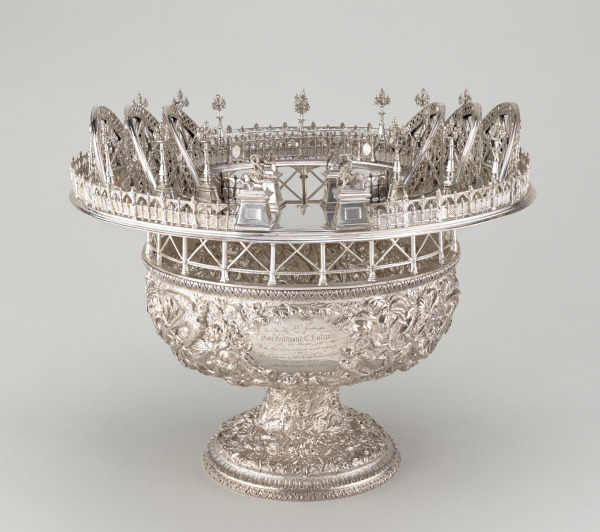
Inscribed: Inscribed: To Lewis Howell/from/the San Pedro Company of Baltimore./A tribute of respect for his fidelity and/skill in recovering the treasure of the Ship of/War 'The San Pedro d'Alcantra' lost May, 1815./-1846
Markings: Maker's Stamp: "S. KIRK & SON" in box / "11 oz" in box
 On View at the BMA