Lobi
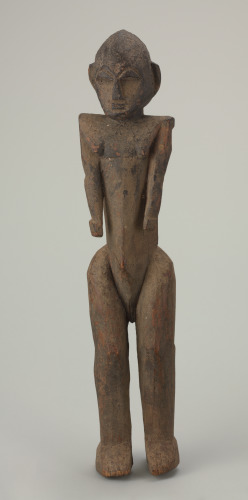
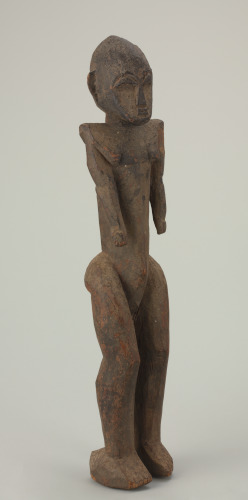
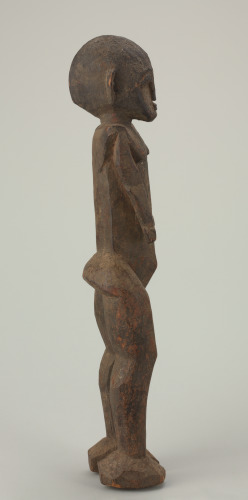
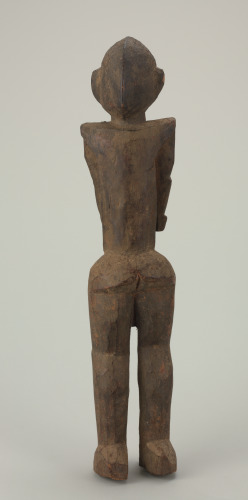
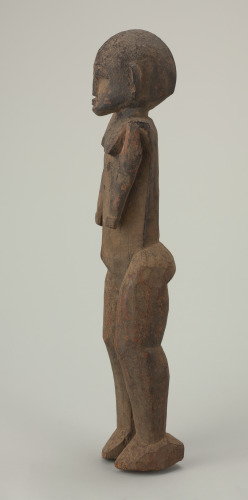
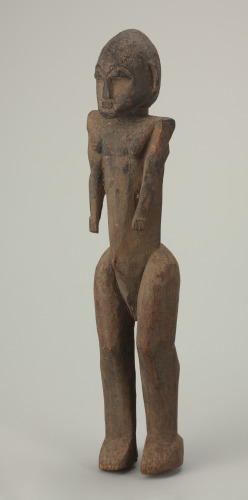
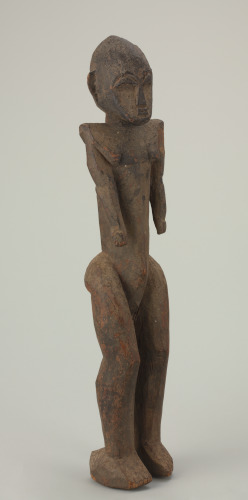
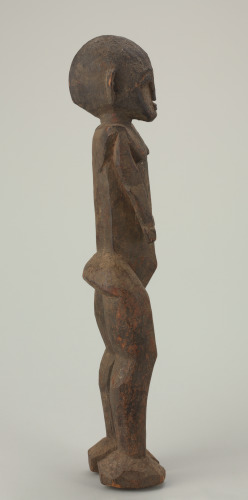
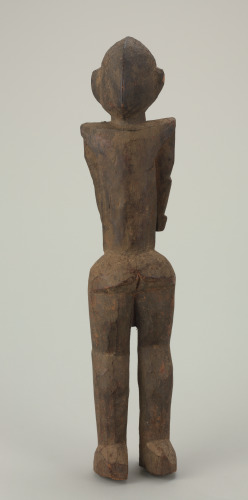
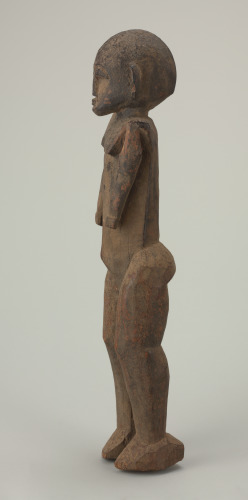
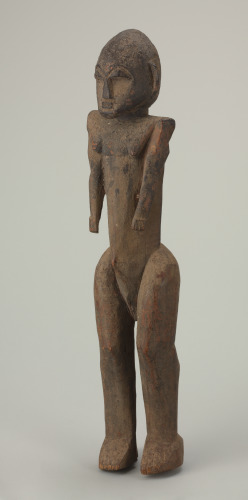
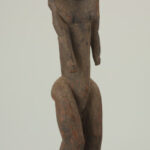
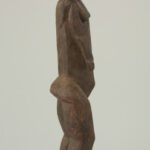
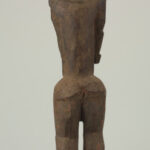
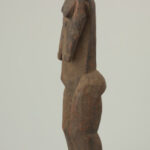
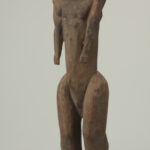
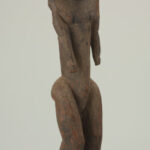
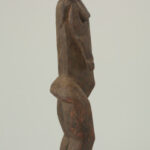
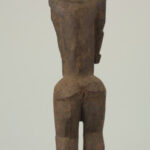
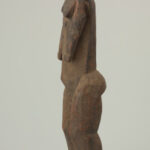
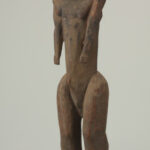
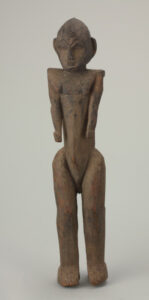
Female Ancestor Figure (Bateba Phuwe)
Lobi and other group identifications, 1900-1932
Scroll
Lobi
Female Ancestor Figure (Bateba Phuwe)
Lobi and other group identifications, 1900-1932
Physical Qualities
Wood, 23 1/2 in. (59.7 cm.)
Credit Line
Gift of Robert and Mary Cumming, Baltimore
Object Number
1983.66
Lobi artists rely on divine inspiration. When facing illness, stress, or unusual encounters with nature, a person might consult a diviner to connect with a spirit that would dictate the kind of sculpture it would like as an offering. This particular artist interpreted the spiritual guidance to create an evocative figure with high hips, tense shoulders, and shortened arms held tight to the body. The person seeking divine assistance then placed this female figure in a family or village shrine. Once the problem was solved, the sculpture would no longer have been needed and would have been left to decay or sold to a trader. This figure’s presence at the BMA suggests that a prayer was answered.
Field photo:
Photograph: P. Meyer, Kunst und Religion der Lobi, 1981
Purchased from Issaka Zango, New York; ex J.J. Klejmann Gallery, New York
African Reinstallation
Frederick John Lamp, "See the Music Hear the Dance: Rethinking African Art at the Baltimore Museum of Art." New York: Prestel, 2003, p.159,ill.
Piet Meyer, 'Kunst und Religion der Lobi' (Museum Reitberg, Zurich), 1981.