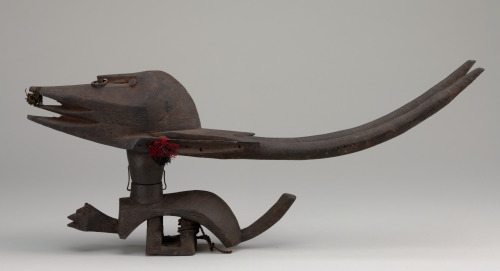
Unidentified and Bamana
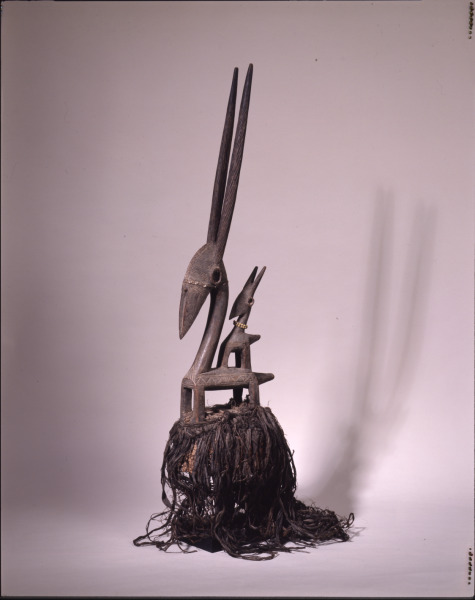
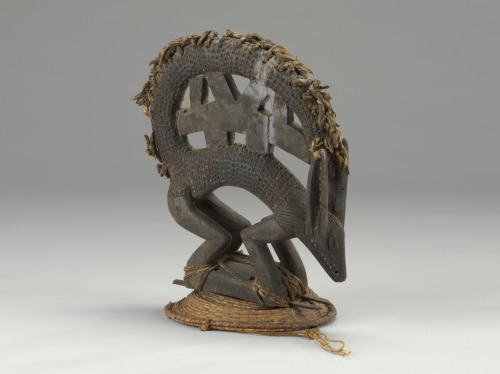
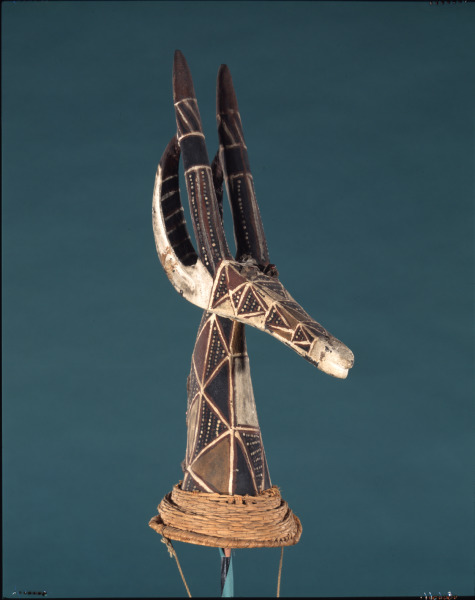
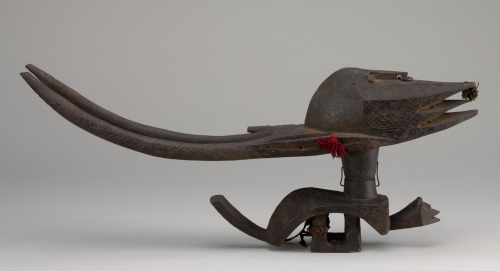
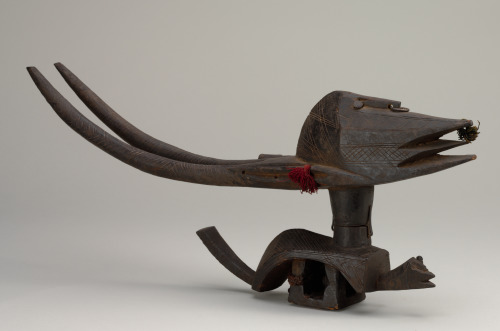
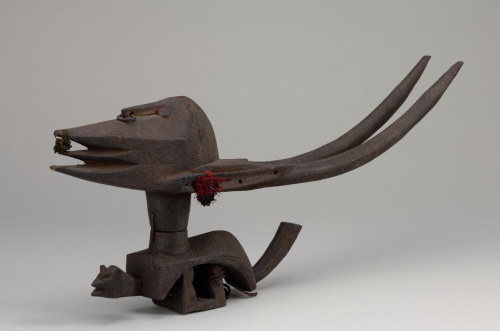
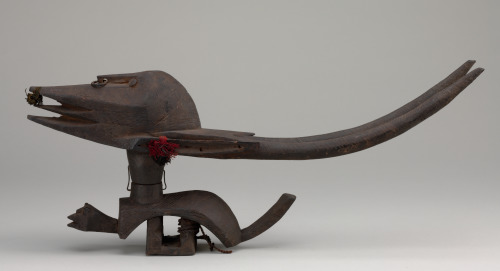
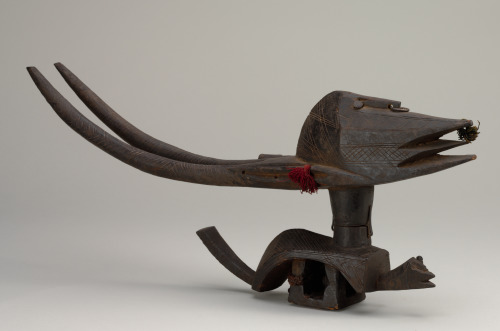
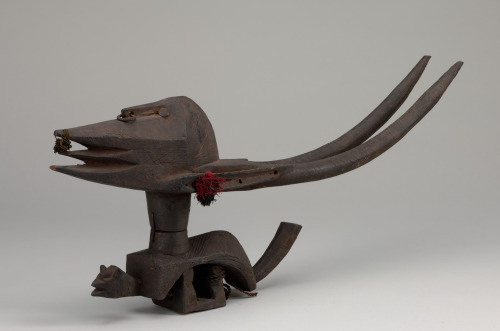
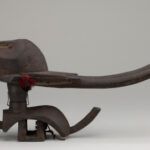
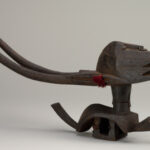
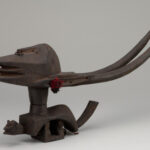
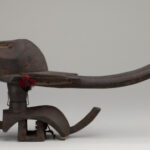
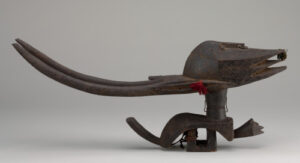
Female Antelope Headdress (N’Gonzon Koun)
Bamana, 1900-1932
Scroll
Physical Qualities
Wood, fiber, iron, aluminum, paint, 9 13/16 × 23 3/4 × 3 1/2 in. (24.9 × 60.3 × 8.9 cm.)
Credit Line
Gift of Alan Wurtzburger
Object Number
1954.145.1
In Bamana oral histories, the mythical ancestor Ci Wara - half man, half antelope - introduced agriculture to the men and women of southwestern Mali. This headdress, marked as female by iron jewelry, would have danced alongside a male counterpart. They were worn at festivals to encourage and praise farmers' efforts in the fields.
Several details make the connection between the mask and the earth. Surface decoration of layered chevrons on the mask's face and horns and the zig-zag pattern of the legs may refer to the sun's radiance needed for a successful harvest. When in use, the pair dances while pawing and digging into the earth, much like the farmers they are meant to inspire.
African Gallery Rotations 2021
African Gallery Rotations 2022
African Gallery Rotations 2023
African Wing Rotations 2024
African Wing Rotations 2025
Frederick John Lamp, "See the Music Hear the Dance: Rethinking African Art at the Baltimore Museum of Art." New York: Prestel, 2003, p.169, ill.
Wooten, Stephen R. "Antelope Headdresses and Champion Farmers: Negotiating Meaning and Identity through the Bamana Ciwara Complex." African Arts, Vol. 33, No. 2 (Summer 2000): pp. 19-90, illus p. 24.
Siegel, Katy. "Odyssey: Jack Whitten Sculpture," 1963-2017. New York: Gregory R. Miller & Co., 2018, p. 42, ill.
Artist
Unidentified
2000-01-01 00:00:00–2000-01-01 00:00:00
 On View at the BMA