
Lobi
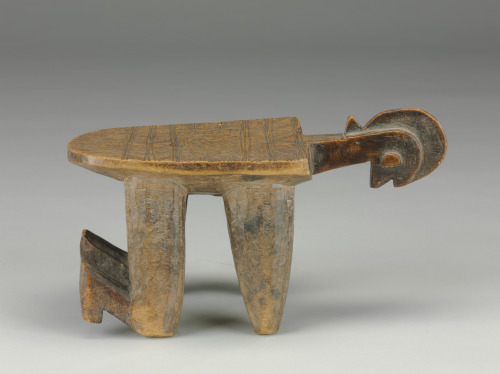
Female Figure
Lobi, 1900-1966
Scroll

Lobi
Female Figure
Lobi, 1900-1966
Physical Qualities
Wood, 22.2 H x 4.5 W x 6 D cm.
Credit Line
Gift of Martin Huppert, Arlington, Virginia
Object Number
2000.442
At some time in the past, each of these stamps served to transfer thick, black dye onto the adinkra textiles worn by Asante at funerals and times of mourning. Characterized by bold and intricate patterns, adinkra cloth is typically arranged in a grid-like formation. Stamps are used to fill each open section with visually and conceptually complex patterns. While the primary purpose of carving the delicate stamps from the fragile shell of a gourd was to produce a work of textile art, the stamps can also be viewed as compelling sculptural forms in their own right.
In isolation or complex interaction, the patterns on the stamps refer to specific proverbial knowledge. Two abstract crocodiles sharing one stomach refer symbolically to democracy and the profound importance of unity in diversity. Four radiating leaves signify an upright spirit and good fortune, while a radiating target pattern proclaims greatness, prudence, and magnanimity.