Bogunjoko Fakeye and Yorùbá
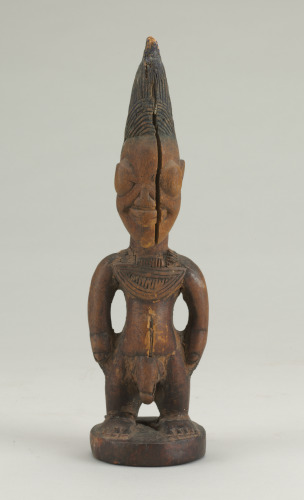
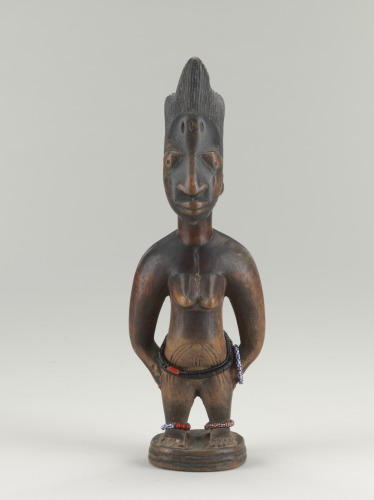
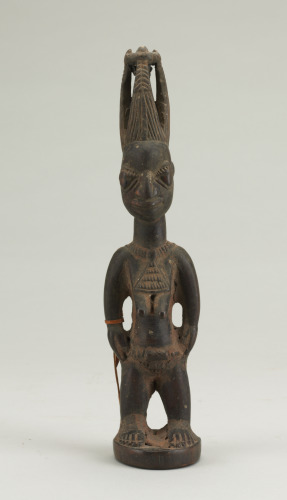
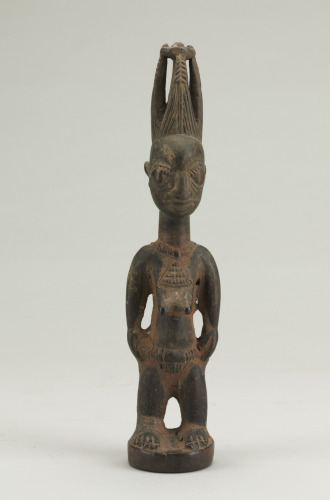
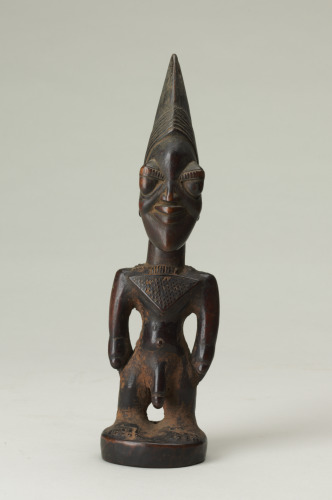
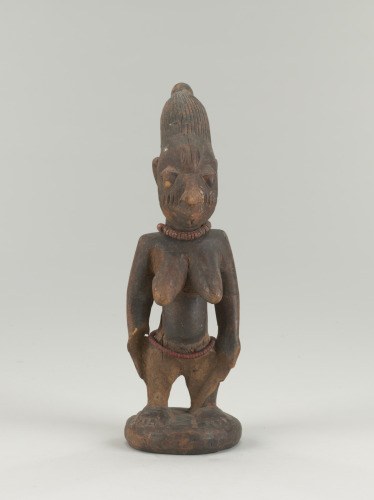
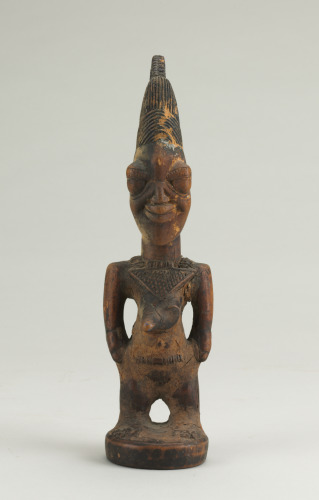
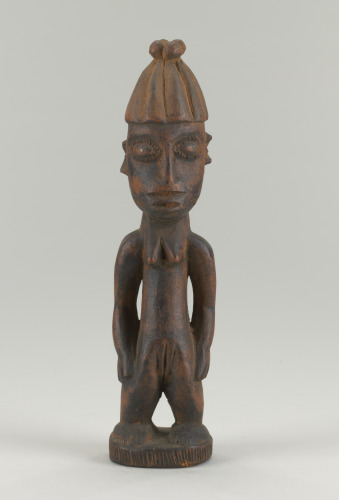
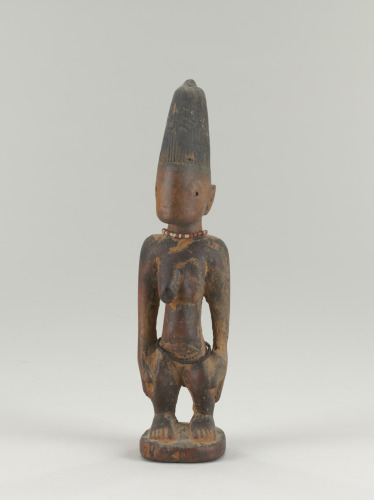
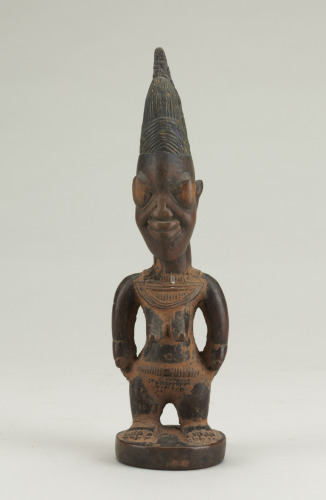
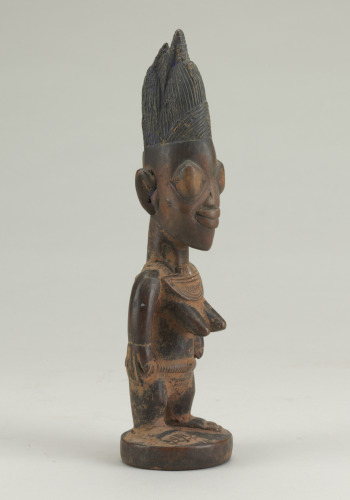
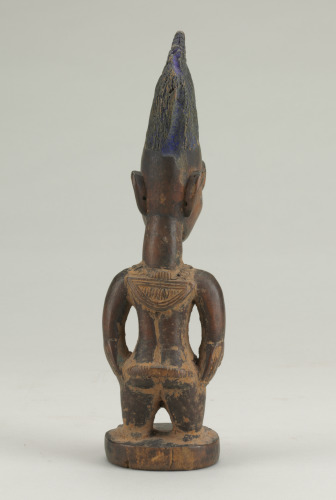
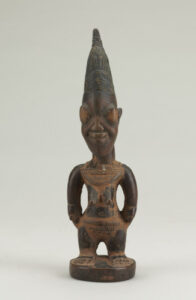
Female Twin Figure (Ibeji)
Yoruba, 1900-1932
Scroll
Physical Qualities
Wood, Rickett's laundry bluing, encrustation, 11 1/4 in. (28.5 cm.)
Credit Line
Gift of Nance Asher, Denton, Maryland
Object Number
1988.65.2
The voluminous, crested hairstyle of these two Ibeji (twin figures) symbolizes status and beauty in the Yorùbá region of southwestern Nigeria. In the past, men and women believed that the head (orí) was lord of the body and the seat of personality. Olódùmarè, the supreme god in Yorùbá religion, was thought to breathe life into each person through their head. As a result, much attention was paid to dressing the head and making
it appear larger. Whitten was fascinated by this crest form, which is found throughout west African figurative sculpture. Its presence inspired the blade forms that appear throughout his work.
Frederick John Lamp, "See the Music Hear the Dance: Rethinking African Art at the Baltimore Museum of Art." New York: Prestel, 2003, p.262,ill.
Thompson, Robert F., "Black gods and kings: Yoruba art at UCLA," Bloomington: Indiana University Press, 1976, c1971, ch. 3&13.
Galerie Koller Zürich. "Afrikanische Kunst," June 25, 2005. (Cat. 67)
Galerie Koller Zürich. "Afrikanische Kunst," June 25, 2005. (Cat. 67)