Chokwe
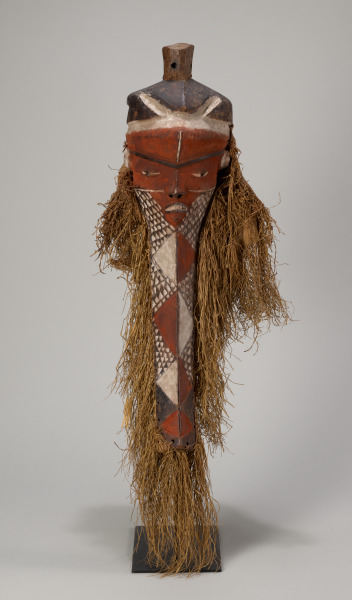
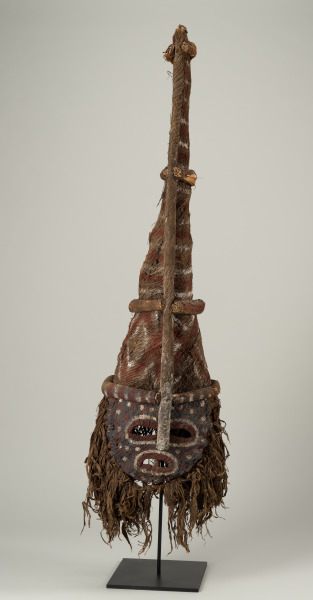
Fiber Mask (Chikunza)
1849-1879
Scroll
Chokwe
Fiber Mask (Chikunza)
1849-1879
Physical Qualities
Bark cloth, wood, raffia fiber, pigment, 57 × 16 1/2 × 13 1/2 in. (144.8 × 41.9 × 34.3 cm.)
Credit Line
Gift of Asif Shaikh, Charlotte, North Carolina
Object Number
2020.45
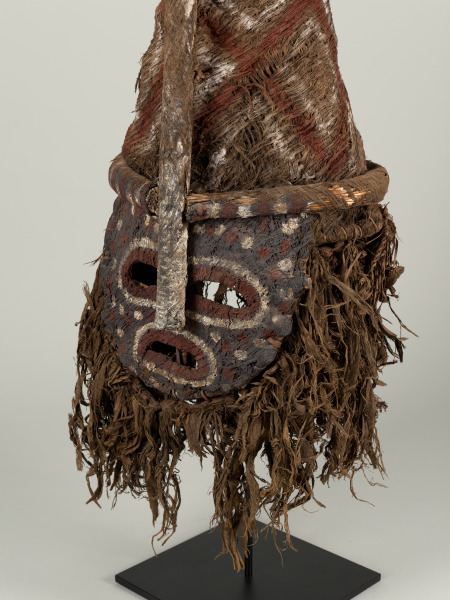
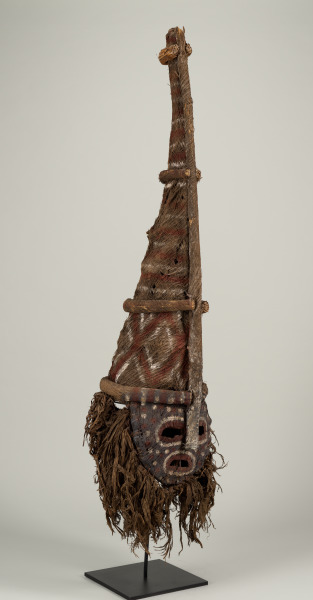
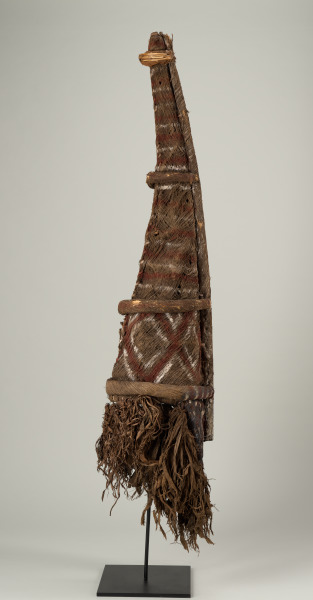
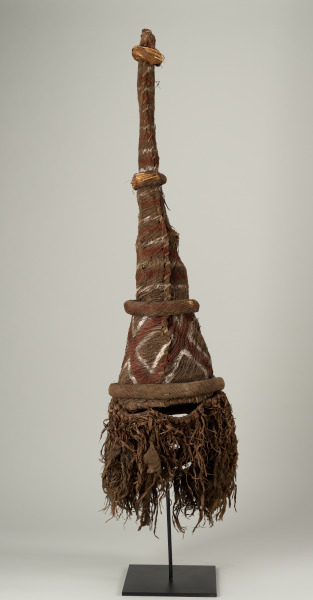
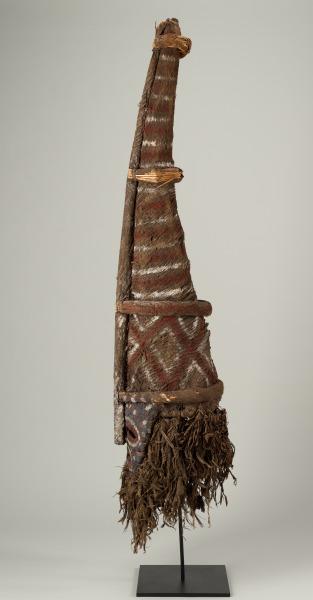
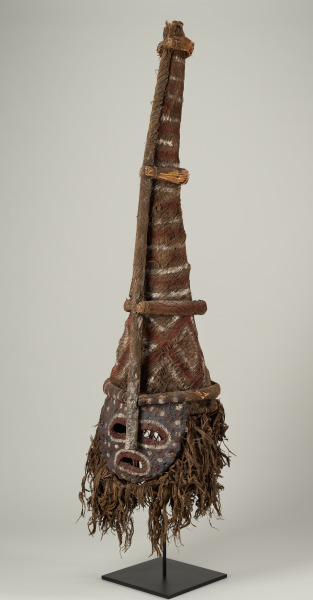
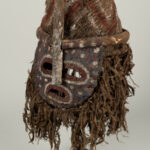
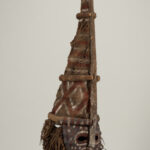
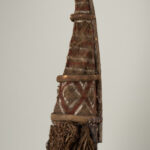
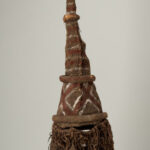
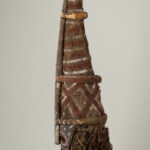
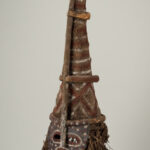
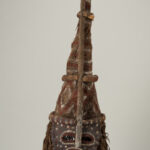
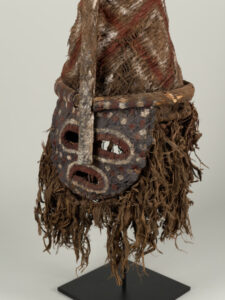
Painted bark cloth wraps around a conical, wooden frame to represent a powerful,
ancestral spirit: Chikunza. In Chokwe communities, Chikunza was symbolically thought to sponsor and protect male initiation ceremonies. Despite his power, masks representing him were made from bark cloth, a notoriously fragile material. This was intentional. Like many masks associated with male initiation ceremonies in Chokwe societies—a class of artworks known as mukishi a ku mukanda—masks representing Chikunza were meant to be impermanent. At the completion of the ceremonies, these masks were burned along with the temporary campsite where the ceremonies took place. This example was likely created for sale to a European colonizer in the late 19th century.
The Baltimore Museum of Art by gift, 2020; Asif Shaikh, by purchase at Zemaneck-Munster, 2018-Present; Jean David of Zurich, by purchase, 2003 – 2018; Fritz Hieber of Brombach/Basel, by descent, ?? – 2003; Ernst Hieber of Brombach/Basel, by collection/purchase in Angola, Between 1880 and 1895
The Matter of Bark Cloth
Stefan Eisenhofer, Karen Guggeis, and Reante Moller, "Afrikanische Kunst." Berlin: Kunstverlag, 2001. Page 93. Plate 91.
Reynold C. Kerr, ed. "Chokwe and Their Bantu Neighbors." Zurich: Jean David and Gerhard Merzeder, 2003. Plate 76.
Marie-Louise Bastin, "Ritual Masks of the Chokwe," African Arts 17, no. 4 (1984): 40-45