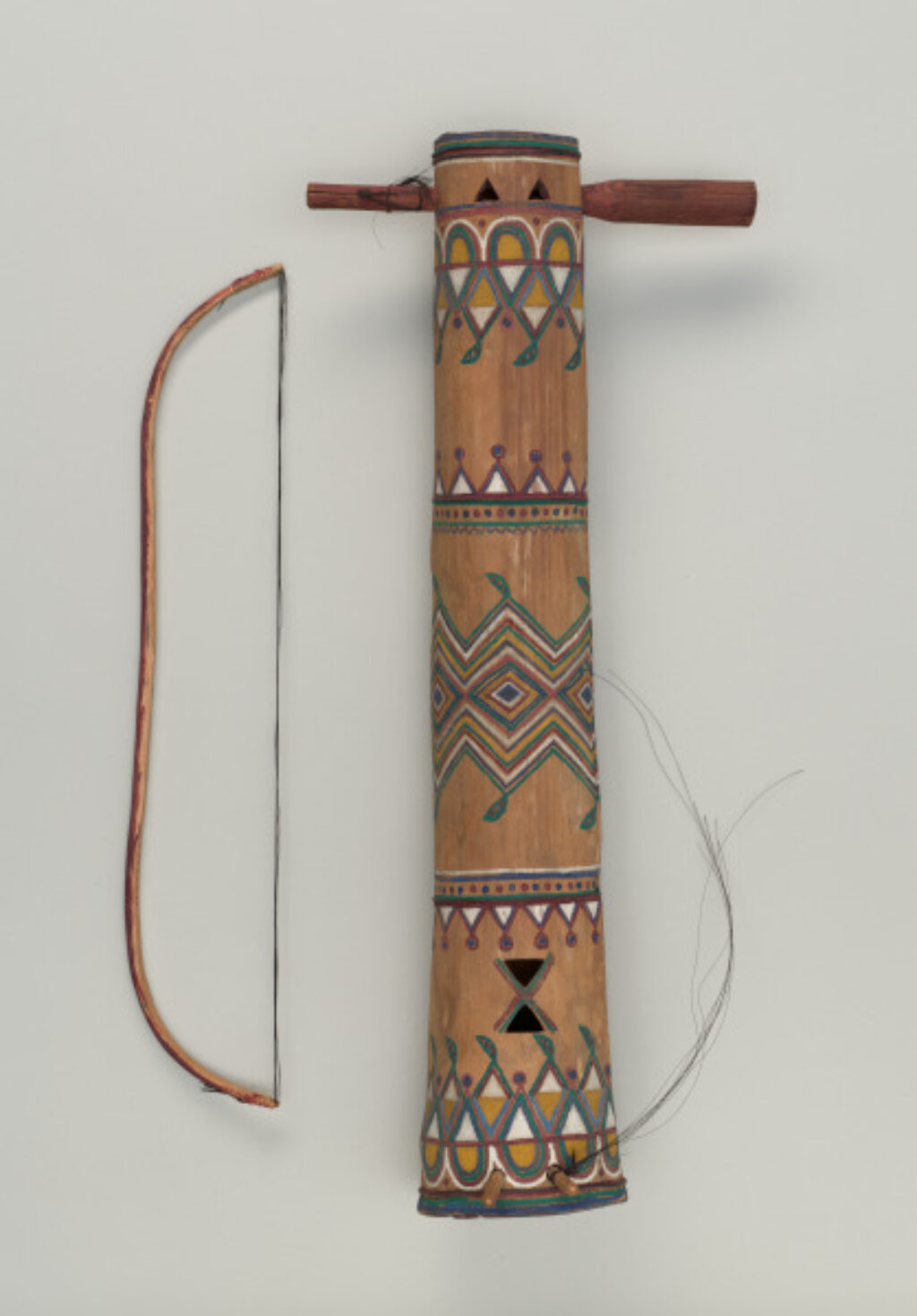
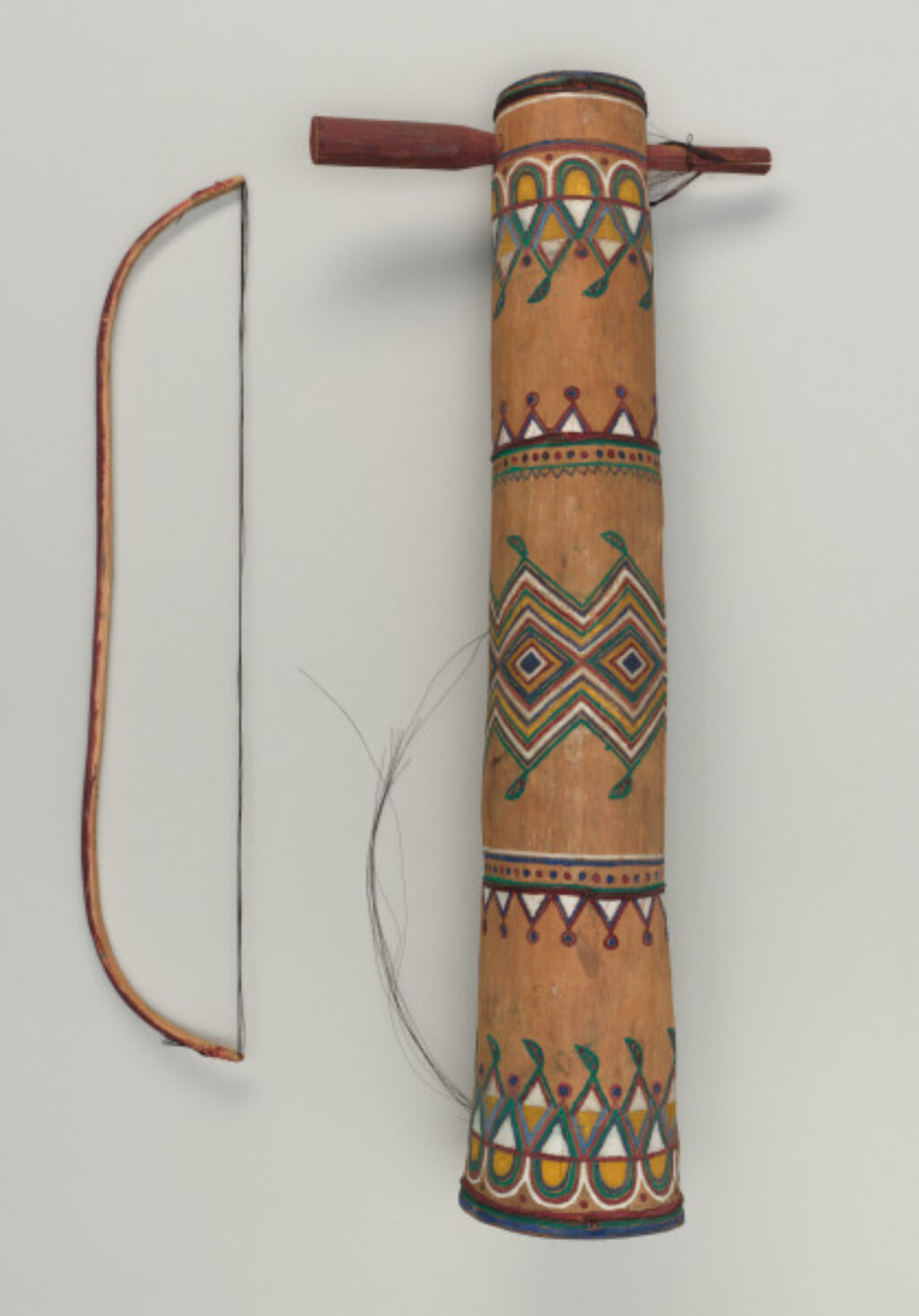
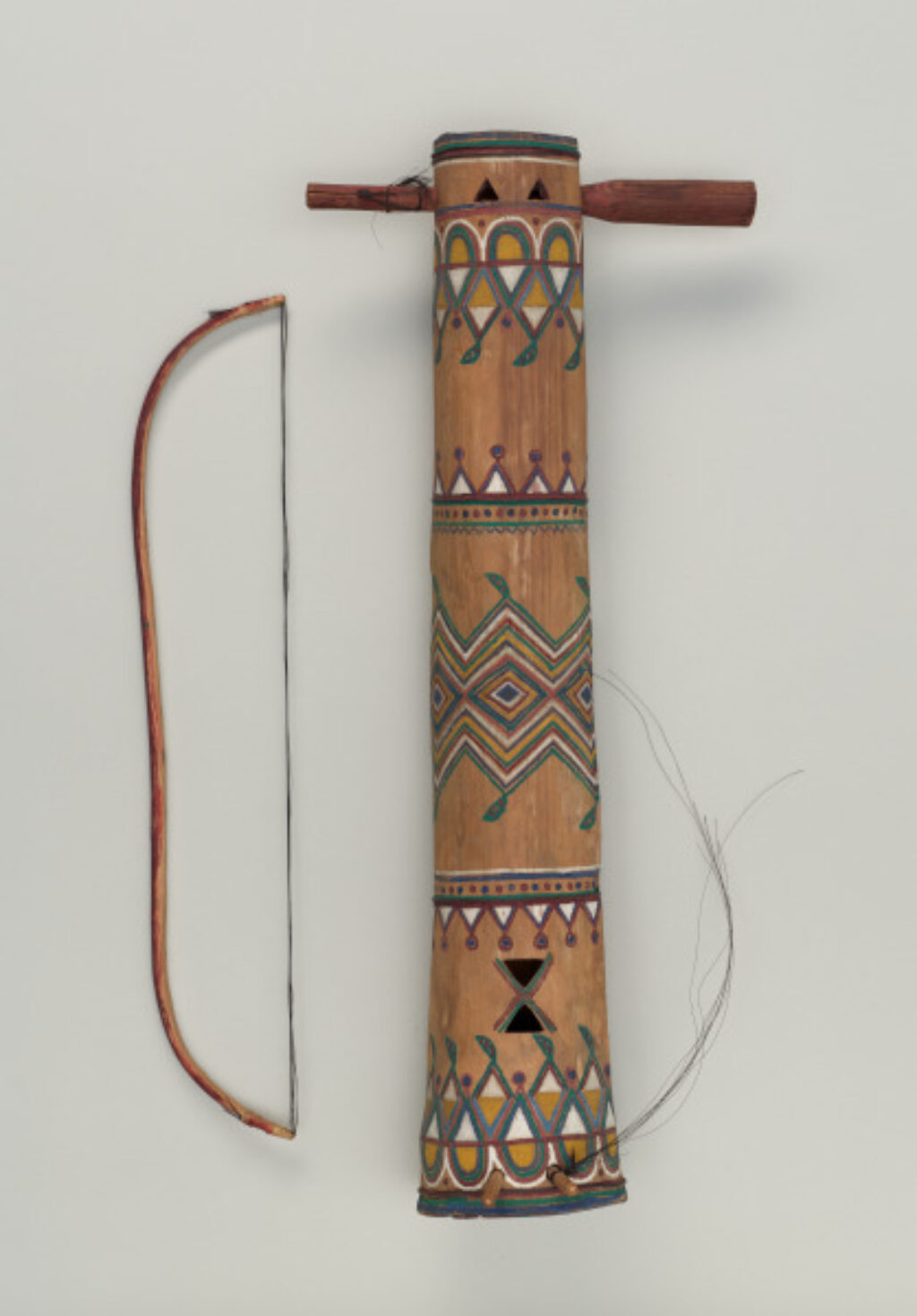
Amos Gustina and Western Apache
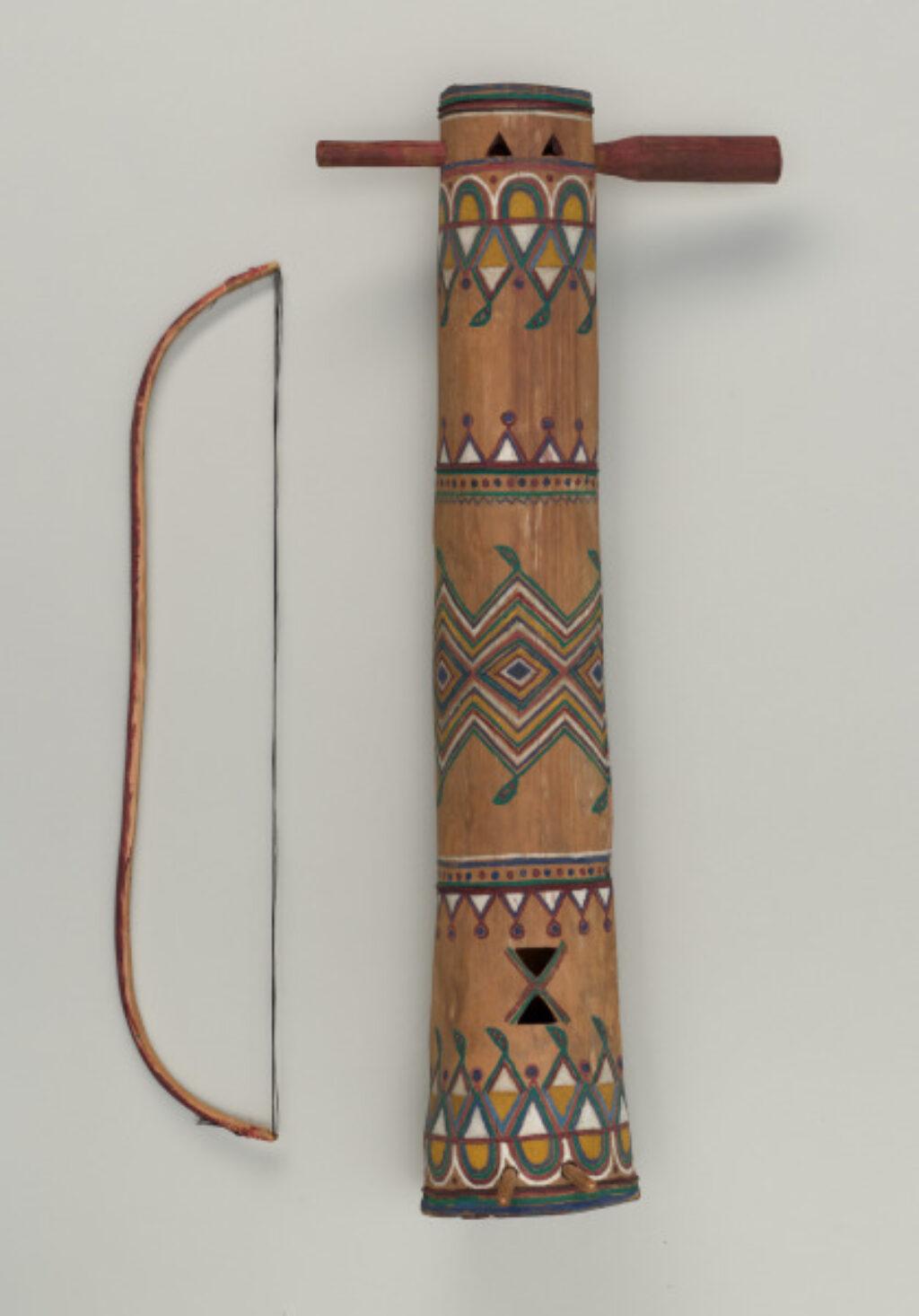
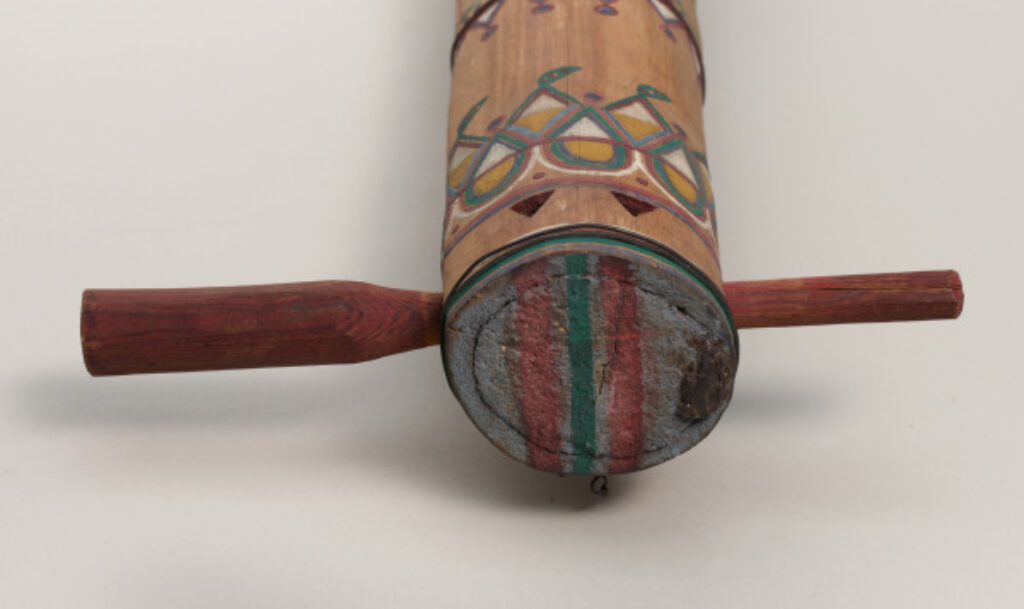
Fiddle
Western Apache, 1900-1932
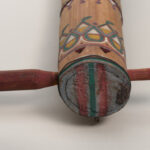
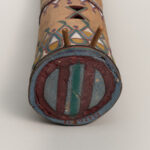
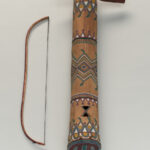
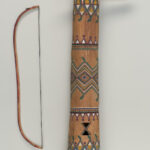
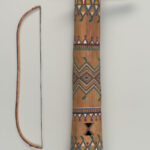
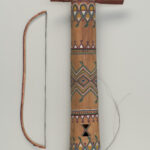
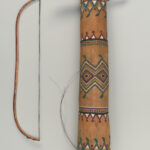
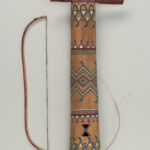
Scroll
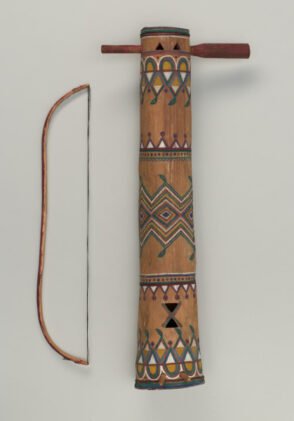
Physical Qualities
Agave wood, pigment, metal, replacement horsehair, Overall (Fiddle): 22 1/2 x 10 1/8 x 5 1/2 in. (59.7 x 25.7 x 14 cm)
Overall (Bow): 18 7/8 in. (48 cm.)
Credit Line
Bequest of Florence Reese Winslow
Object Number
1953.220.E.13
Amos Gustina (Western Apache)
born San Carlos Apache Indian Reservation, AZ 1858;
died Bylas, San Carlos Apache Indian Reservation, AZ 1945
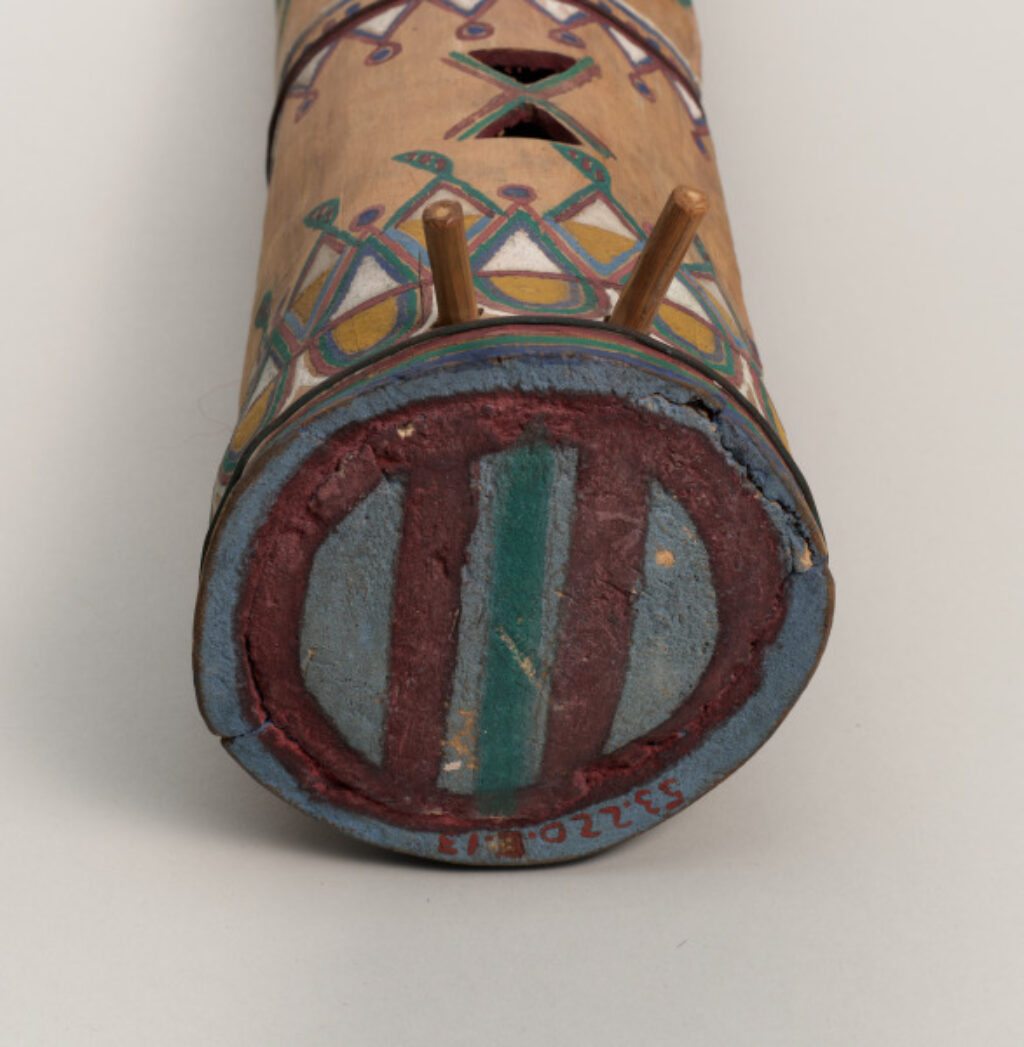
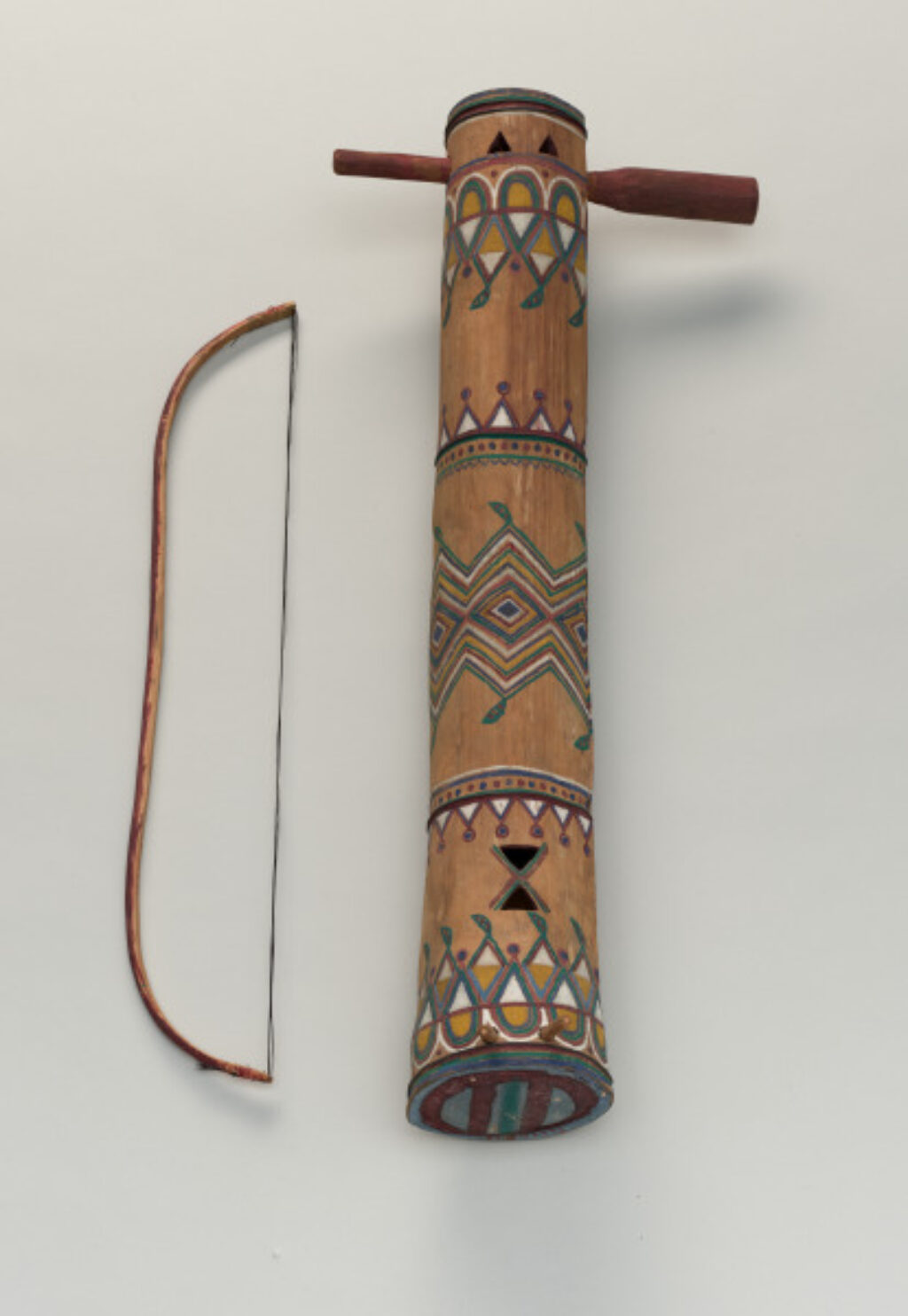
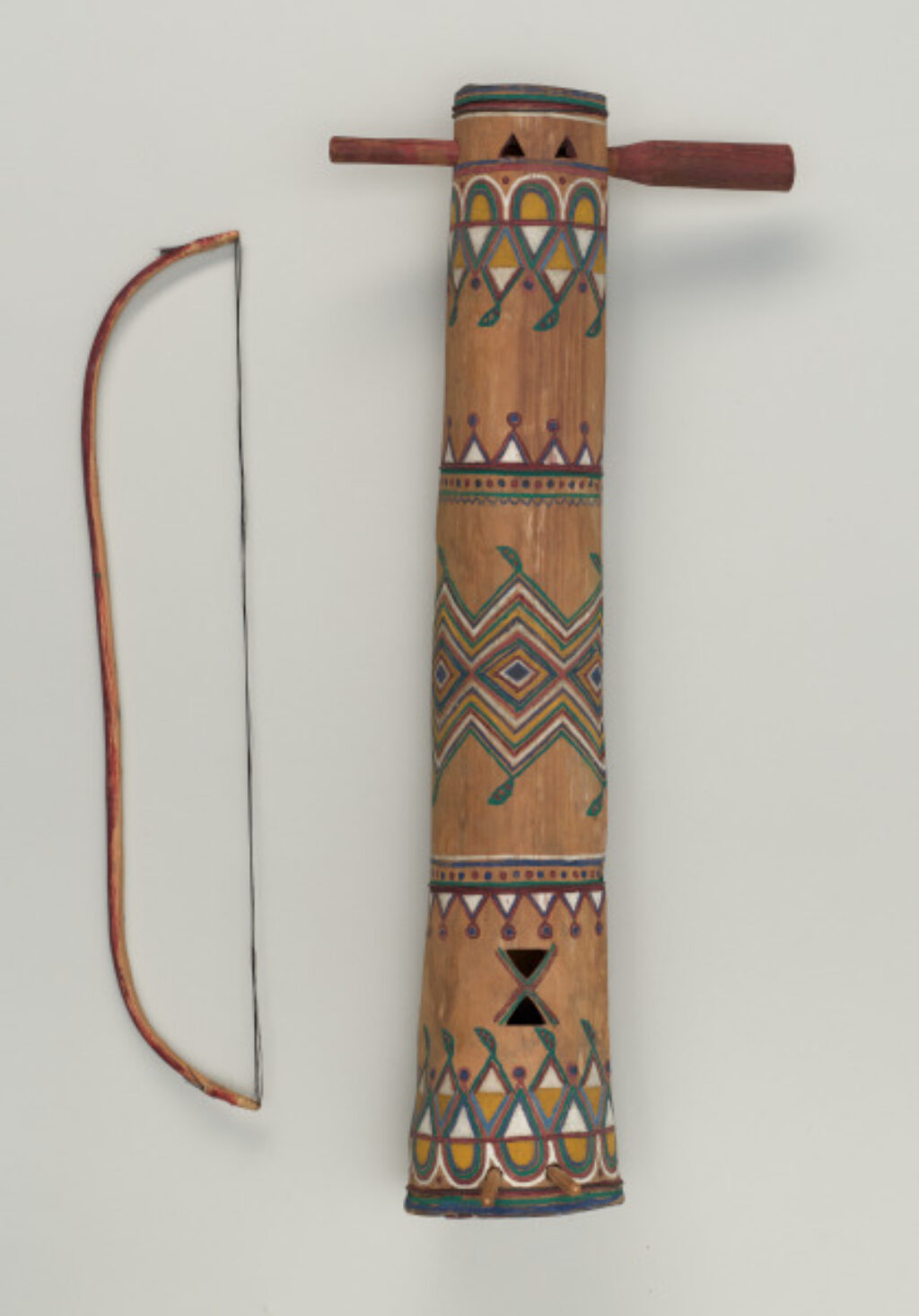
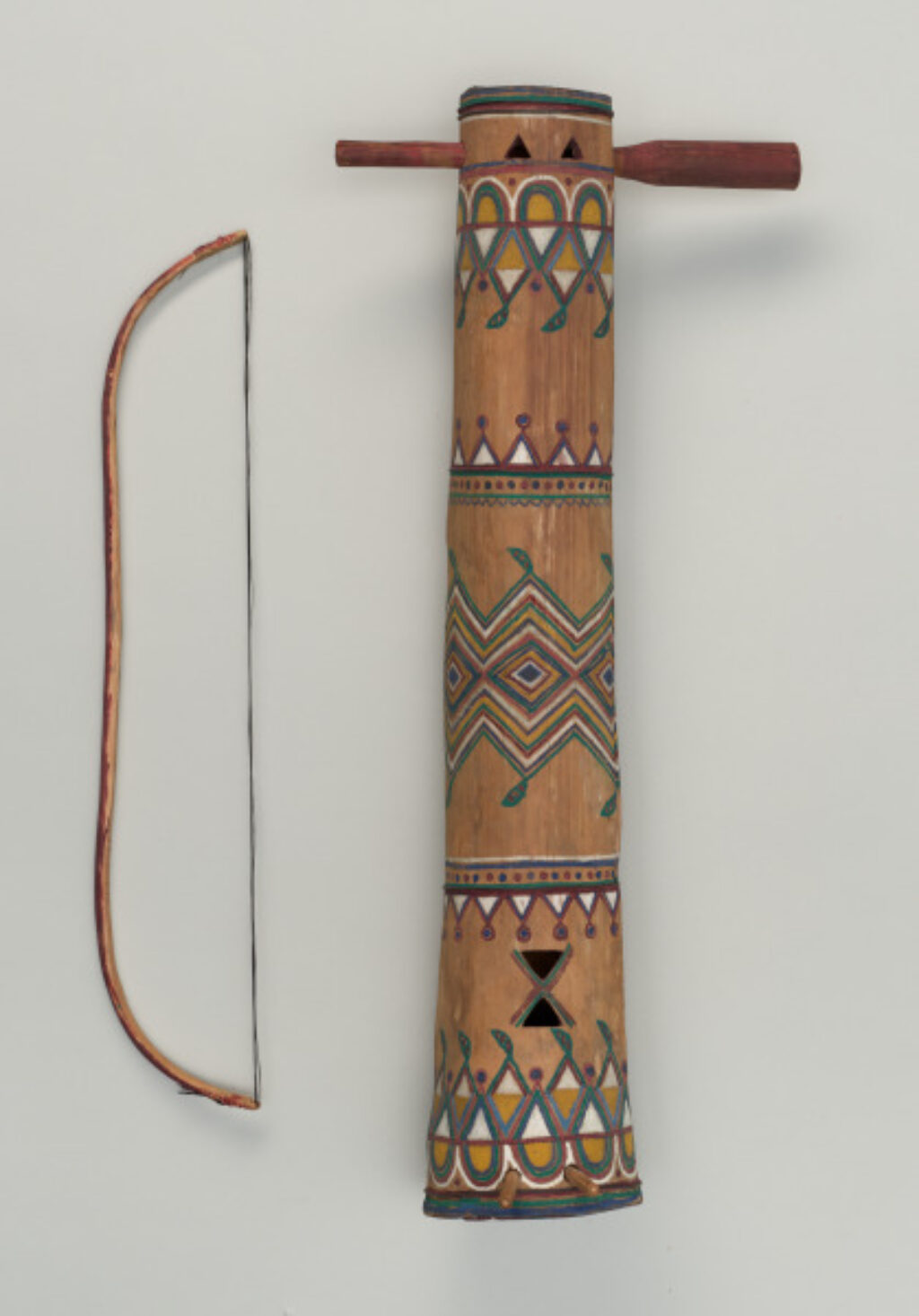
Tsíí’ edo’a’tl (Fiddle)
early 20th century
Agave wood, pigment, metal, replacement horsehair
Bequest of Florence Reese Winslow, BMA 1953.220.E.13
[overall exhibition intro text]
Apache oral traditions trace the origins of stringed musical instruments to the beginning of the earth, and music has played a central role in cultural traditions ever since. Laura Ortman: Wood that Sings explores Apache musicality by displaying the film My Soul Remainer by Laura Ortman (White Mountain Apache) alongside an early 20th-century Apache tsíí’ edo’a’tl (fiddle) from the BMA’s collection crafted by artist and musician Amos Gustina (Western Apache). Together, these works highlight the importance of music in sustaining Indigenous cultural ways and promoting community vitality.
In My Soul Remainer, Ortman plays her violin throughout the southwestern landscape of the United States: in a forest clearing, on a mountainside, and within a rocky stream. Her collaborator Jock Soto (Diné) assumes different reverential postures while Ortman’s original score—which samples a piece by German composer Felix Mendelssohn (1809–1847)—bleeds into an atmospheric and ethereal composition. By building upon and ultimately departing from the overwhelmingly white and male history of Western classical music composing, Ortman insists upon her own Native autonomy.
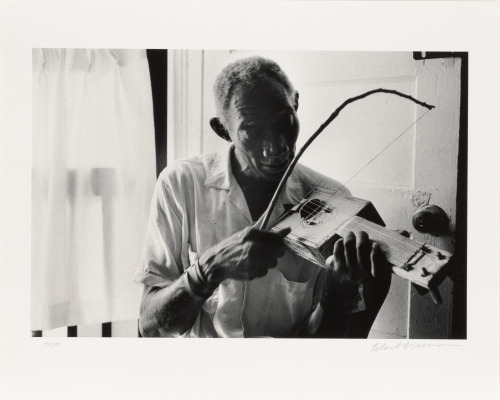
Ortman’s work continues the legacies of Apache musicians like Gustina, who made the traditional tsíí’ edo’a’tl on view. Crafted from the hollow stalk of an agave plant and played with the wide end against the musician’s chest, its Apache name translates to “the wood that sings.” For decades, non-Native anthropologists argued that Apache fiddles copied European violins, despite their distinct appearance and structure. Oral histories passed down by Apache Elders indicate the instruments predate the introduction of European violins, rebuking anthropologists’ claims. Native ingenuity and self-sufficiency have long predated colonial influence, and they will endure long into the future.
The Baltimore Museum of Art by bequest, 1953; Florence Reese Winslow, Baraboo, WI.
Preoccupied: Laura Ortman
Ferg, A. "Amos Gustina: Apache Fiddle Maker." American Indian Art Magazine 6 No. 3 (1981): 28-35.
https://www.youtube.com/watch?v=hSN0TOVgDOE for Anthony Belvado, a contemporary maker of these instruments
https://www.youtube.com/watch?v=hSN0TOVgDOE for Anthony Belvado, a contemporary maker of these instruments
Inscribed: Instrument: tape: 'A41A'(?) Bow: N/A
Artist/Maker
Amos Gustina
1857–1944
(Western Apache) b. San Carlos Apache Indian Reservation, AZ 1858; d. Bylas, San Carlos Apache Indian Reservation, AZ 1945
Meet Amos Gustina


!['WHILE INDUSTRY FIDDLES' [CARTOON]](https://artbmadevsite.org/wp-content/uploads/2026/02/2232_31159941-3.jpg)