Utagawa Kunisada (Toyokuni III) and Sanoya Kihei
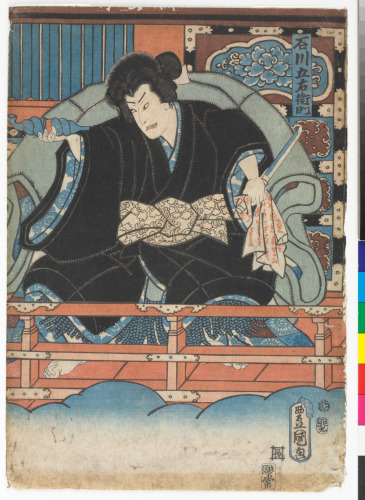
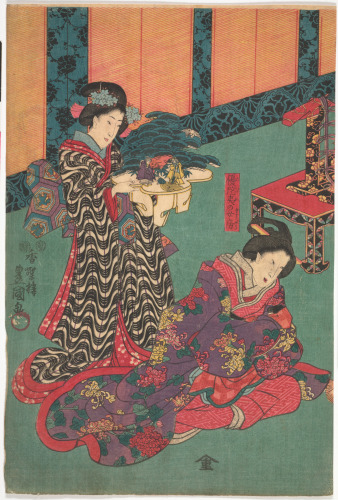
Fight Scene
1853
Scroll
Physical Qualities
Color woodcut, Image: 330 x 218 mm. (13 x 8 9/16 in.)
Credit Line
Gift of Mr. and Mrs. Albert Wade Laisy
Object Number
2011.65
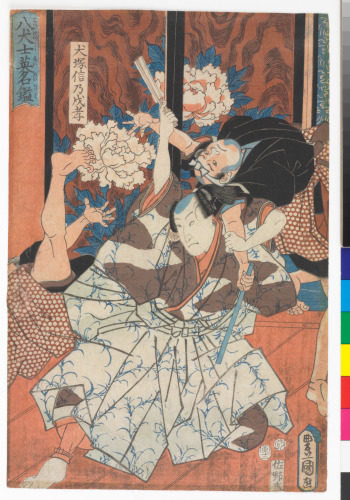
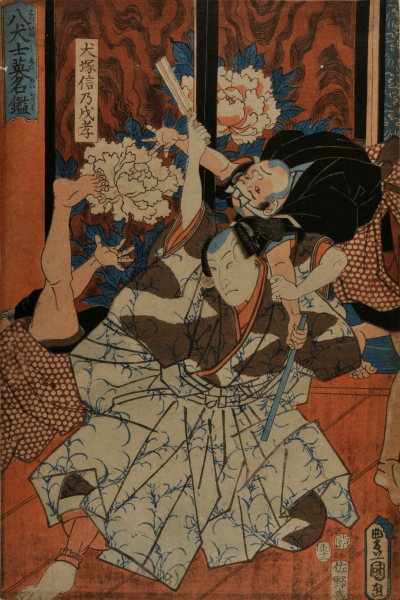
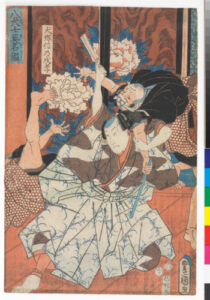
The central panel of a triptych (or multi-panel image) showing the hero's struggle with two bandits, probably the retainers of Inukai Genpachi Nobumichi. One has been tossed to the floor, only his hand and foot are visible; the second is being flipped over his back. The hero peers out of one opened eye. The fight takes place against a two-panel sliding door with large peony blossoms against a ground of grained wood; the floor would have been pigmented with lead that has mostly worn away.
The scene is based on the 106-volume epic novel, "Nanso Satomi Hakkenden" which was written by Takizawa Bakin (1767-1848) over a 28 year period and chronicles the adventures of eight brothers. The magically conceived sons of the Satomi family's heroic dog, Yatsafusa, all have the character inu (dog) in their surnames, and each is associated with one of the eight Confucian virtues: ko (filial piety), gi (duty), chu (loyalty), shin (faith or sincerity), tei (brotherhood), jin (benevolence), chi (wisdom), rei (courtesy).
The novel was adapted for Kabuki in 1834, and staged first in Osaka. Other adaptions followed including Sakurada Jisuke III's "Satomi Hakkenden" which was first performed in Edo in 1852 and is the likely source of this particular image. The scene featuring Inuzuka Shino Moritaka (who embodies filial piety) occurs in the middle of Act I in the palace of Gov. Koga Naiuji, when Inuzuka Shino fights Inukai Gempachi (who personifies sincerity) without knowing their relationship. At the end of their fierce combat, the brothers are reconciled.
They travel on together, meeting four more of their siblings on Mount Maruzuka. The act ends with an entertaining "danmari" (dumb show) as the six brothers search for each other in the dark. In Act II, the remaining two brothers appear.
The highlight of the Kabuki performance features a mid-air fight, and it concludes with an aerial exit.
The Baltimore Museum of Art by gift, 2011; Albert and Emily Laisy, Baltimore, by purchase
"Satomi Hakkenden," synopsis of a 2002 version of the Kabuki, http://www.kabuki21.com/hakkenden.php
Inscribed: Face: lower right, artist's signature within a blue-framed cartouche, at lower right, "Toyokuni ga"; censor's kiwame and date stamps (1854/12); publisher's mark.