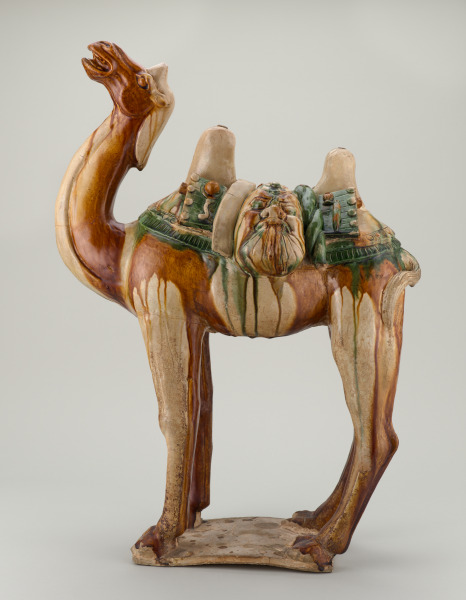
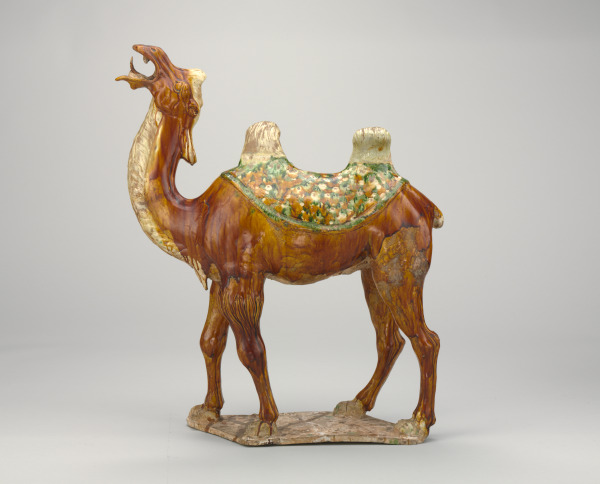
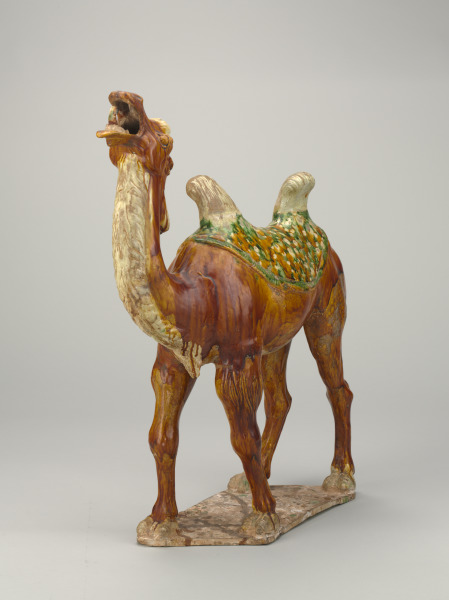
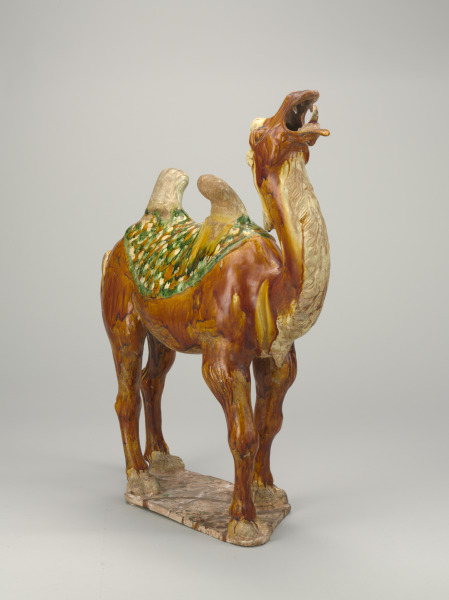
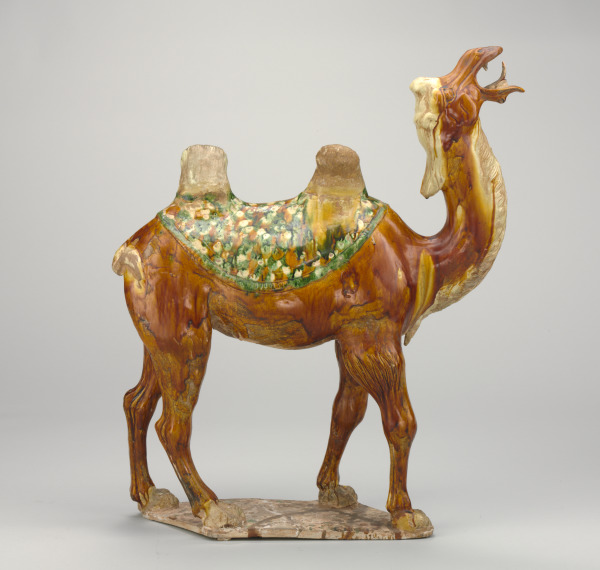
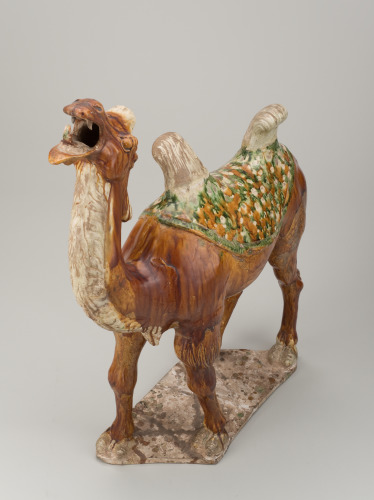
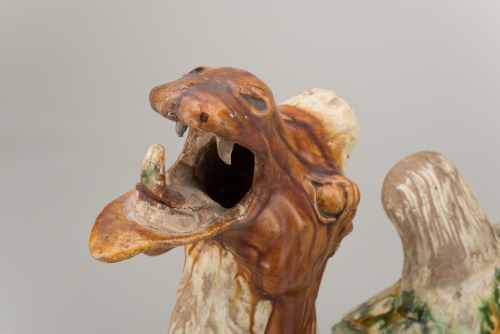
Figure of a Striding Camel
701-733
Scroll
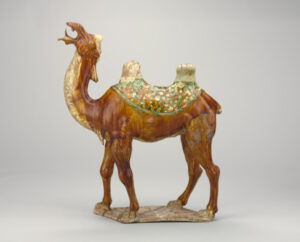
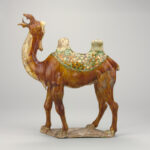
Figure of a Striding Camel
701-733
Physical Qualities
Earthenware with brown, green, and transparent lead glazes over white slip, 32 1/2 x 28 3/4 x 8 1/16 in. (82.6 x 73 x 20.5 cm.)
Credit Line
Gift of David K.E. Bruce
Object Number
1956.148
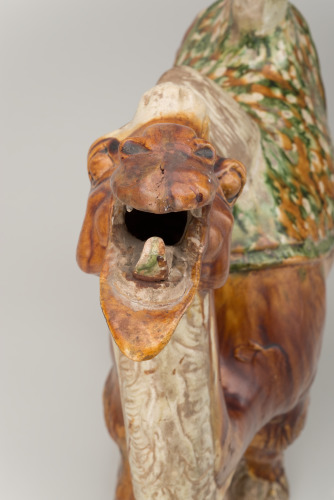
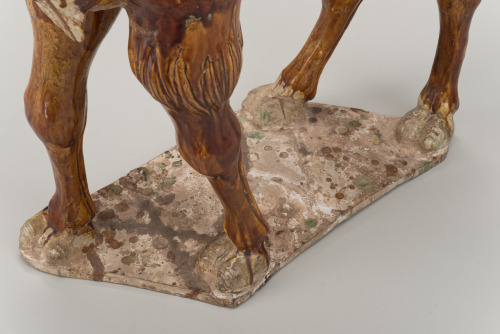
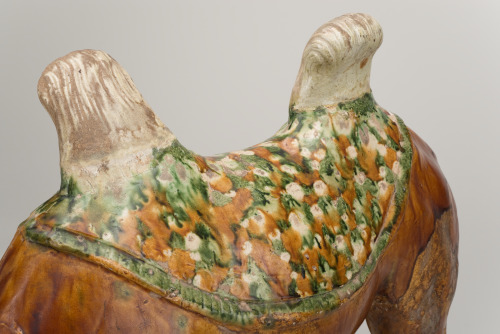
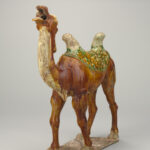
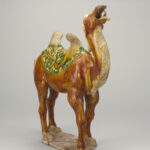
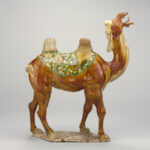
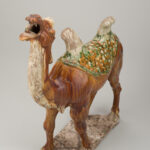
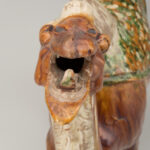
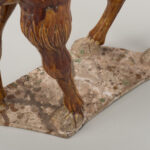
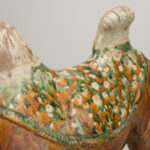
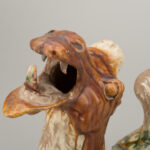
Bright lead glaze, applied in layers, evokes a camel’s heavy, matted fur. Splashes on the slab base reveal the runny nature of the glaze. This clay camel was made for a Tang dynasty (618–907) tomb and would have been accompanied by many other ceramic figures.
Tombs belonging to aristocratic or military elite were furnished with everything necessary for the deceased soul’s comfort and amusement. Mortuary pottery of girls playing polo, horses saddled and ready to ride, and fearsome guardian creatures, as well as copies of metalwork from Central Asia, are among the objects discovered in these tombs. Family amply provided such items for the soul of the deceased to secure their ancestor’s favor.
Families reinforced their status by carrying furnishings to the tomb in a display of filial piety and disposable wealth. Some families were even bankrupted by this practice. An imperial decree of 742 limited the contents of tombs based on the rank of the deceased: officials of the third rank and above were permitted up to 70 figures, while most were allowed only 15.
The Baltimore Museum of Art by gift, 1956; David K. E. Bruce, Washington, D.C., by 1955
Asian Reinstallation: Home, Temple, Tomb
Asian Gallery Rotations 2021
[Asian Refresh]
Asian Gallery Rotations 2022
Asian Gallery Rotations 2023
Asian Rotations 2024
Asian Rotations 2025
"A Tribute to Adelyn D. Breeskin," "BMA New Quarterly," Vol. XXV, No. 4, Summer 1962, ill. p. 25.
K. R. Greenfield, "The Museum: Its First Half Century," "Annual I," Baltimore: BMA, 1966, ill. p. 29.
Frances Klapthor, Chinese Ceramics, Baltimore: BMA, 1993, no. 10, p. 22, ill. p. 23.
Frances Klapthor, "Asian: Camel," "Diamond of the Month," BMA, 1996.
BMA Today, Baltimore: BMA, November - December 2004, p. 13, ill.
Linda Andre, 'Braying Camel, Chinese, Tang dynasty,' "School Arts," vol. 109, no. 4, December 2009, pp. 25-28, ill. pp. 26-27.
Baltimore Museum of Art. The Baltimore Museum of Art: Celebrating a Museum. Baltimore: The Baltimore Museum of Art, 2014.
 On View at the BMA
Explore the Collection Further