






Kongo
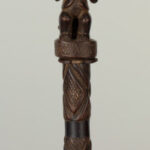
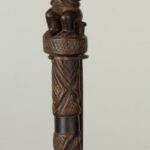
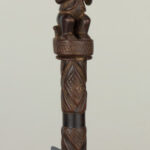
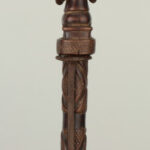
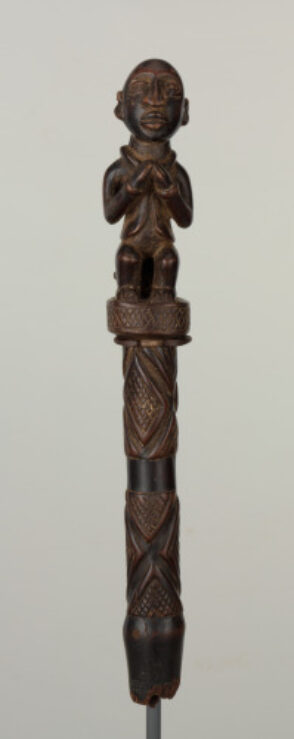
Fly Whisk Handle
Kongo, Late 19th-early 20th century
Scroll

Kongo
Fly Whisk Handle
Kongo, Late 19th-early 20th century
Physical Qualities
Wood, bone, hair, resin, 12 3/4 x 1 1/2 in. (32.4 x 3.8 cm.)
Credit Line
Gift of David and Gayle Ackley, Baltimore
Object Number
2013.372
Wooden figures from the Kongo Kingdom are well known. These four examples from the mid-19th to early-20th centuries were carved for and used by people who enjoyed social and political prestige. Each figure adopts a different posture. The mother carrying a child atop the pestle kneels in supplication, enacting a posture widely represented throughout the kingdom. The man on top of the flywhisk sports a suit based on European types and sits upon a stool. The upward turn of his hands and eyes are like those of the man upon the flask, who appears made-an oddity in Kongo art. So too is his posture, with legs dangling downward. The figure atop the leader's staff sits cross-legged with hands bound at back to suggest enslavement-a rare but not unusual position, particularly in the context of court art. Facial features vary greatly, indicating the figures were made in different regions of this vast kingdom.
The Baltimore Museum of Art by gift, 2013; David Ackley, Baltimore, MD; another dealer (unnamed), from a European collection (unnamed) [per NB conversation w/ D. Ackley 04/19/2011]
Rena Hoisington, The Baltimore Museum of Art, "New Arrivals: Gifts of Art for a New Century," February 7-May 8, 2016.


