Chopi and Southern Sotho
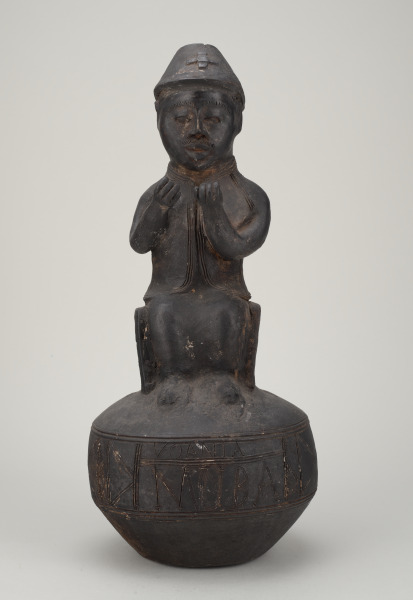
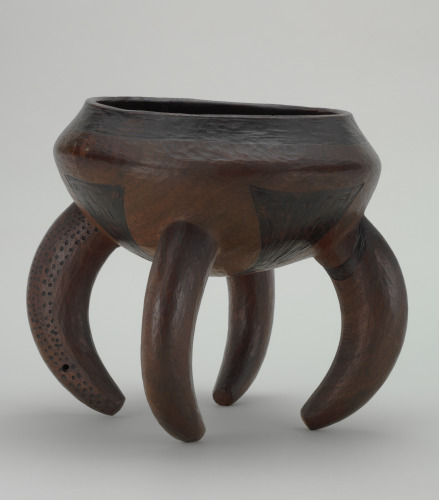
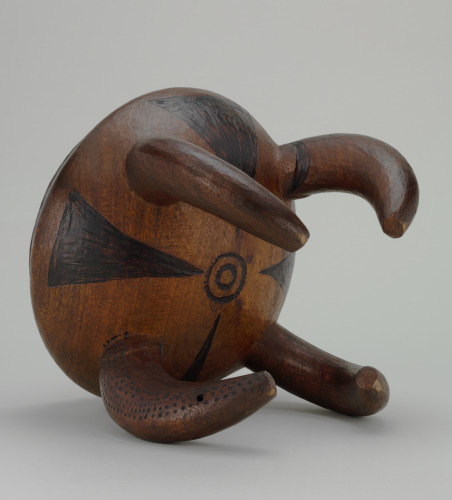
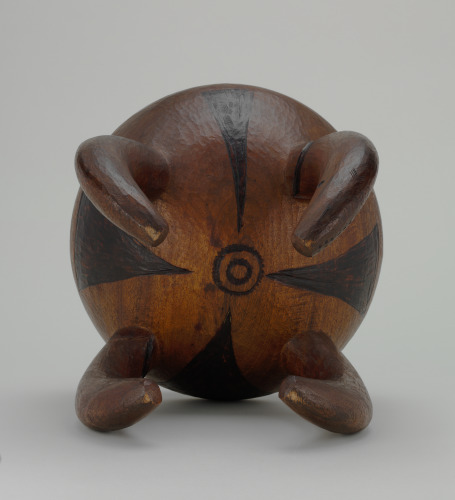
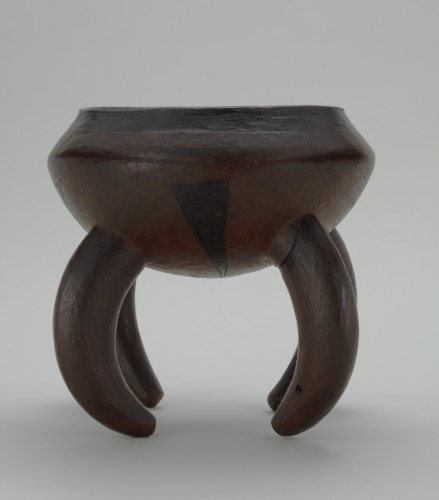
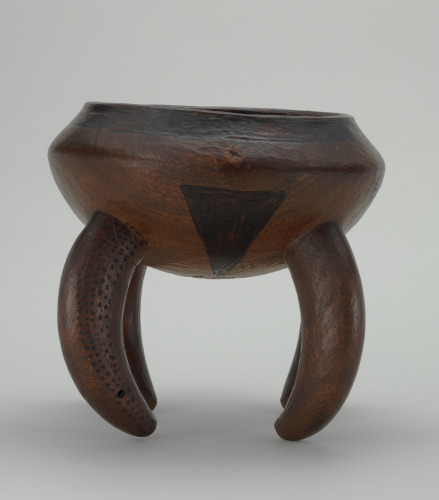
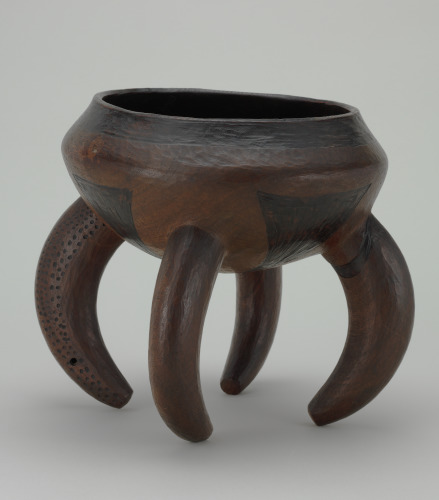
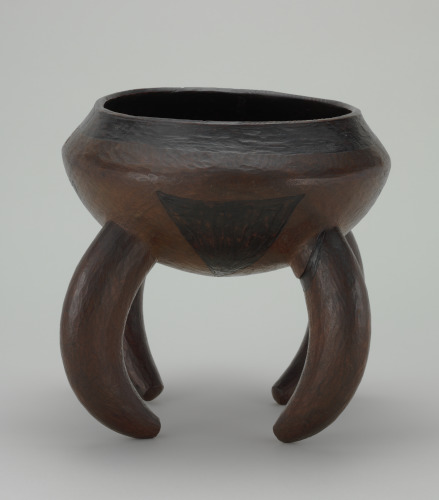
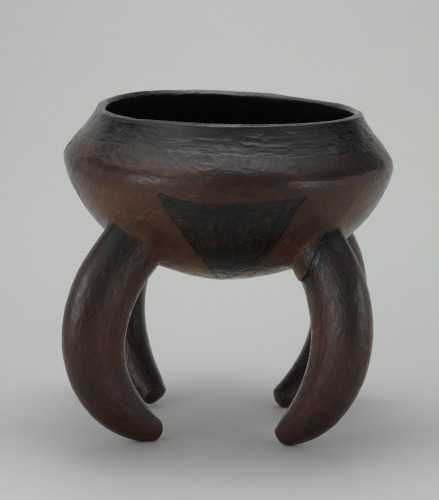
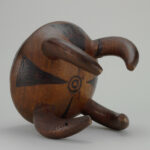
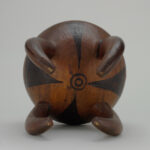
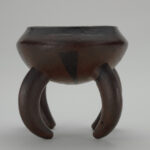
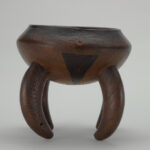
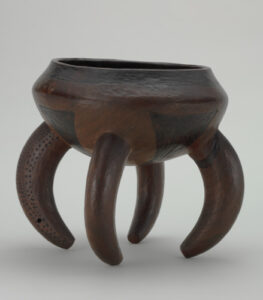
Four-legged Vessel for a Chief
1900-1932
Scroll
Physical Qualities
Wood with burnt wood, 9 15/16 × 9 15/16 × 10 1/16 in. (25.2 × 25.2 × 25.5 cm.)
Credit Line
Purchased as the gift of the Estate of Allen A. Davis
Object Number
2017.220
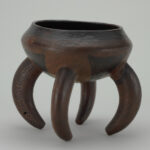
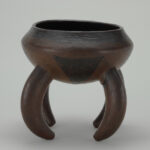
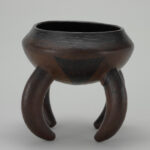
In the 18th and 19th centuries, artists across southeastern Africa began to experiment with figuration. Bowls sprouted horn-shaped legs. Animals appeared on knives. And once-simple containers morphed into cows. Christian missionaries - who saw figurative art as superior to indegenous forms of abstraction - commissioned African artists to make many of these pieces. The knife featuring a European rider on a non-native horse was undoubtedly one such commission. The cow-shaped snuff container and four-legged bowl, however, were made for a southern African clientele. This shift in southern African taste can be attributed both to the growing fliency of local artists with figuration as well as the spread of photographic technology, which made figurative images more accessible to African artists.
The Baltimore Museum of Art, by purchase, 2017; Jacaranda Tribal, New York; Jonathan Lowen, London; Bowmint Collection, Pretoria, South Africa
African Mini-Installation
African Gallery Rotations 2021
African Gallery Rotations 2022
African Gallery Rotations 2023
African Wing Rotations 2024
African Wing Rotations 2025
"Containers for the Living and the Shades: Vessels from Southern Africa." Jacaranda 2022. p31
Nicholas Maritz, "Relics of War: A Collection of 19th Century Artefacts from British South Africa and Southern Rhodesia," 2008.
Constantine Petridis. "The Art of Faily Life: Portable Objects From Southeast Africa." Milan: The Cleveland Museum of Art / 5 Continents Editions, 2011.
Casalis, Eugene. The Basutos: Or Twenty-Three Years In South Africa. 1861, p. 139.
 On View at the BMA