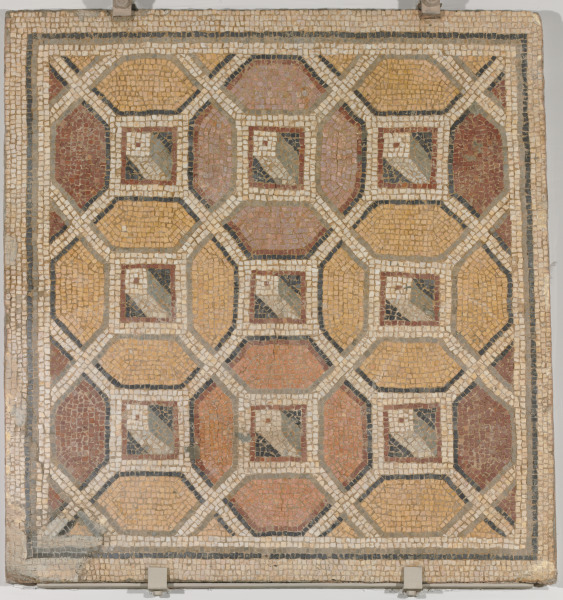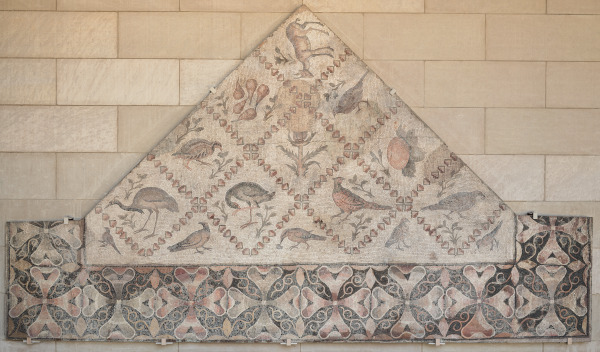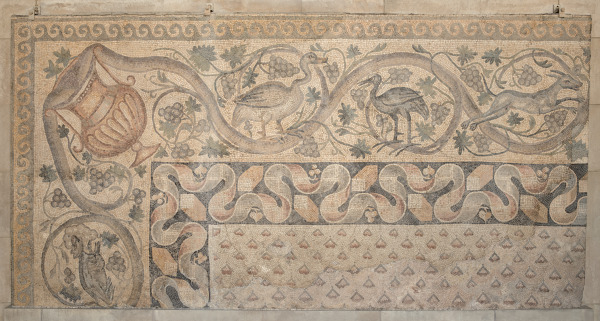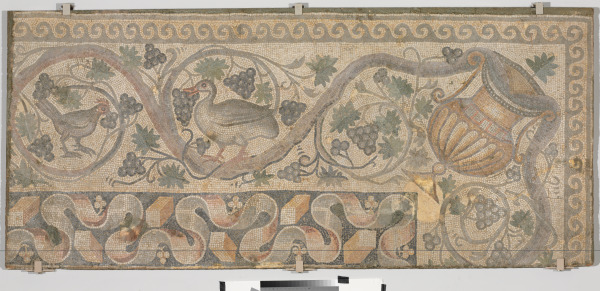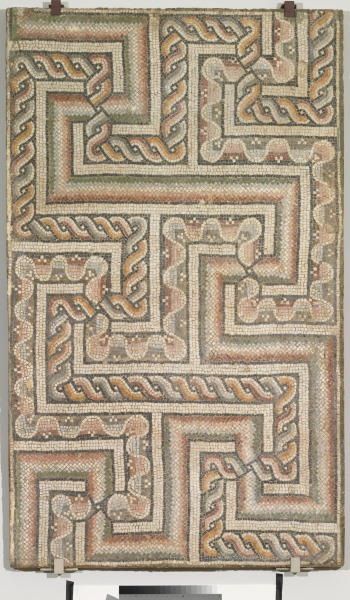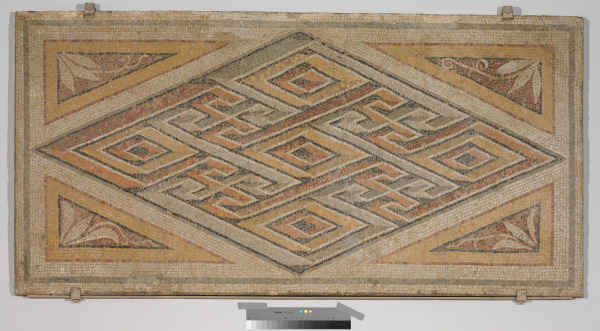
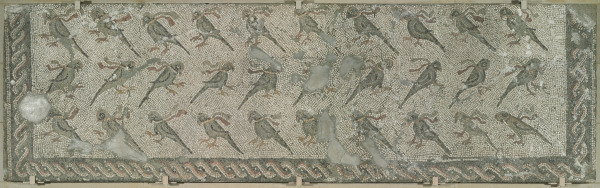
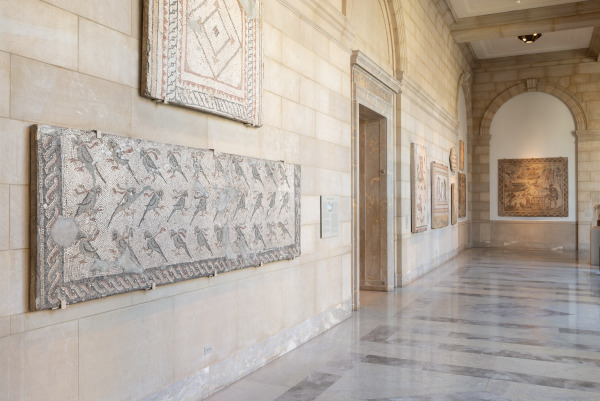
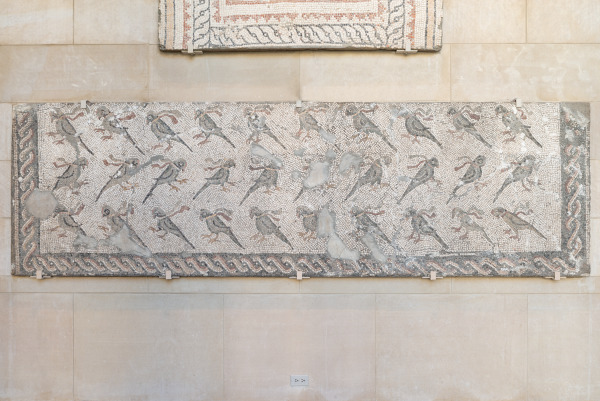
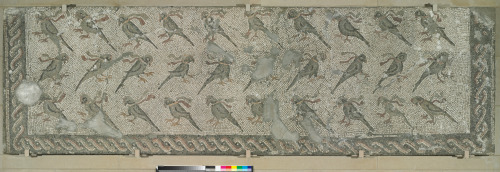
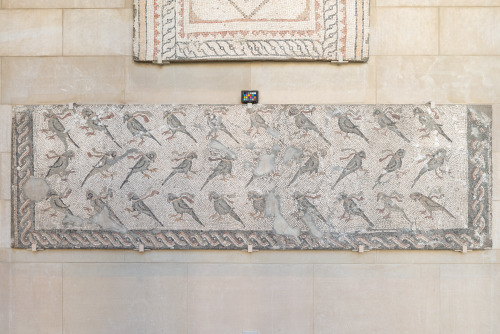
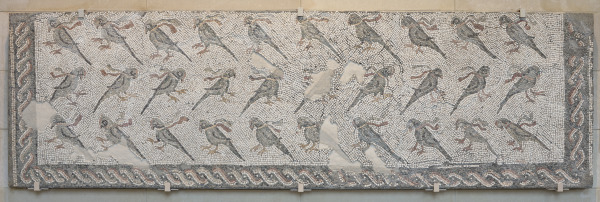
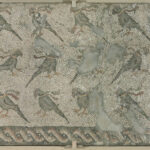
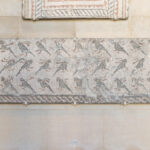
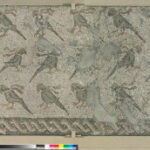
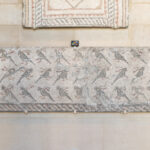
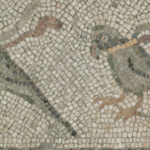
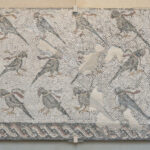
Fragment of floor mosaic depicting beribboned parrots
467-533
Scroll
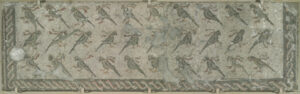
Fragment of floor mosaic depicting beribboned parrots
467-533
Physical Qualities
Stone and lime mortar, 141 x 42 x 2 1/4 in. (358.1 x 106.7 x 5.7 cm.)
Credit Line
Antioch Subscription Fund
Object Number
1937.147
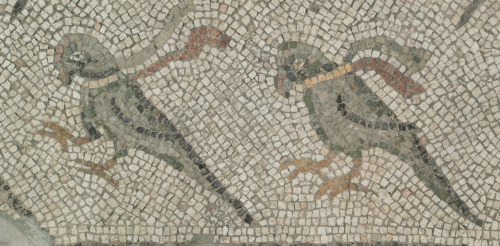
These parrots’ fluttering ribbons attest to artistic exchanges between Antioch and the Sasanian Empire (224–651 CE), which was centered in modern-day Iran. They are characteristic features of the beribboned animal motif found on Sasanian seals, stucco, and silverwork. The mosaic’s overall design of repeating rows that alternate between facing left and facing right evokes the complex pattern weaves typical of drawloom silk, a luxury good that caravan traders moved from China across the Iranian Plateau to the Syrian coast.
"Antioch-on-the Orontes, II, The Excavations, 1932-1936," Princeton: Princeton University Press, 1938, no. 89, p. 200, pl. 70.
Doro Levi, "Antioch Mosaic Pavements," Princeton: Princeton University Press, 1947, p. 358.
Christine Kondoleon, "Antioch The Lost Ancient City," Princeton: Princeton Univeristy Press, 2000, p. 136.
"From the Ground Up: New Interpretation for the Antioch Floor Mosaics Reflect Many Cultural Influences." BMA Today issue 170 (Winter/Spring 2023): p. 23
 On View at the BMA