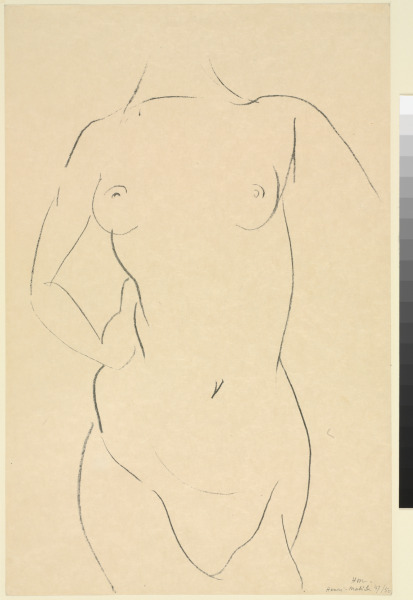
Henri Matisse
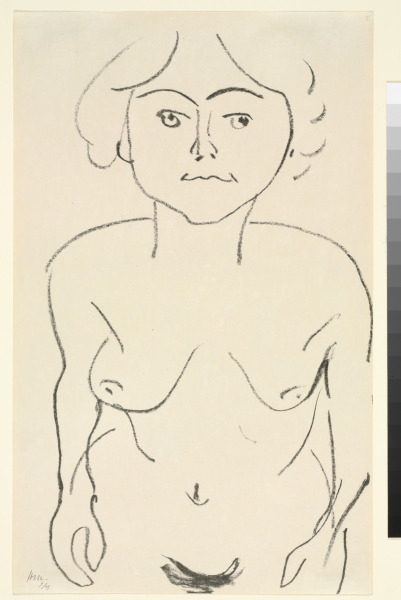
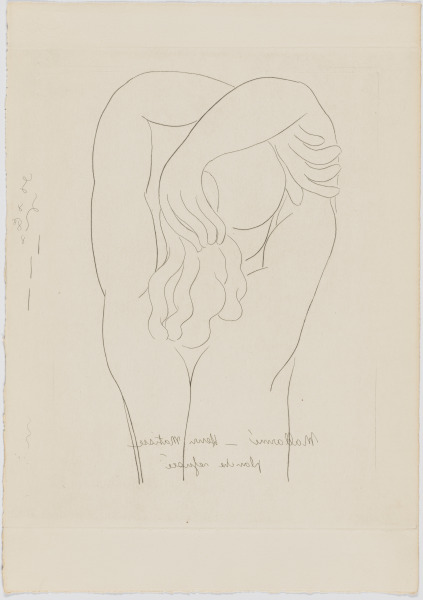
Frontal View of Torso
1912
Scroll
Henri Matisse
Frontal View of Torso
1912
Physical Qualities
Crayon transfer lithograph, Sheet: 504 x 331 mm. (19 13/16 x 13 1/16 in.)
Credit Line
The Cone Collection, formed by Dr. Claribel Cone and Miss Etta Cone of Baltimore, Maryland
Object Number
1950.12.139
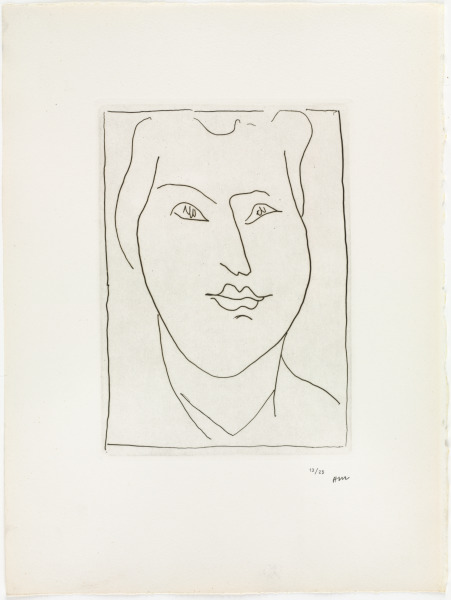
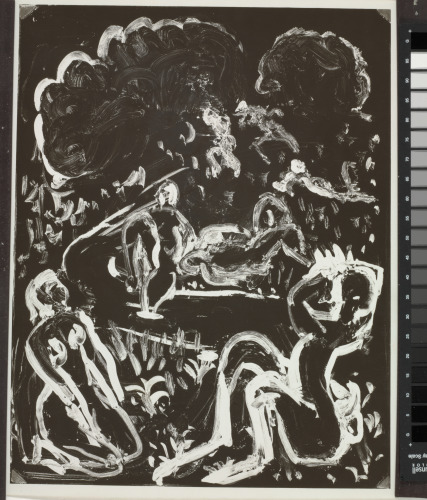
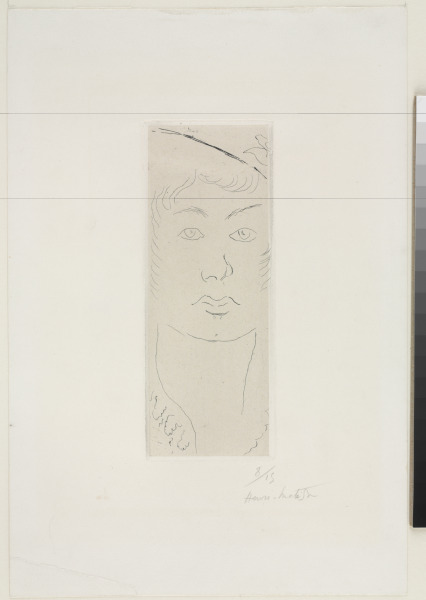
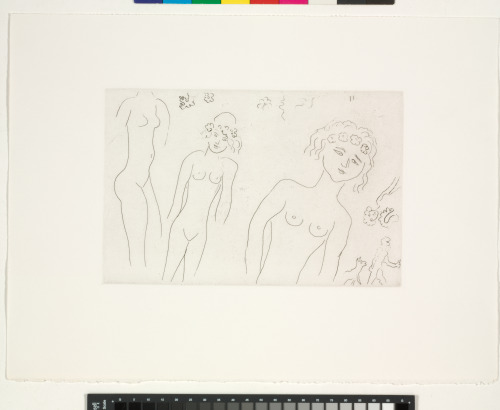
In an interview in 1909 the artist explained that he had abandoned impressionism because it was too rooted in the copying of nature, too objective, too easily satisfied with the pleasure of recording. In short, "It is a state of agitation." Matisse then outlined his goals: "[To] work toward serenity through the simplification of ideas and form. The ensemble is our only ideal. Details lessen the purity of the lines and harm the emotional intensity; we reject them."
Matisse: Painter as Sculptor
Matisse as Printmaker
Matisse, Life in Color: Masterworks From The Baltimore Museum of Art
Duthuit-Matisse, Marguerite, Claude Duthuit, Françoise Garnaud. Henri Matisse, catalogue raisonné de l'oeuvre gravé (Paris: C. Duthuit, 1983).
Inscribed: lower right in stone: "H.M"; lower right in graphite: "Henri Matisse"; lower right in black ink: "47/50"