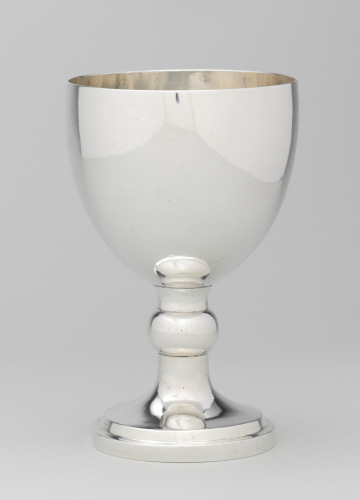
Littleton Holland
Goblet
1799-1809
Scroll
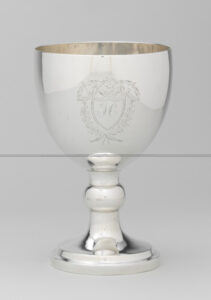
Littleton Holland
Goblet
1799-1809
Physical Qualities
Silver, 5 7/8 x 6 9/16 x 4 3/16 in. (14.9 x 16.7 x 10.6 cm)
Credit Line
Gift of Virginia P.B. White, Baltimore
Object Number
1933.54.70b
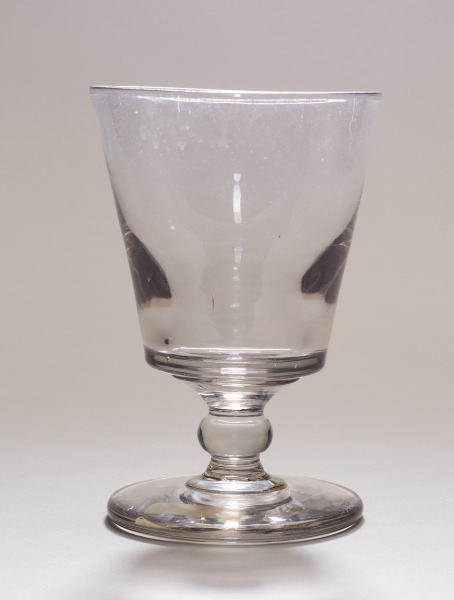
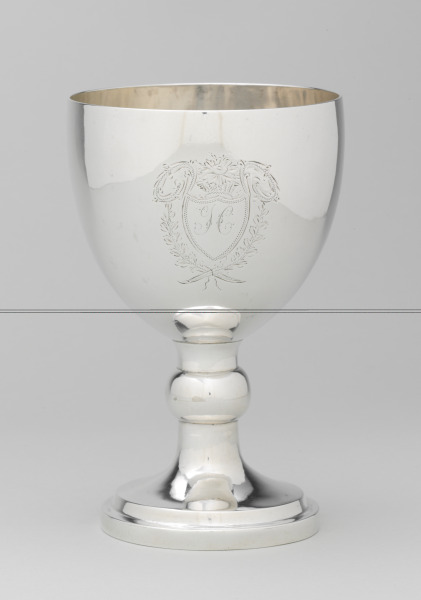
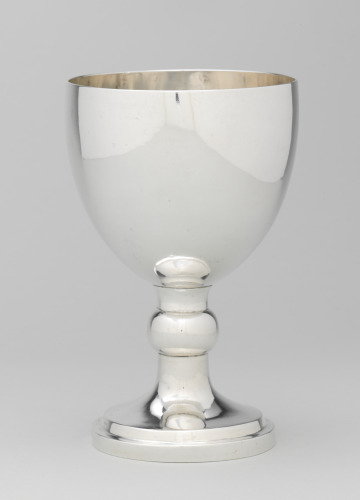
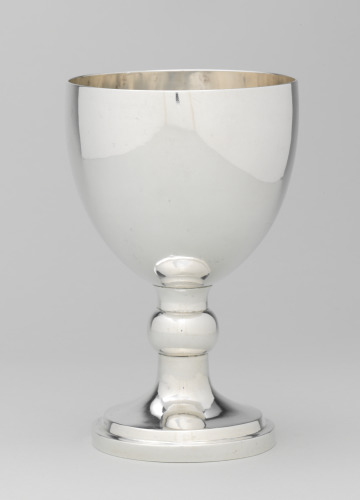
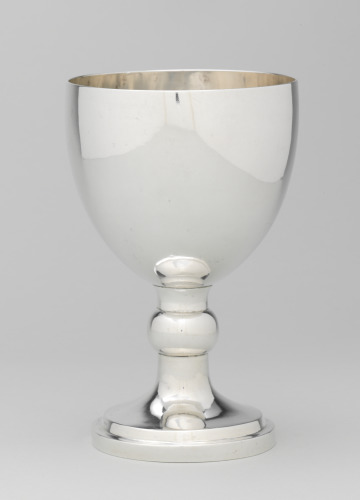
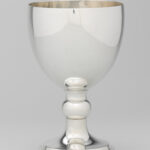
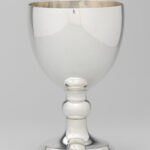
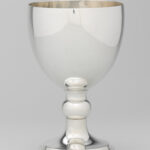
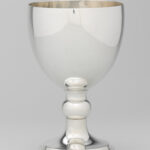
Littleton Holland worked in Baltimore from around 1800 until his death at mid-century. The form he chose for these drinking vessels is simple – large bowls set on knobbed stems with stepped bases. Littleton’s design depends on graceful curves and highly polished surfaces. Each goblet bears the initial H enclosed in a shield that echoes the goblet’s ovoid bowl. Here we compare the front of one goblet to the back of its twin. How does the addition of an engraved initial change the visual impact of Holland’s design?
AMW Reinstallation 2014
American Wing Rotations 2020
American Wing Rotations 2021
American Wing Rotations 2022
American Wing Rotations 2023
American Wing Rotations 2024
American Wing Rotations 2025
Goldsborough, Jennifer Faulds. "Eighteenth and Nineteenth Century Maryland Silver in the Collection of The Baltimore Museum of Art." Baltimore: The Baltimore Museum of Art, 1975. p. 97, ill.
Pleasants, J. Hall and Sill, Howard. "Maryland Silversmiths 1715-1830." Baltimore: Privately Printed, 1930, p. 132 and pl. XXXVI, nos. 2 and 3.
Inscribed: Etched onto bottom of base: "VW 203" "H" enclosed in a shield surrounded by interlaced olive brances and surmounted by a basket of flowers
Markings: Maker's mark: "Holland"
 On View at the BMA