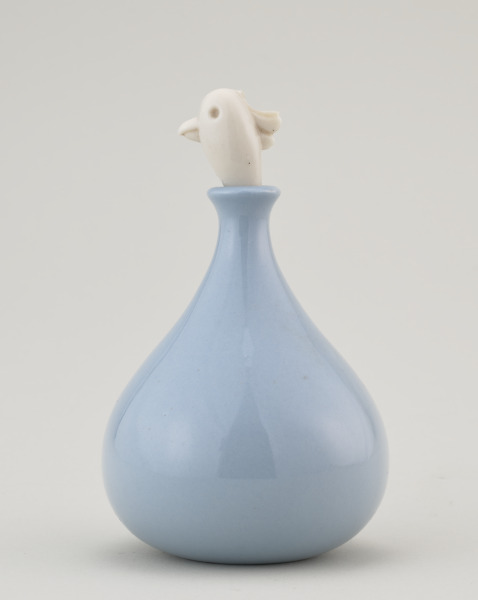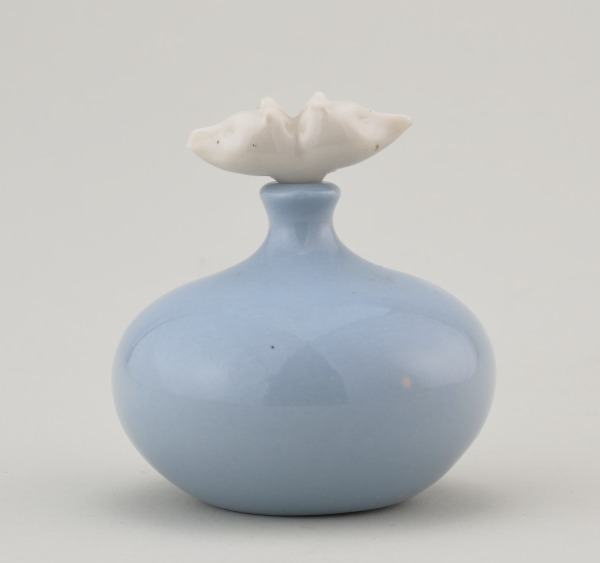
Gourd-Shaped Bottle with Stopper
2033
Scroll
Gourd-Shaped Bottle with Stopper
2033
Physical Qualities
Earthenware with remnant of naturally occurring ash glaze, 22.2 H x 15.9 Diam. cm. (8 3/4 x 6 1/4 in.)
Credit Line
Given in Memory of Mr. and Mrs. Liu Hsien-pu
Object Number
2016.46
Gourd-shaped bottles like this one have been attributed to kilns from southern China to Vietnam. The kilns may ave been operated by southern Chinese artisans who relocated following China's invasion in 111 BCE of the Nam Viet kingdom (established in 207 BCE) in present-day Guangdong Province, Guangxi Province, and northern Vietnam
China sought its neighbor's extensive natural resources such as forests, ores, pearls, and elephant ivory. But more importantly, the Nam Viet kingdom had access to the Red River delta and the harbor it provided to trading vessels from Indonesia, India, and Arabian Peninsula. Defying Chinese control, the Vietnamese continued to mount local rebellions and gained independence in 939.
The Baltimore Museum of Art by gift, 2016; private collection, Honolulu; purchased c. 1987, Guangzhou
[Asian Refresh]
Asian Gallery Rotations 2023
Asian Rotations 2024
Asian Rotations 2025
"Archaeological Finds from Han Tombs at Guangzhou and Hong Kong," Guangzhou Museum and the Art Gallery, Hong Kong: Peter Lam, 1983.
 On View at the BMA