

Hair Pin with Openwork Design of a Leafy Chrysanthemum

1884-1894

Scroll

Hair Pin with Openwork Design of a Leafy Chrysanthemum

1884-1894

Physical Qualities Silver alloy, 7 5/8 × 1 1/2 × 3/8 in. (19.4 × 3.8 × 1 cm.)
Credit Line Gift of Mr. and Mrs. R. Austin Tydings
Object Number 1978.89.11
Japanese texts from the 8th century describe the magical transformative properties of combs, specifically their ability to change into torches or clumps of bamboo. More intimately, it was thought that a comb embodied the spirit of its owner. Their special nature led to ceremonies honoring used combs. One such ceremony is held each September in Kyoto. During spring and fall migrations, waterfowl are present in great numbers in the grassy marshes that are a familiar feature along the coasts and rivers of Japan.
The Baltimore Museum of Art by gift, 1978; Mr. and Mrs. R. Austin Tydings, Baltimore


Explore the Collection Further

Hair Pin with Openwork Design of a Leafy Chrysanthemum
1899–1911
Hair Pin with Openwork Design of a Leafy Peony
1899–1911
Hair Pin with Openwork Design of a Butterfly and Chrysanthemum
1884–1894
Hair Pin (hirauchi kanzushi) with Chrysanthemum Flower and Maple Leaf Design
1879–1919
Hair Pin (tama kanzashi) Decorated with Fall Grasses
1899–1914
Hair Pin (tama kanzashi) Decorated with Fall Flowers
1884–1914
Hair Pin (tama kanzashi)
1889–1909
Hair Pin (tama kanzashi) Decorated with a Maple Leaf and Fall Flowers
1899–1911
Comb (kushi) and Hair Stick (kogai) Decorated with Nandina and Chrysanthemum
1866–1911
Comb (kushi) and Hair Stick (kogai) Decorated with Storks, Stream, and Pine Tree
1866–1899
Imberline Damask with Floral Design in Leafy Ogee Grid
1993–2014
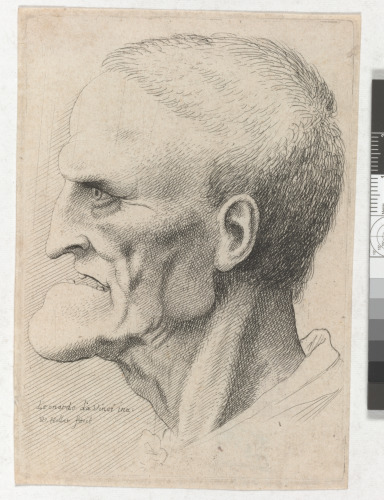
Wenceslaus Hollar and Leonardo da Vinci
Head of an Old Man with Pronounced Chin, Short Cropped Hair and Gaping Mouth Showing Teeth in Profile to Left
1626–1676