
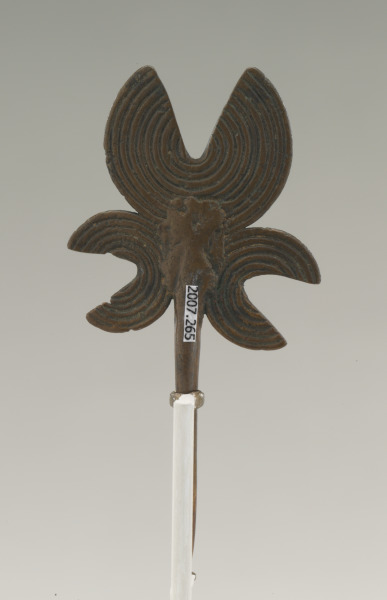
Mossi
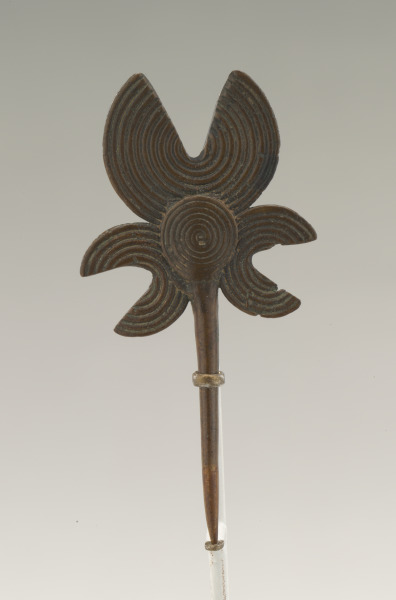
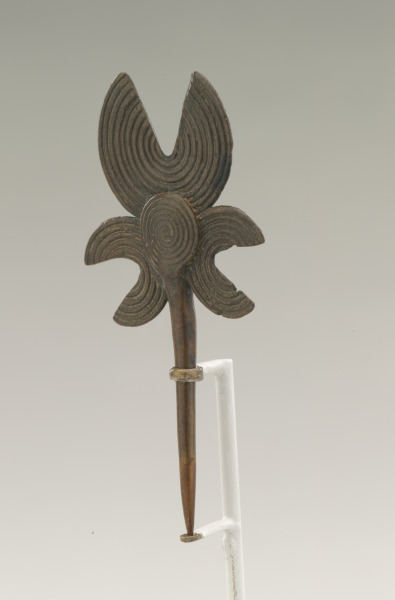
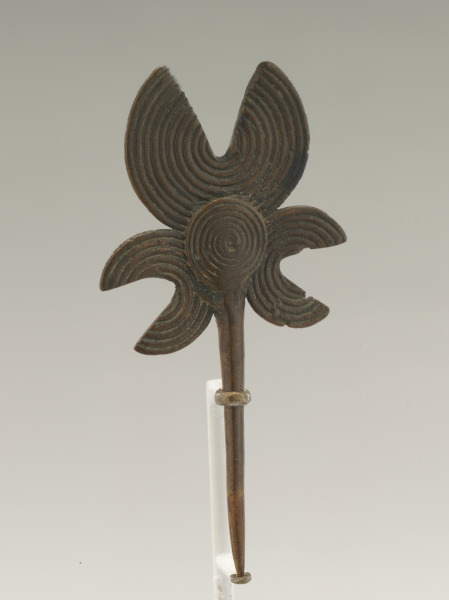
Hairpin
Mossi, 1900-1999
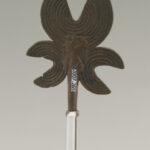
Scroll
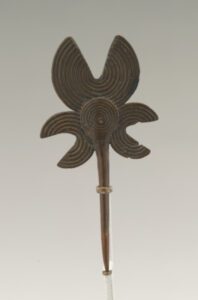
Mossi
Hairpin
Mossi, 1900-1999
Physical Qualities
Brass, 3 x 1 5/8 in. (7.6 x 4.1 cm.)
Credit Line
Anonymous Gift
Object Number
2007.265
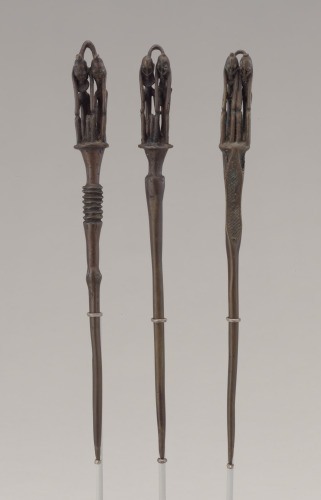
Combs and pins for the hair, crafted from wood, iron, bronze, and ivory, served not only as implements for grooming and styling but also as ornaments that added an extra degree of elegance to one’s hairdress. Such combs exhibit decorations ranging from the figurative to abstract, as well as Christian and Islamic motifs. Beautifully crafted combs were considered more prestigious than those made of simple cane and wire. In many African societies, combs were heirlooms passed on through generations with the intent to retain spiritual connections with honored ancestors. The bronze Dogon hairpins suggest an enduring link to revered ancestors. The intricate figure pairs may refer to the nommo, the mythological pairs of twins to whom Dogon peoples attribute their origins.
The Baltimore Museum of Art by gift, 2007; Private Collection, Baltimore, Maryland
Meditations on African Art: Pattern
Hand Held: Personal Arts from Africa