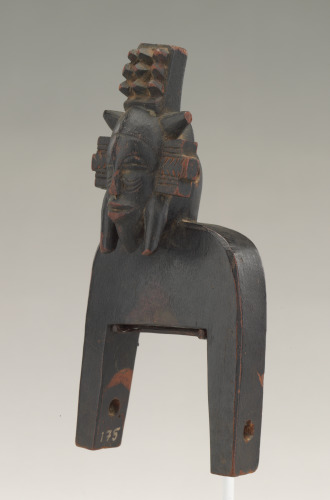
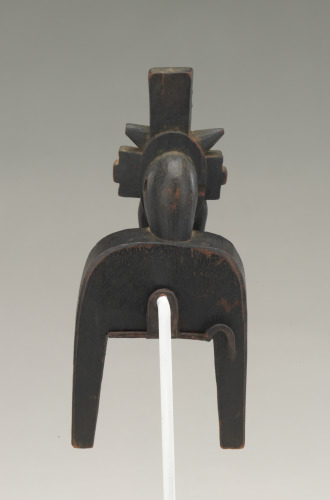
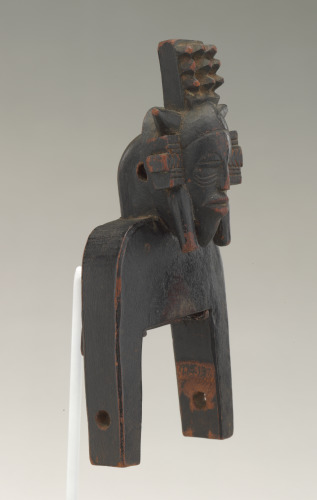
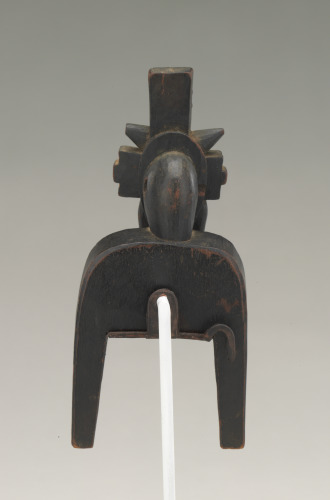
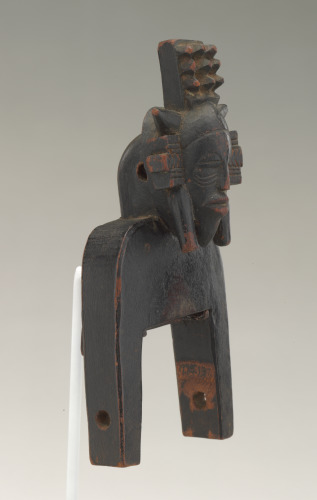
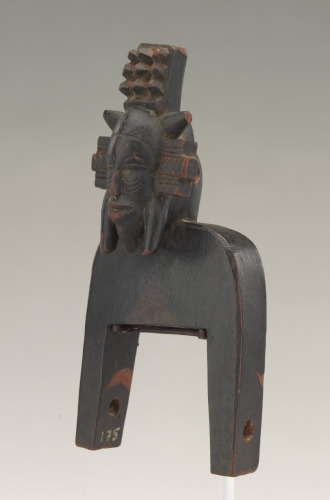
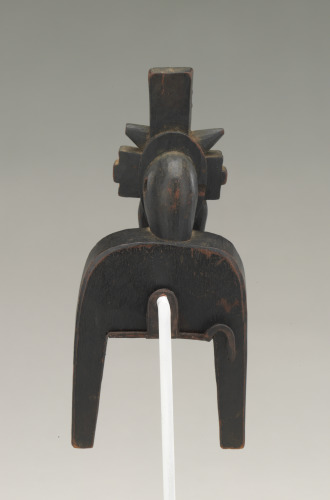
Senufo
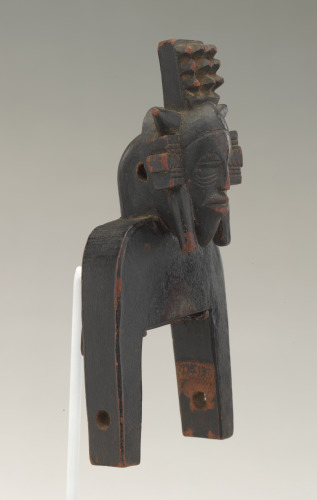
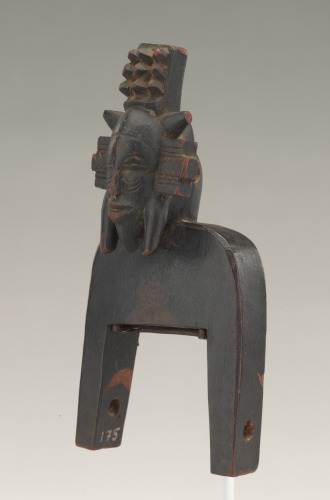
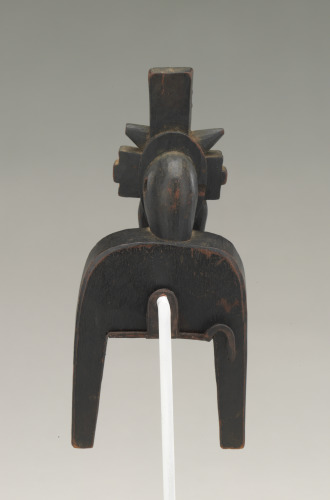
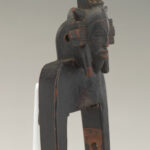
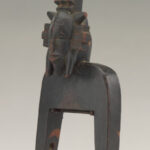
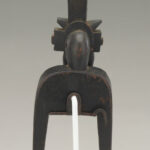
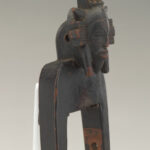
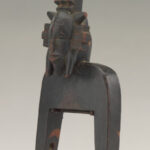
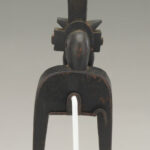
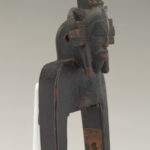
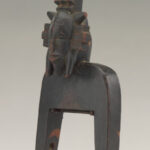
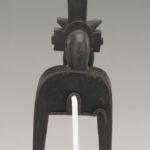
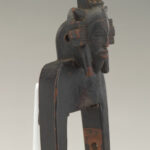
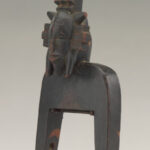
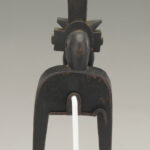
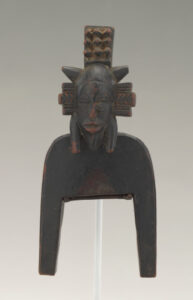
Heddle Pulley
Senufo, 1866-1932
Scroll
Senufo
Heddle Pulley
Senufo, 1866-1932
Physical Qualities
Wood, 6 5/16 × 3 1/16 × 2 1/16 in. (16 × 7.7 × 5.3 cm.)
Credit Line
Anonymous Gift
Object Number
1995.137
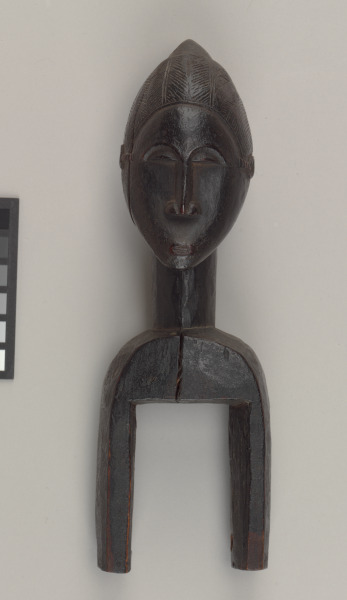
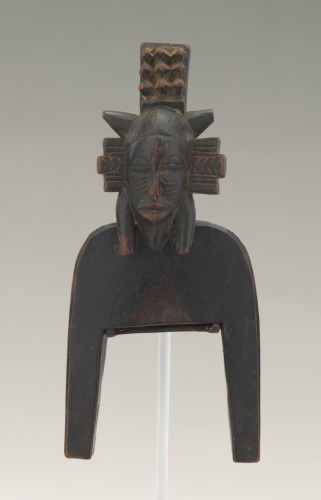
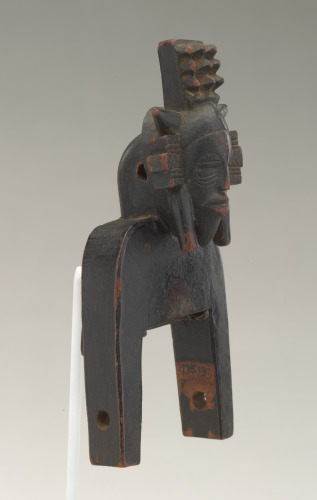
A typical West African narrow-strip loom requires a pulley to suspend the heddles that keep warp (lengthwise) threads separated during the weaving process. An appealing sculptural pulley, bobbing with each motion of the weaver’s hands and mechanisms of the loom, could amuse the weaver as well as passersby. While most decorative heddle pulleys exhibit imagery regarded as secular, some may allude to spiritual ideals. For example, across West Africa, the bird is regarded as a spiritual messenger. The back-to-back figure pair may refer to the primordial ancestors of Dogon peoples. By the late 20th century, imaginative heddle pulleys became rare as plain pulleys took their place. Various types of narrow-strip looms were used to create many of the textiles in this exhibition.
Harold Rome, New York
Hand Held: Personal Arts from Africa
Frederick John Lamp, "See the Music Hear the Dance: Rethinking African Art at the Baltimore Museum of Art." New York: Prestel, 2003, p.226, ill.
Inscribed: Orange sticker with number: 227; 175 written inside one frame leg