
Charles-François Daubigny and Chalcographie Imperiale du Louvre
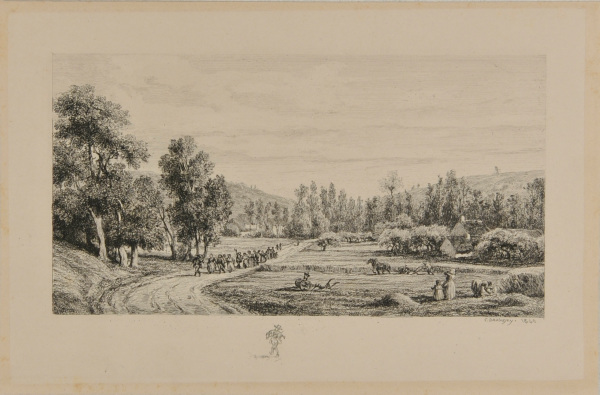
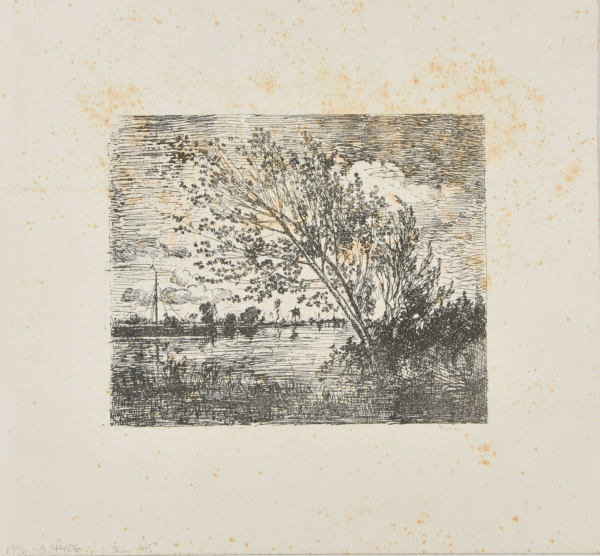
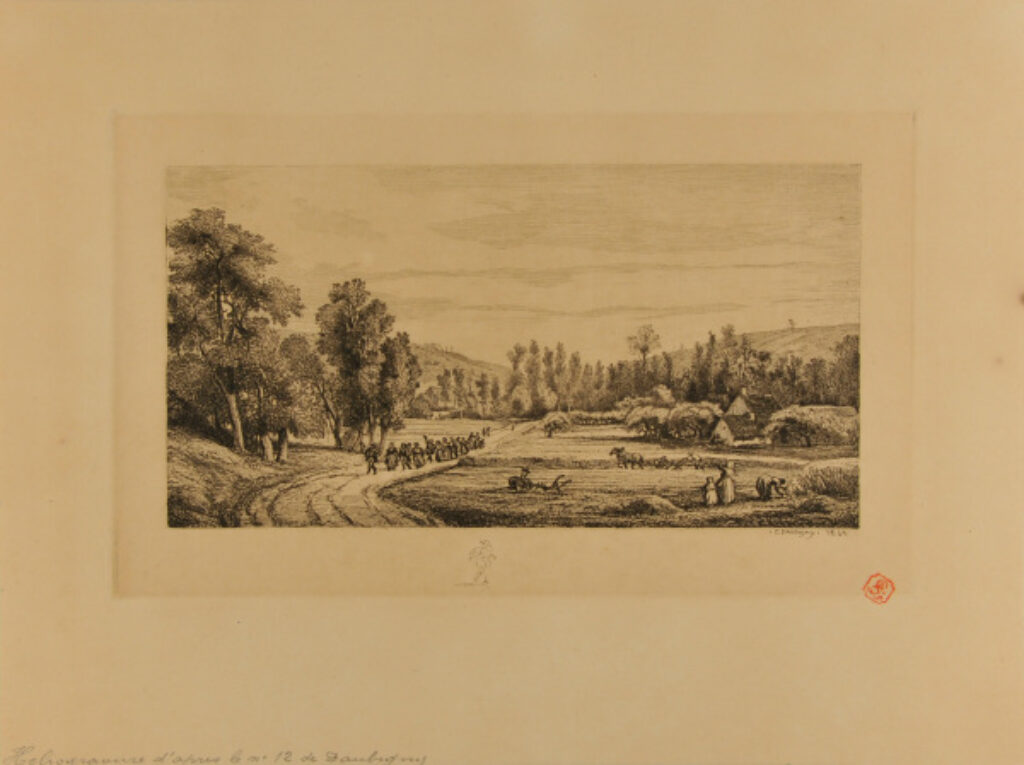
How Towns are Born
1839
Scroll
- Artist: Charles-François Daubigny
- Printer/Publisher: Chalcographie Imperiale du Louvre
How Towns are Born
1839
Physical Qualities
Photomechanical reproduction (heliogravure), Sheet: 219 x 293 mm. (8 5/8 x 11 9/16 in.)
Plate: 138 x 230 mm. (5 7/16 x 9 1/16 in.)
Credit Line
The George A. Lucas Collection, purchased with funds from the State of Maryland, Laurence and Stella Bendann Fund, and contributions from individuals, foundations, and corporations throughout the Baltimore community
Object Number
1996.48.4533
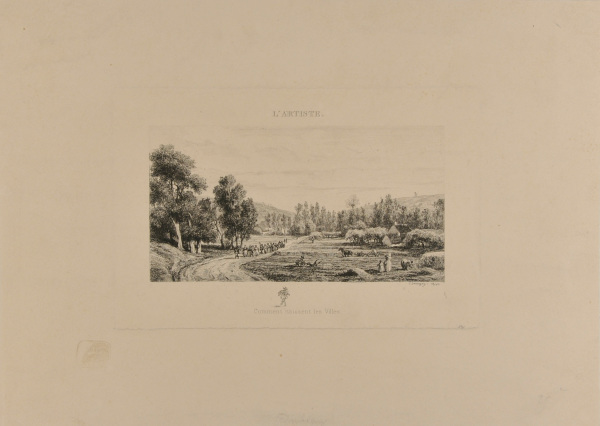
An enlarged photomechanical reproduction (procédé Amand-Durand) of Daubigny's etching, Comment naissent les villes (Delteil 13). Remarque: lower center, man playing fiddle.
The Baltimore Museum of Art by purchase, 1996; The Maryland Institute College of Art,
through Henry Walters, Baltimore, by bequest 1909; from George A. Lucas, Paris
through Henry Walters, Baltimore, by bequest 1909; from George A. Lucas, Paris
Inscribed: Signed and dated in plate: lower right "C. Daubigny. 1840" Inscribed in pencil: bottom left "Heliogravure d'apres le no. 12 de Daubigny"
Markings: Collector's stamp: Alfred Lebrun (Lugt 140) Watermark: Strasbourg lily


Printer/Publisher
Chalcographie Imperiale du Louvre
2000–2000
Meet Chalcographie Imperiale du Louvre