
Arita kilns
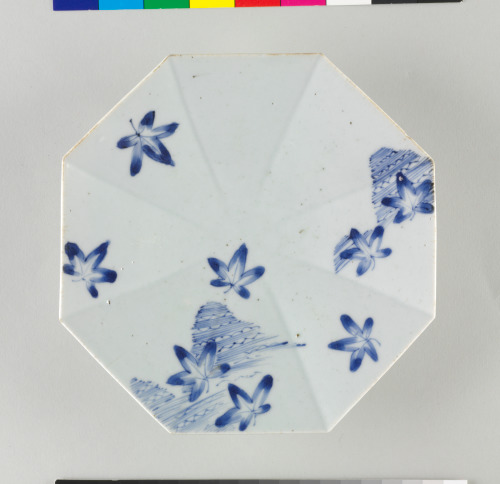
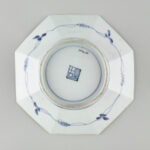
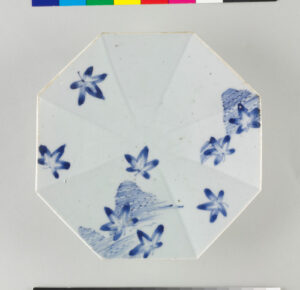
Imari-style Dish Decorated with a Meandering River and Falling Maple Leaves
1666-1732
Scroll
Arita kilns
Imari-style Dish Decorated with a Meandering River and Falling Maple Leaves
1666-1732
Physical Qualities
Porcelain with underglaze cobalt decoration, Other: 1 9/16 × 7 1/16 in. (4 × 17.9 cm.)
Credit Line
Gift of Frederick Singley Koontz, Baltimore, in Memory of Laurance P. and Isabel S. Roberts
Object Number
2006.54
Japan invaded Korea twice during the 1590s. Though Korea withstood the
assaults, Japanese armies captured skilled artisans, metalworkers, and
civilians. Korean potters taken to Kyushu Island advanced Japanese ceramics
by introducing the climbing kiln and discovering kaolin clay deposits in the
Arita area. These contributions, and the popularity of imported Chinese blueand-
white porcelain, led to the Japanese production of dishes like this one.
This dish reflects both Korean and Chinese ceramic traditions, with a purely
Japanese motif of a few maple leaves and the suggestion of a meandering
river. The palette is blue and white, but this imagery evokes the fall, when
traveling to view the fleeting red maple leaves was—and remains—a popular
activity in Japan.
The Baltimore Museum of Art by gift, 2006; from Frederick Koontz, by gift; from Laurance and Isabel Roberts, Baltimore
Across East Asia: China's Cultural & Artistic Legacy
Asian Gallery Rotations 2021
Asian Gallery Rotations 2022
Asian Gallery Rotations 2023
The Way of Nature: Art from Japan, China, and Korea
Richard S. Cleveland, "200 Years of Japanese Porcelain," Kansas City: Nelson Gallery-Atkins Museum, 1970; no. 5, p. 21 [early Hizan bottle], nos. 20 & 21, pp. 34-35 [compare close style of painting and foot of no. 20], no. 26, p. 40 [compare very close painting style and height of foot], and no. 50, p. 64-65 [compare 'fuku' mark, variation]
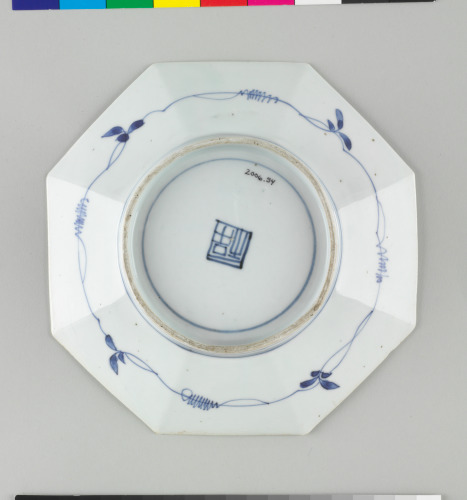
Inscribed: Bottom, underglaze blue: "fuku" within a square [good fortune].