
Claude Gillot and Jean Audran
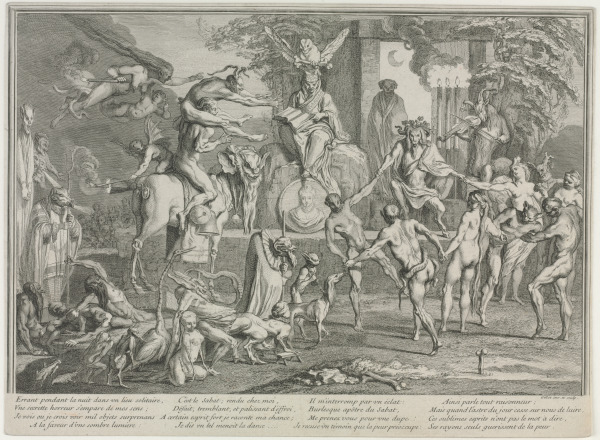
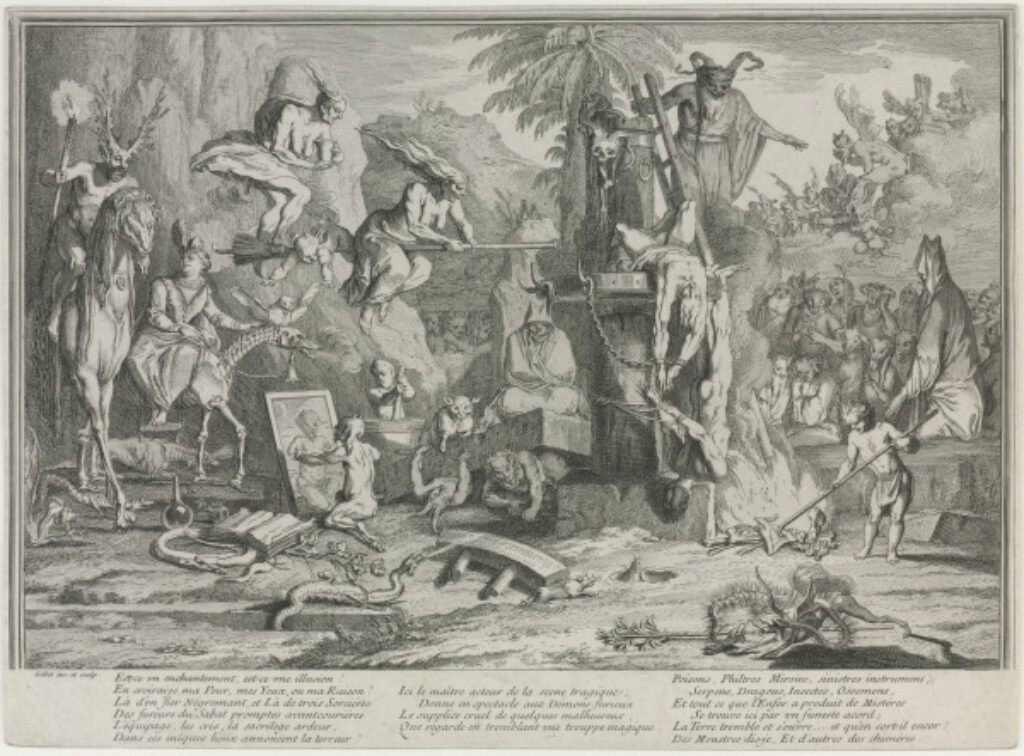
Is It a Spell, Is It an Illusion (Est-ce un enchantement, est-ce un illusion)
1689-1729
Scroll
- Artist: Claude Gillot
- Artist: Jean Audran
Is It a Spell, Is It an Illusion (Est-ce un enchantement, est-ce un illusion)
1689-1729
Physical Qualities
Etching and engraving, Sheet (trimmed within platemark): 246 x 336 mm. (9 11/16 x 13 1/4 in.)
Credit Line
Purchased as the gift of the Print, Drawing & Photograph Society
Object Number
2011.2
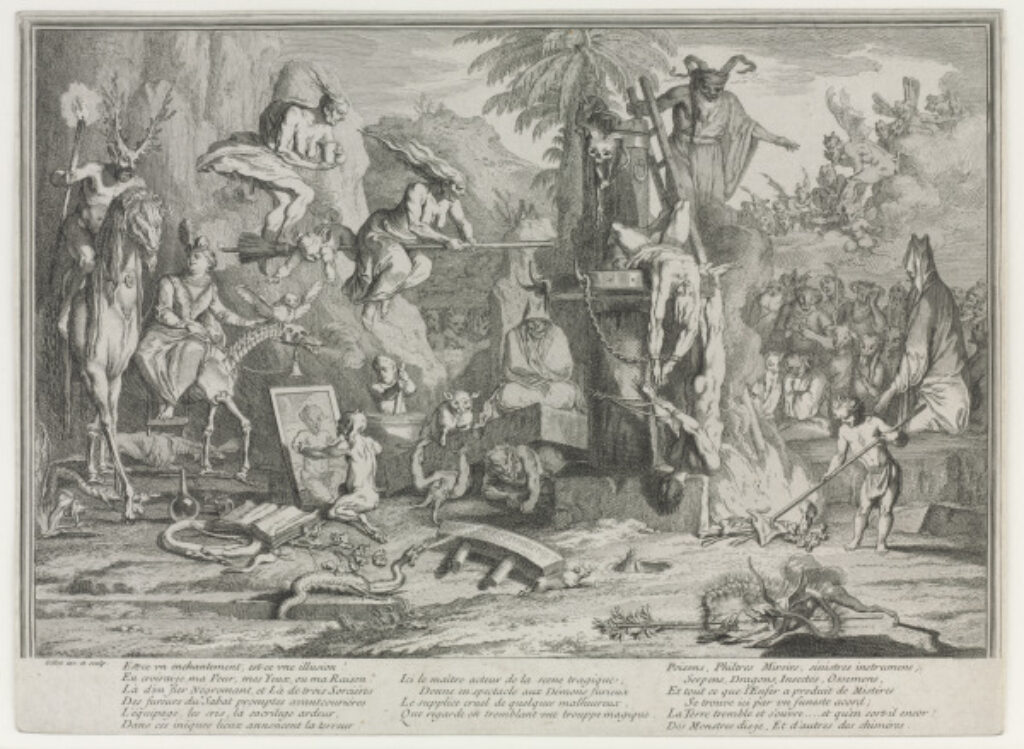
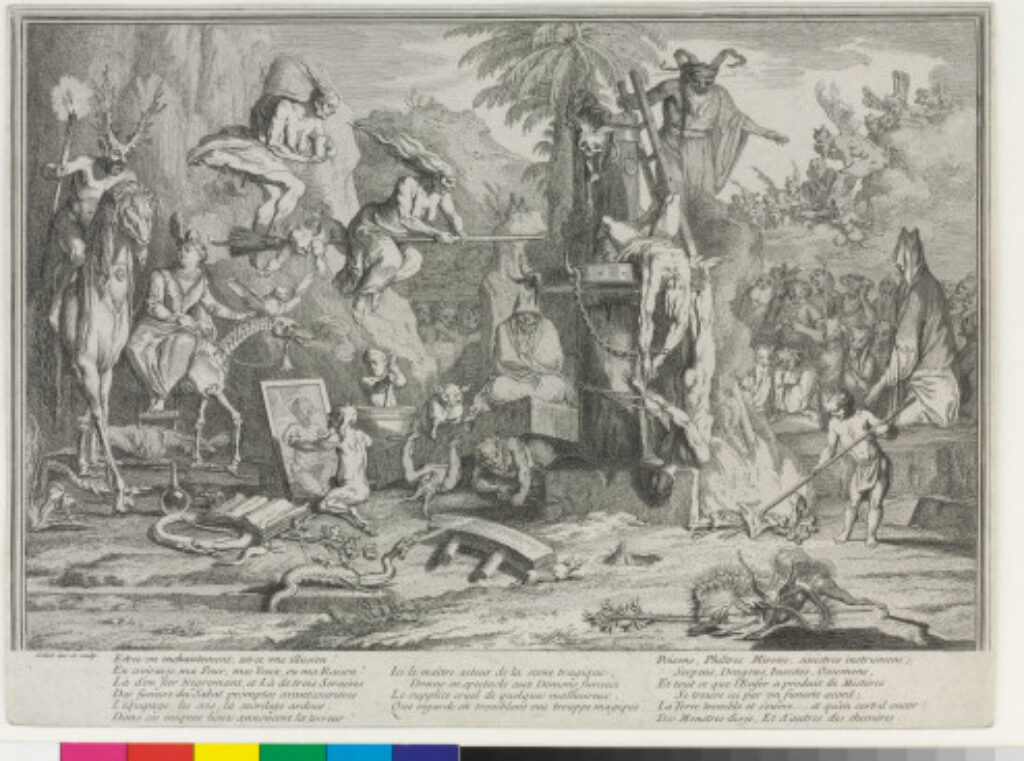
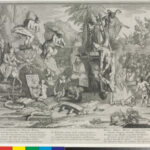
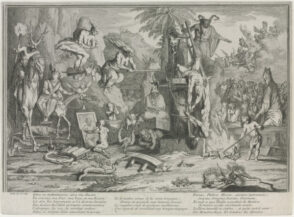
Although Claude Gillot became a member of the Académie Royale de Peinture et de Sculpture as a painter, he is best known today for his lively prints and drawings of a wide range of subjects. In The Witches’ Sabbath, Gillot depicted snakes, owls, witches, and skeletons, as well as satanic gatherings, human sacrifice, and half-human, half-animal creatures. And yet the artist has lent something of a whimsical quality to these mysterious scenes of sorcery through his calligraphic line work and light-suffused compositions.
These works were printed posthumously by Jean Audran, a French printmaker and publisher who acquired the unrealized etching plates from Gillot’s studio after his death. Audran reinforced certain elements of the designs with engraving and then added the accompanying verses below.
The Baltimore Museum of Art by purchase, 2011; Carolyn Bullard and Susan Shulman
BMA, Jacobs wing rotation, 15 November 2011 - 2 March 2012.
Inscribed: lower right in plate: "Gillot inv. et sculp."