




Japanese Man’s Band (datejime)

2009

Scroll

Japanese Man’s Band (datejime)

2009

Physical Qualities Silk, indigo dye , 4 × 109 in. (10.2 × 276.9 cm.)
Credit Line Gift of Charles W. Newhall III, Baltimore
Object Number 2014.81.2c
The tea bowl and hand-guards in the nearby case together with this contemporary kimono suggest the four seasons. The full moon and flowering branch is an emblem of springtime; the silvery orb-like bowl and inky kimono evoke the summer’s night sky; the Inari fox is the eponymous messenger of Japan’s ancient rice deity who provides a bountiful harvest; and the snowclad top of Mt. Fuji symbolizes winter. While each of these works might have served a practical function as a garment, drinking vessel, or protection for the hand in the forward thrust of a razor-sharp sword, instead they were never used but rather created as objects of beauty or acquired for display.
The Baltimore Museum of Art by gift, 2014; Charles Newhall, Baltimore by purchase, Tokyo, Japan
Rena Hoisington, The Baltimore Museum of Art, "New Arrivals: Gifts of Art for a New Century," February 7-May 8, 2016.
Explore the Collection Further

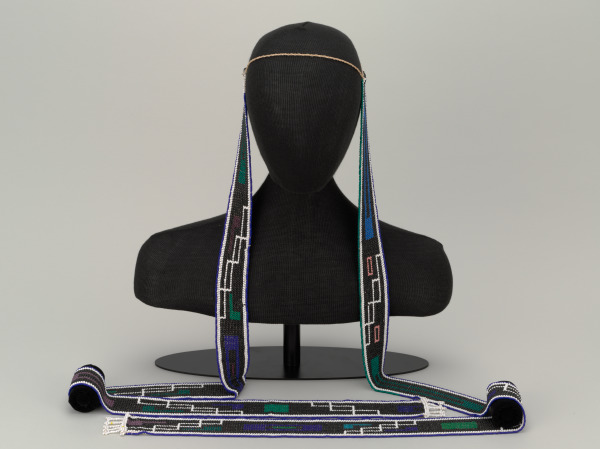
Ndebele
Pendants for a Married Woman's Headband (Milingakobe)
1900–1999
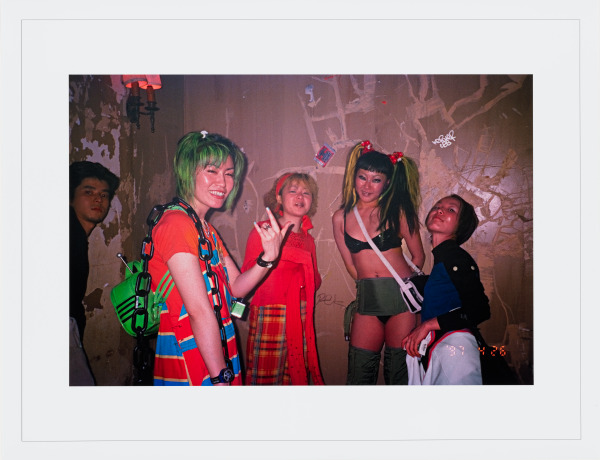
Nikki S. Lee
The Young Japanese East Village Project (13)
1996