Pieter Lastman
Judah and Thamar
1614-1624
Scroll
Pieter Lastman
Judah and Thamar
1614-1624
Physical Qualities
Etching and engraving, Plate: 216 × 180 mm. (8 1/2 × 7 1/16 in.)
Sheet: 221 × 185 mm. (8 11/16 × 7 5/16 in.)
Credit Line
Garrett Collection
Object Number
1946.112.5192
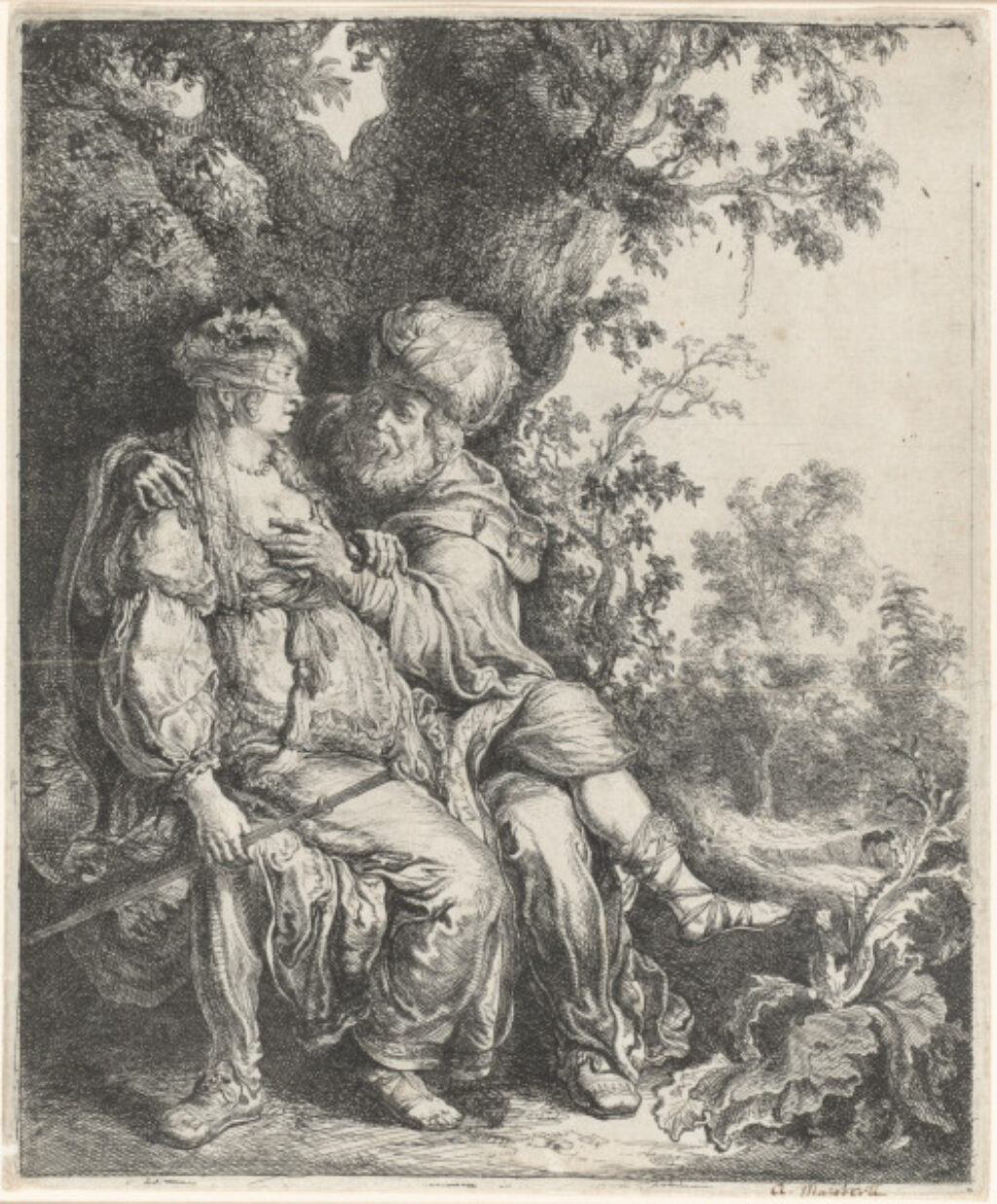
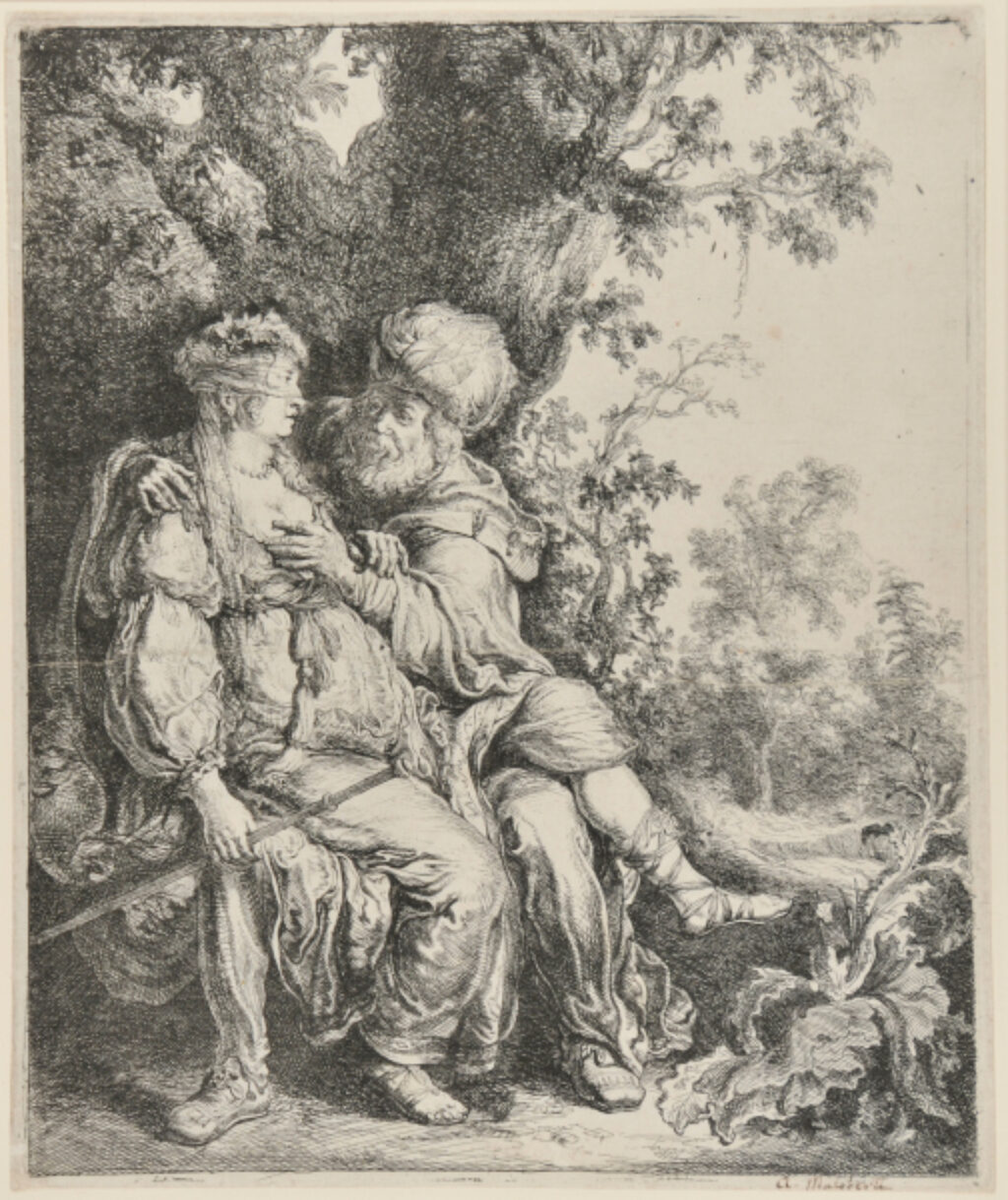
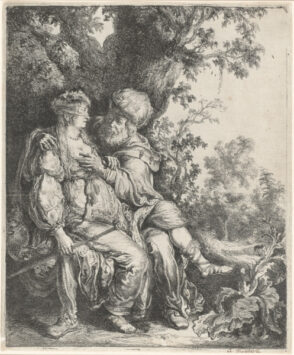
Tamar’s story is one of deception and seduction in service of continuing a patriarchal line. After being twice widowed without children by the sons of Judah, Tamar was considered cursed by her father-in-law, who refused to marry her to his third son. Fearful that she would be cast out, Tamar took it upon herself to ensure the continuation of his family line. When Judah traveled to another town, Tamar, disguised as a prostitute, intercepted him, asking for his staff and seal in exchange for her services. This etching shows their meeting: Tamar is dressed luxuriously and veiled, holding Judah’s staff as he gropes her. When Tamar became pregnant from their encounter, Judah threatened to kill her for committing adultery, but she confronted him with his staff and seal, stating the owner was the father of her unborn twins.
Judaic Museum of the Jewish Community Center of Greater Washington, "The Jews in the Age of Rembrandt," 1981, cat. 50, p. 78 illust.
BMA, "17th Century Prints from Italy and the North," 27 May - 17 August, 1986.
BMA, "The Age of Rembrandt: Distinguished Prints from the Collection," 12 February - 13 April 1997.
Andaleeb Banta, The Baltimore Museum of Art, "Women Behaving Badly: 400 Years of Power and Protest," July 18 - December 19, 2021.
BMA, "17th Century Prints from Italy and the North," 27 May - 17 August, 1986.
BMA, "The Age of Rembrandt: Distinguished Prints from the Collection," 12 February - 13 April 1997.
Andaleeb Banta, The Baltimore Museum of Art, "Women Behaving Badly: 400 Years of Power and Protest," July 18 - December 19, 2021.
Inscribed: Recto: in image, upper left, in plate "PL inu"; below image, lower right, in brown ink: "A. Matsberts [?]"
Markings: CM: Claghorn; Garrett