Hausa and Unidentified
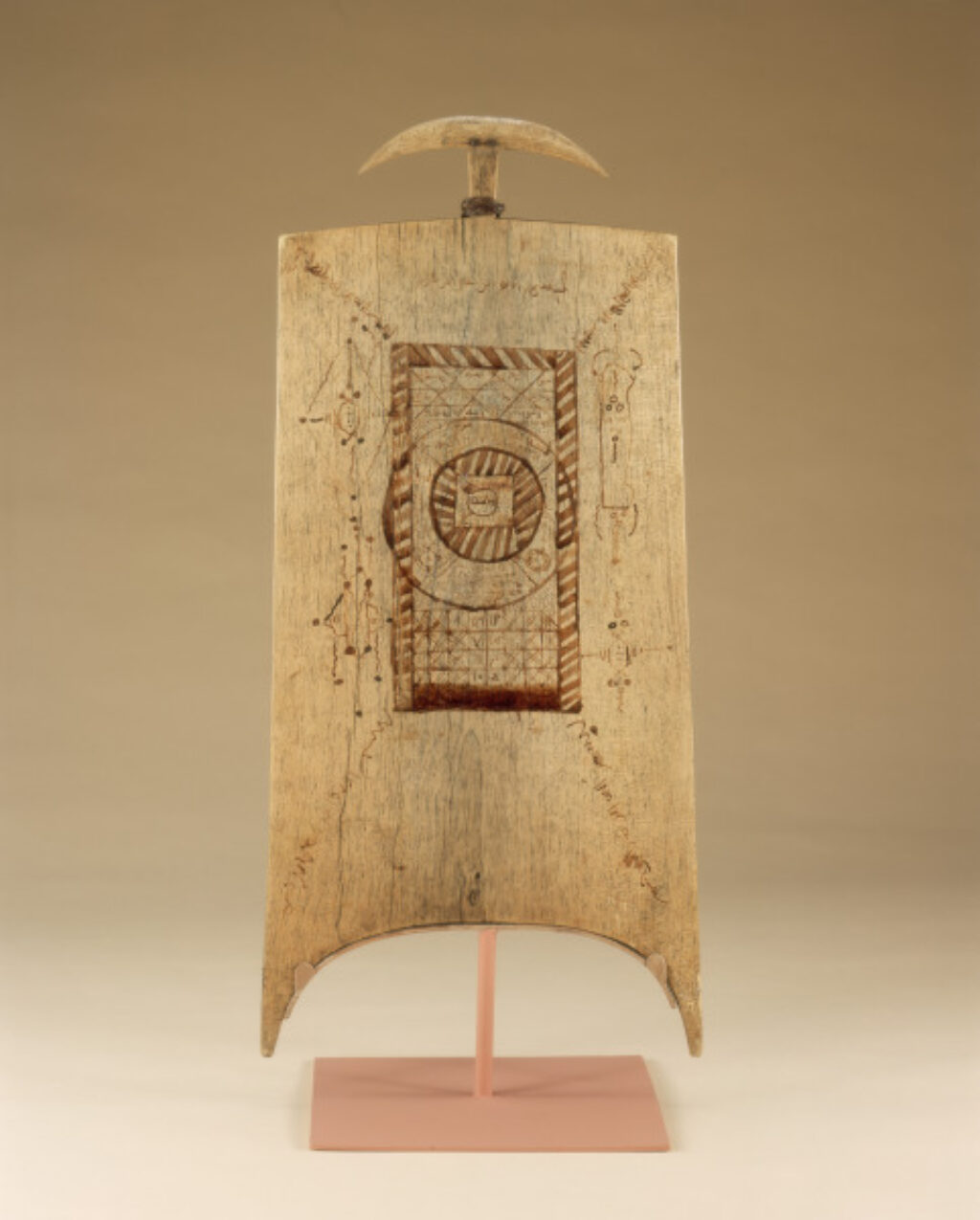
Koranic Writing Board
Hausa, 1900-1999
Scroll
Physical Qualities
Wood, ink, leather, iron, 25 1/2 x 11 in. (64.8 x 27.9 cm.)
Credit Line
Gift of Barry and Toby T. Hecht, Bethesda, Maryland
Object Number
2005.160
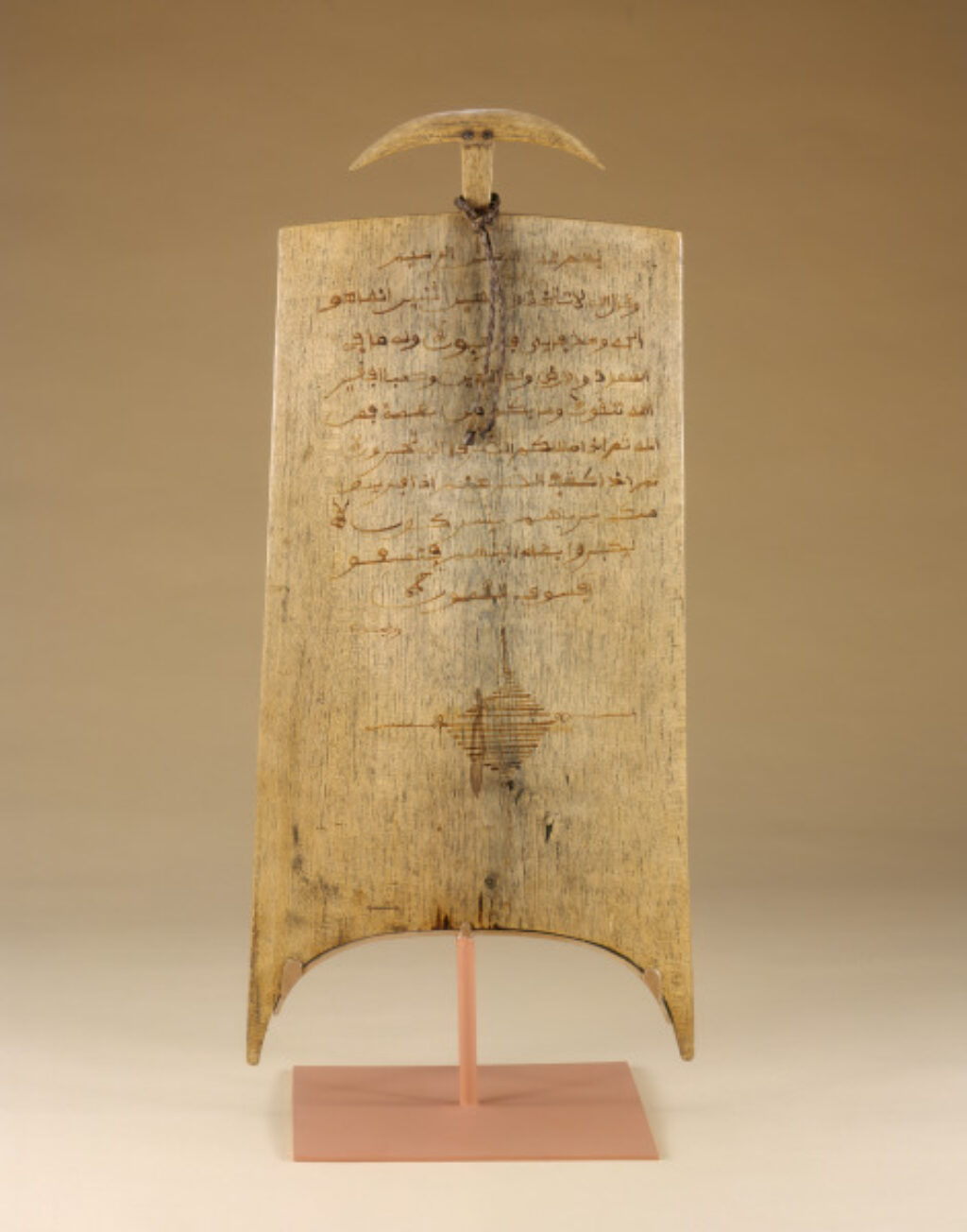
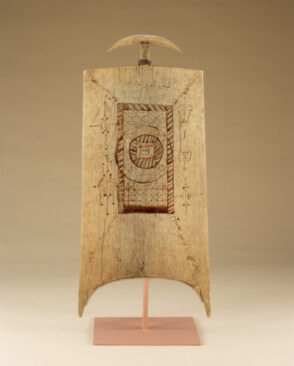
From Senegal to Somalia, Muslim students, clerics and healers work with Qu'ranic boards to memorize passages of the Qu'ran, advance calligraphy skill, or inscribe mystical designs that heal and protect. The ink is washed away after each use until after years of devout us, the wood absorbs the ink and shows the traces of God's Word. The quality of the calligraphy on the reverse of this board, and the skill required to compose the mystical design and sacred texts of its front, suggest this was the Qu'ranic board of someone schooled in the arts of healing. Written in the central circles, each open space of the upper and lower designs, and radiating out from each corner, are pious formulae intended to honor and invoke the power of Allah (God). The center reads "With Allah," and just below: "There is no God but Allah. Muhammad is the prophet of Allah...May Allah bless him and grant salvation." Five passages from the Qu'ran, 16:51-55, remain on the board's reverse side.
The Baltimore Museum of Art by gift, 2005; Dr. and Mrs. Barry Hecht, Bethesda, Maryland
Meditations on African Art: Light


Artist
Unidentified
2000-01-01 00:00:00–2000-01-01 00:00:00
Explore the Collection Further