
James Duffield Harding, Baron Isidore Taylor, and others
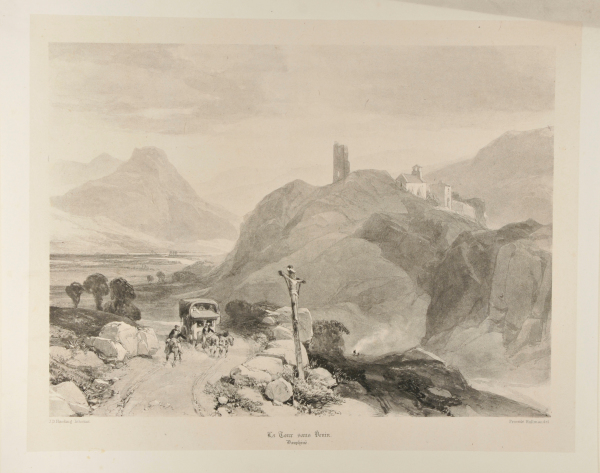
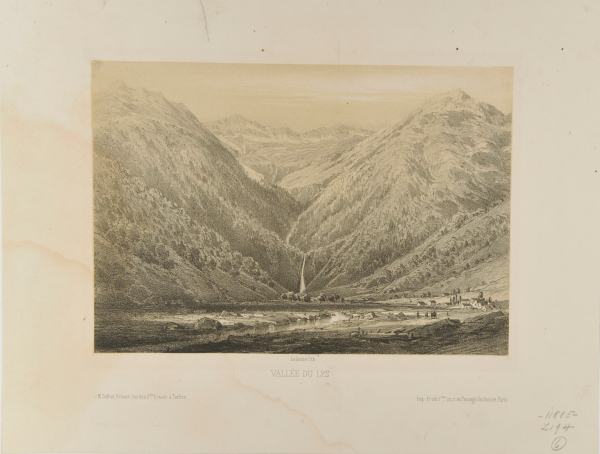
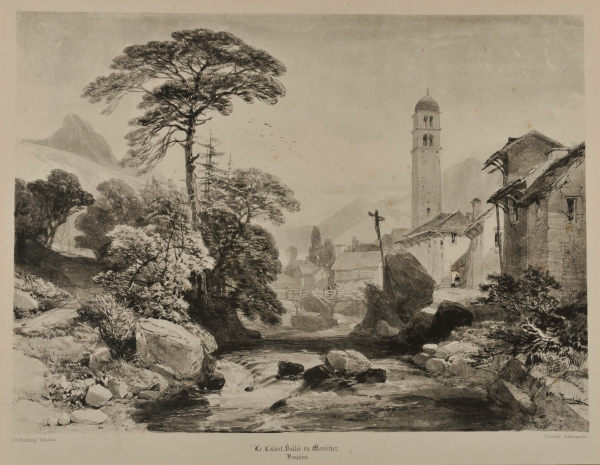
Le Casset, vallée du Monestier
1853
Scroll
- Artist: James Duffield Harding
- Publisher: Baron Isidore Taylor
- Printer: Charles Joseph Hullmandel
Le Casset, vallée du Monestier
1853
Physical Qualities
Lithotint, Sheet: 274 x 349 mm. (10 13/16 x 13 3/4 in.)
Image: 243 x 330 mm. (9 9/16 x 13 in.)
Credit Line
The George A. Lucas Collection, purchased with funds from the State of Maryland, Laurence and Stella Bendann Fund, and contributions from individuals, foundations, and corporations throughout the Baltimore community
Object Number
1996.48.8261
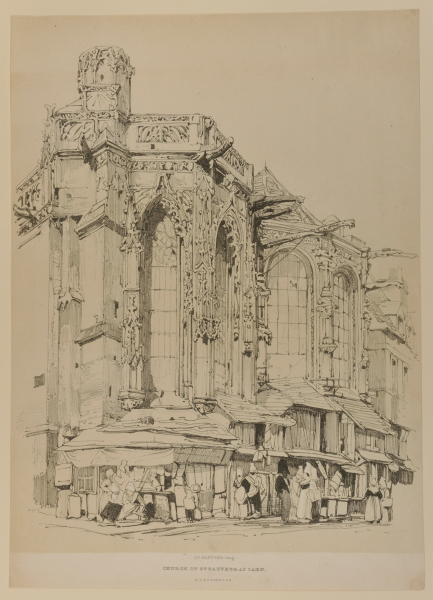
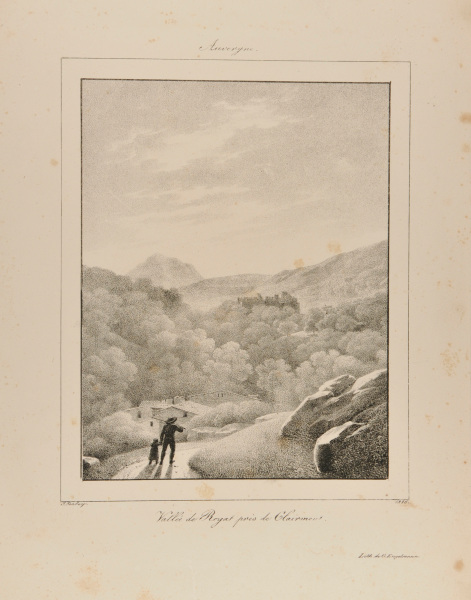
This print is a part of an ambitious series of lithographs published in France by Baron Isidore Taylor (1789–1879) between 1820 and 1878. An international team of artists contributed prints to the 20-volume publication. The goal of the series was to record the medieval monuments of France, which had suffered during the Revolution and Napoleonic Wars, in hopes of raising funds for their restoration.
Lithography relies upon the chemical repulsion of water and grease. A design is drawn onto a stone slab or a specially-prepared metal plate using a greasy crayon or a brush and greasy liquid called tusche. After chemically fixing the image onto the surface, ink is rolled over the stone or plate that has been moistened with water. The ink adheres to the greasy drawing but does not stick to any wet areas. The inked stone or plate is passed through a press to create the print. The term lithotint describes a lithograph that displays fine gradations of tonal washes. In the Harding print, notice how the ink forms
puddles, not unlike color applied to a watercolor painting.
Taking in the View: English Watercolors and Prints
Inscribed: lower left in stone: "J.D. Harding lithotint."; lower center in stone: "Le Casset , Vallée du Monetier / Dauphiné" ; lower right in stone: "Procédé Hullmandel"
Markings: CM: Maryland Institute Lucas Collection (Lugt 1695c)