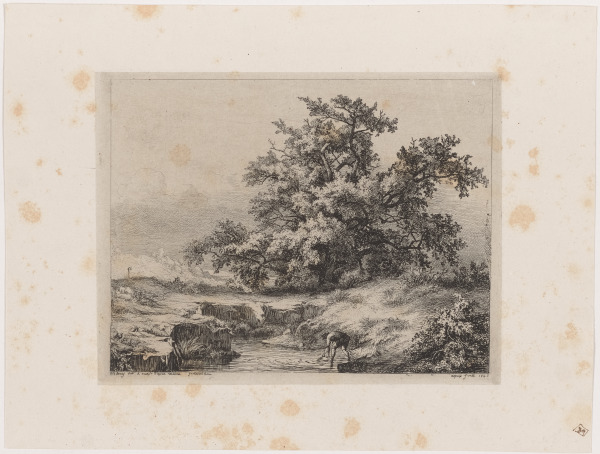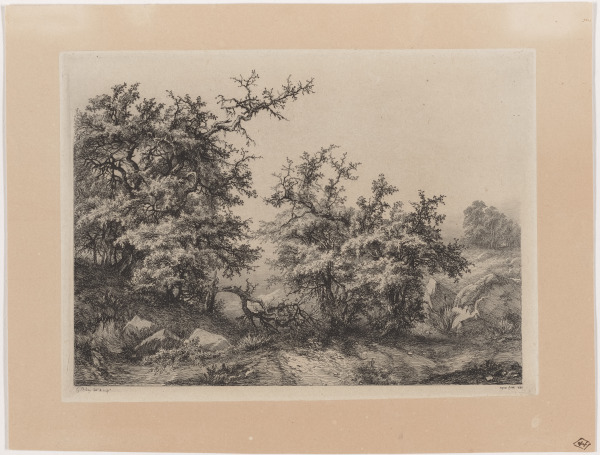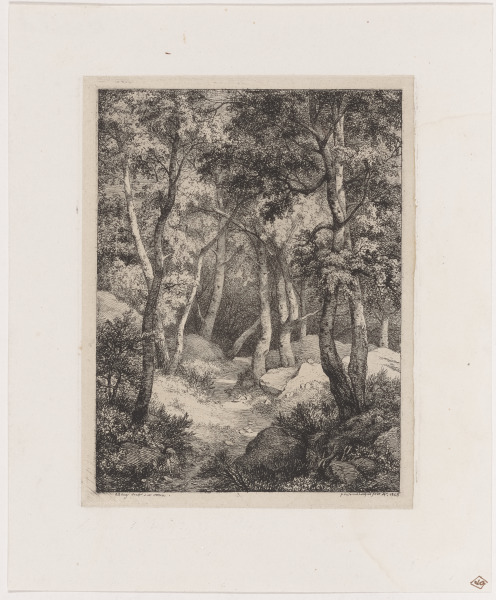
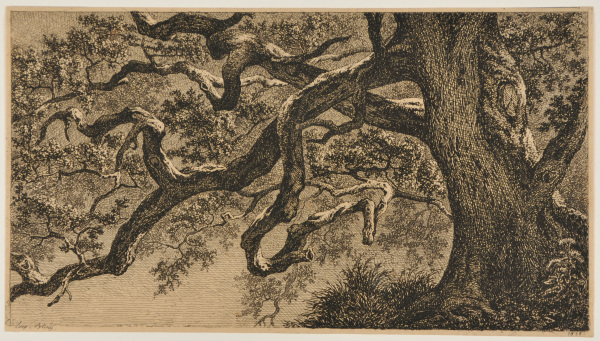
Eugène-Stanislas-Alexandre Bléry
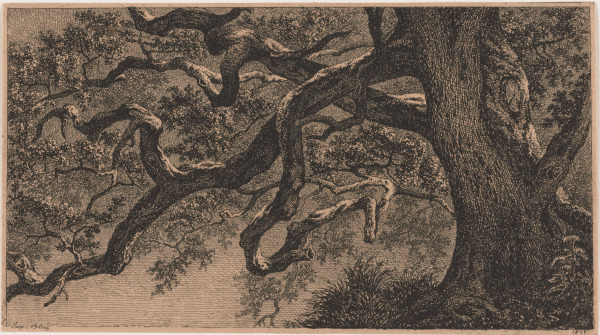
Les Branches de Chêne
1837
Scroll
Eugène-Stanislas-Alexandre Bléry
Les Branches de Chêne
1837
Physical Qualities
Etching, Sheet: 105 × 187 mm. (4 1/8 × 7 3/8 in.)
Credit Line
The George A. Lucas Collection, purchased with funds from the State of Maryland, Laurence and Stella Bendann Fund, and contributions from individuals, foundations, and corporations throughout the Baltimore community
Object Number
1996.48.237
Whether depicting indigenous or non-native plant species
and trees, these works are united in their close observations
of the natural world. Take a moment to explore how each
artist depicted nature’s vitality.
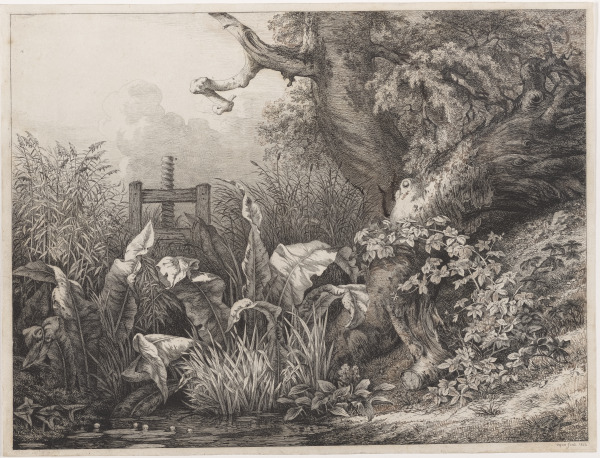
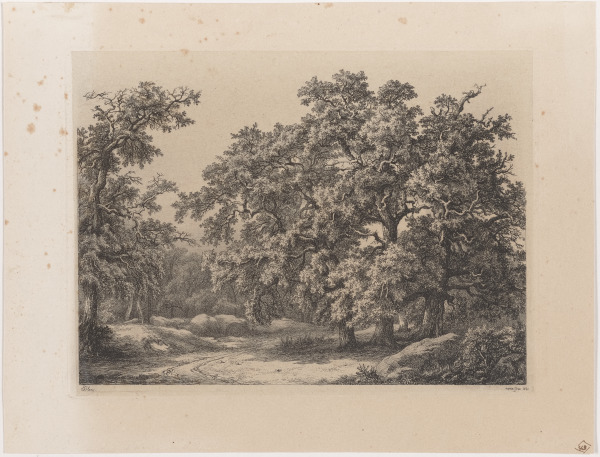
Eugène-Stanislas-Alexandre Bléry’s etching, The Branches
of an Oak Tree, reflects imagery associated with the
French national landscape. Jules Ferdinand Jacquemart’s
Tropical Plants documents an interest in the plants of
different climates, indicating the ecological traces of
France’s colonial projects in Southeast Asia and the Pacific
Islands. Karl Bodmer’s detailed Digitalis and Morning
Glory captures how plant species, like people, traveled
across continents over centuries. By the time he made this
drawing, European foxglove and this Central American
species of morning glory were thriving on both sides of the
Atlantic Ocean.
The Baltimore Museum of Art by purchase, 1996; The Maryland Institute College of Art, through Henry Walters, Baltimore, by bequest 1909; from George A. Lucas, Paris
Deconstructing Nature: Environmental Transformation in the Lucas Collection
Bibliothèque nationale (France). Inventaire du fonds français après 1800 (Paris: M. Le Garrec, 1930-ongoing) vol. 2, p. 506, #2.
Beraldi, Henri. Les graveurs du xix siècle (Paris: L. Conquet, 1885) vol. 2, p. 100, #1.
Beraldi, Henri. Les graveurs du xix siècle (Paris: L. Conquet, 1885) vol. 2, p. 100, #1.
Inscribed: Signed and dated in ink (?): lower left "Eug. Blery"; lower right "1838"
Markings: None
Artist
Eugène-Stanislas-Alexandre Bléry
1804–1886
French, 1805-1887
Meet Eugène-Stanislas-Alexandre →