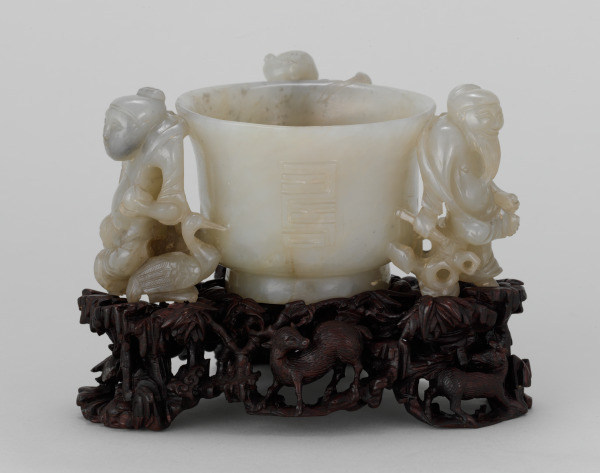

Libation Cup Decorated with Raised Seed Motif
1700-1799
Scroll

Libation Cup Decorated with Raised Seed Motif
1700-1799
Physical Qualities
Jade, 10.7 cm. Diam. (4 3/16 in.)
Credit Line
Frank J. and Elizabeth L. Goodnow Collection
Object Number
1942.70.472
In China, as elsewhere, the addition of drinking tea or wine heightened many types of experiences. From quiet contemplation in the seclusion of the study, to conversations of friends gathered to appreciate music or poetry, to lengthy multi-course banquets, the presentation of the beverage was sometimes as meaningful as its selection and preparation.
During the Qing dynasty (1644-1911), jade utensils became very popular. Manchu rulers favored green jadeite which was introduced to China in the 18th century, but Chinese scholars and aristocrats preferred the whiter, more subtle nephrite which was associated with ancient ritual implements. The nephrite cup, used for toasting with wine, is an example of the 18th and 19th century fashion of reinterpreting decoration and shapes popular during earlier periods. The cup’s shape copies a Tang dynasty (618-907) wine cup, while its decoration derives from the millet grain pattern found on Warring States (481-256 BCE) to Han (206 BCE-CE 220) nephrite jade bi, symbols of heaven commonly placed in ancient Chinese tombs. A cup with such overt allusions to previous dynasties elevated any occasion.
Glazes too conveyed historical associations. The sacrificial red (jihong) glaze was associated with Xuande period (1426-1435) imperial ritual. The deep red glaze was especially difficult to create, as the depth and richness of color depended on exacting preparation of materials and conditions within the kilns. Here gold lacquer was used to repair the bowl, a method and aesthetic enhancement associated with Japan. Yellow, the color of earth, was also a color imbued with meaning, at times restricted to the Emperor’s robes, state ceremonies and sacrifices, and imperial household
The Baltimore Museum of Art by bequest to the Mayor and City Council of Baltimore, 1942; Goodnow Collection, Baltimore; probably acquired by Elizabeth Goodnow in China, c. 1912-1913
Imagining Home