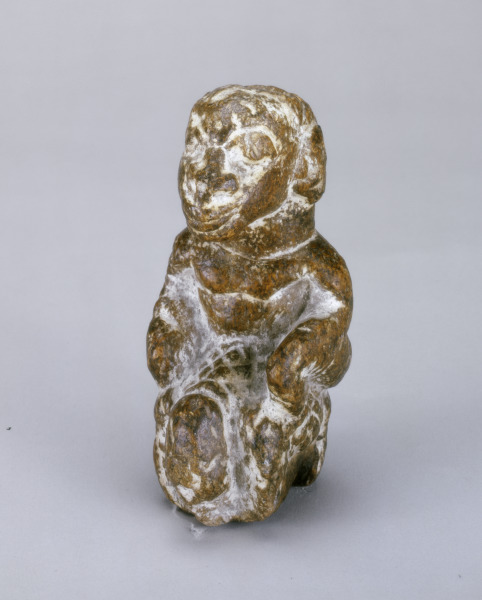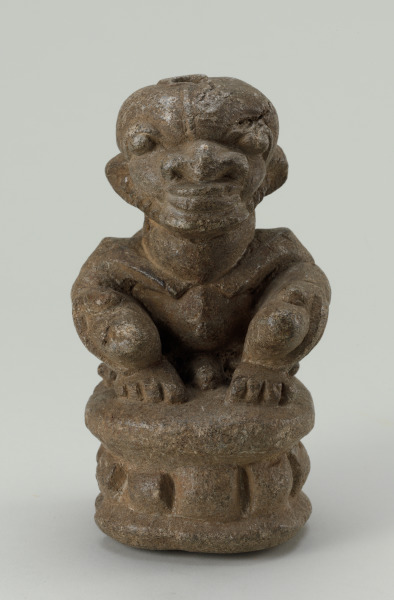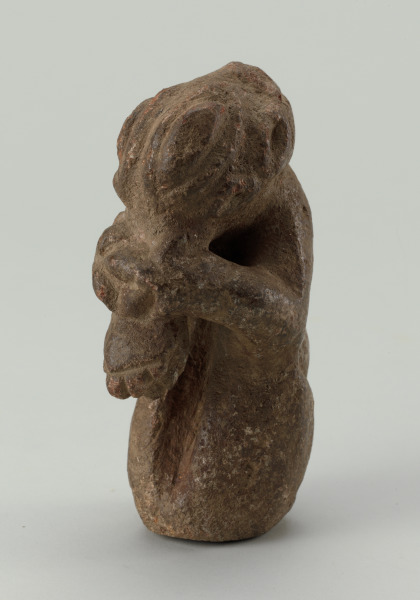
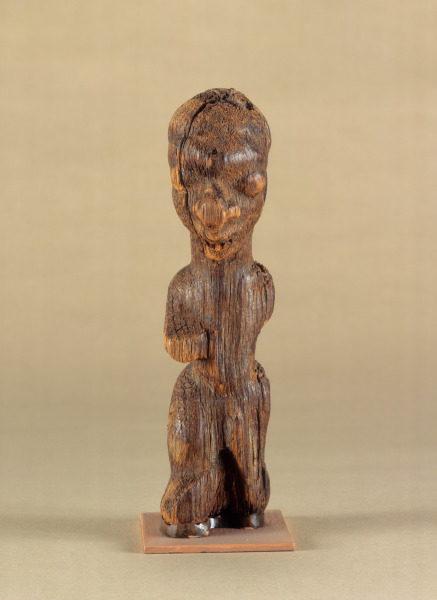
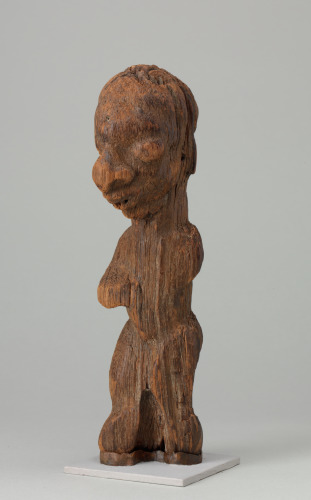
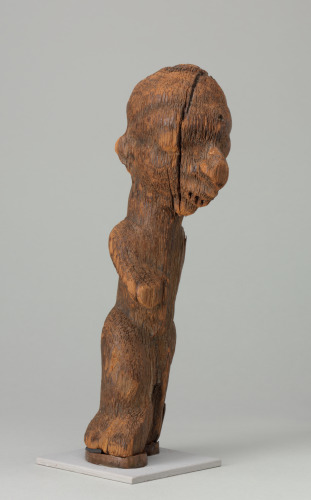
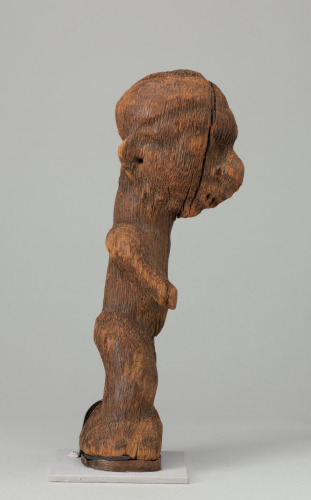
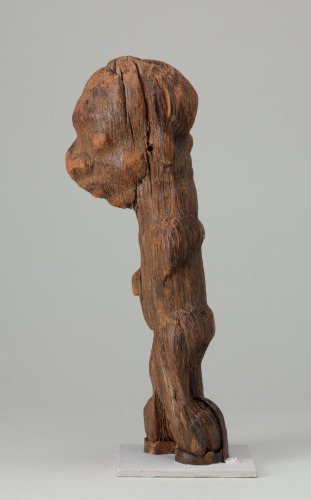
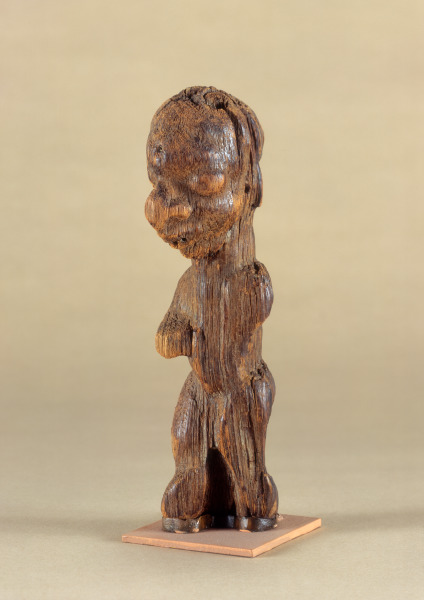
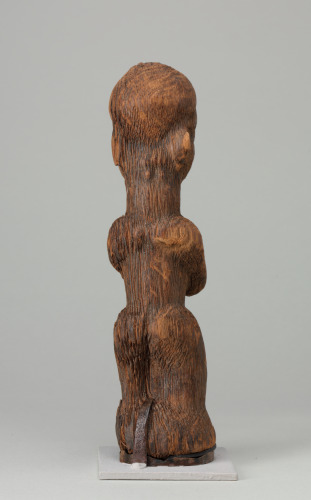
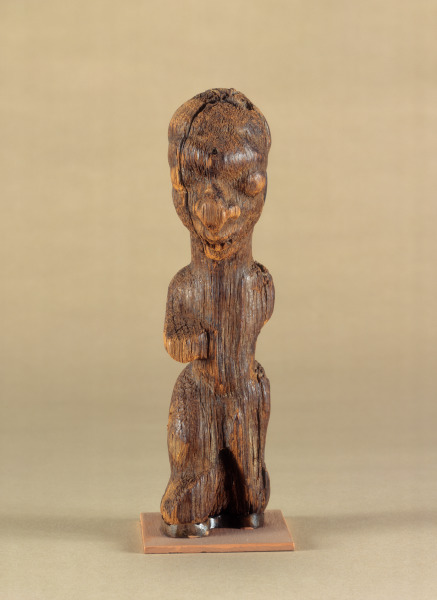
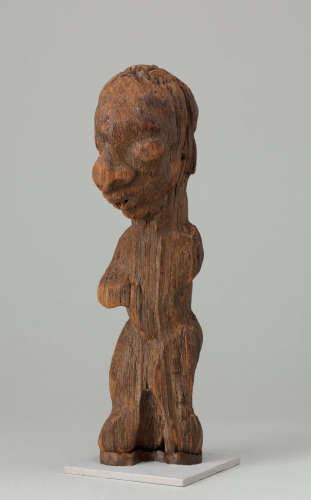
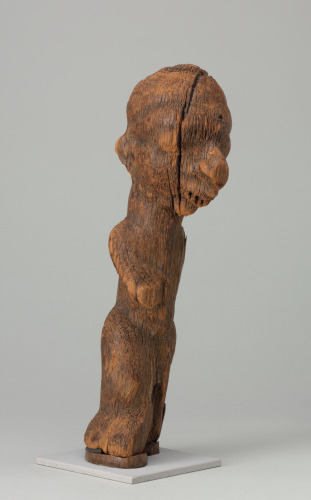
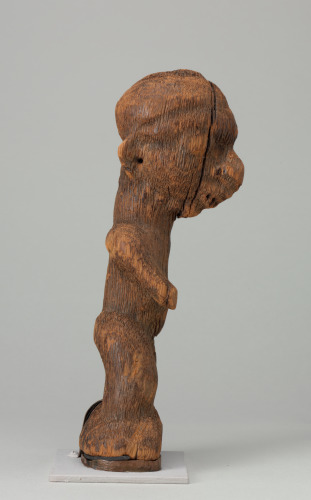
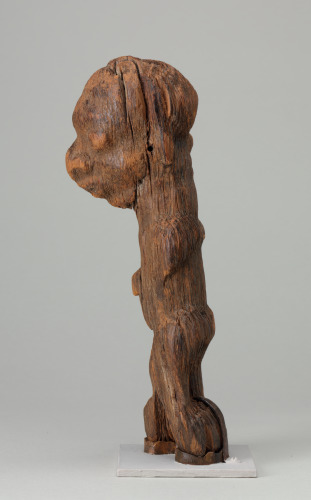
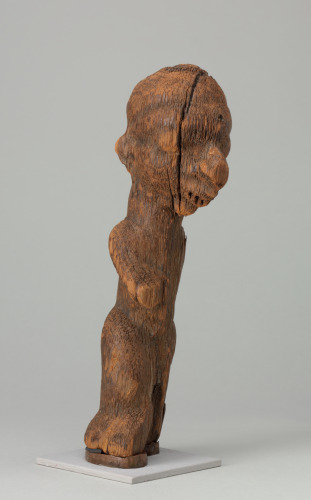
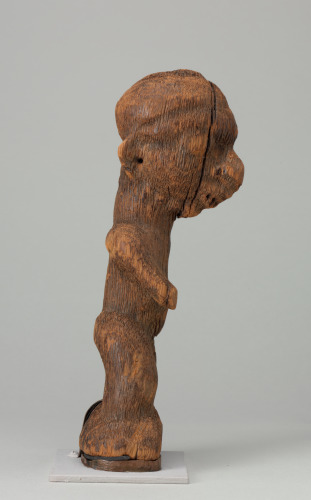
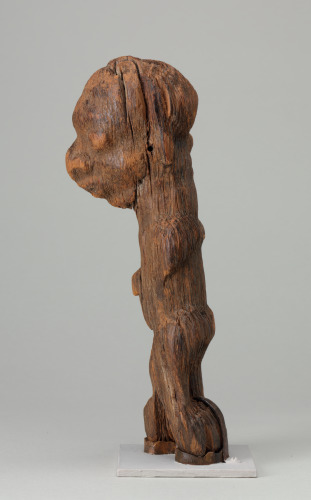
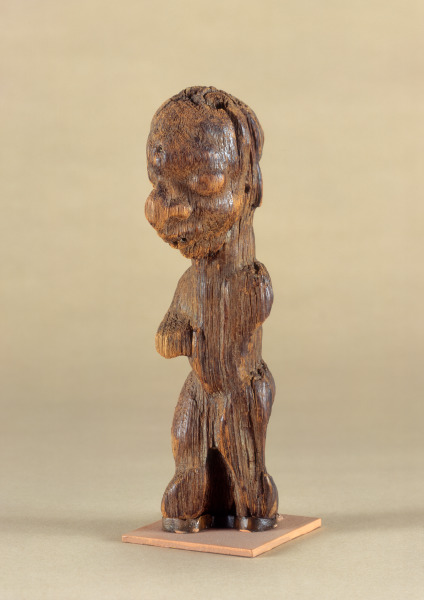
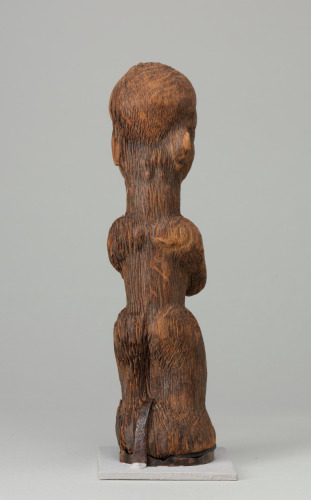
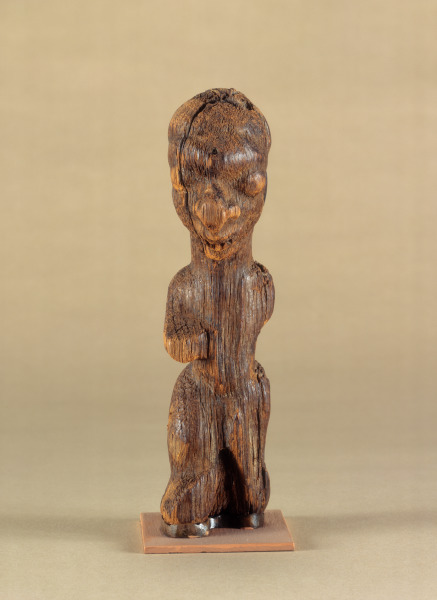
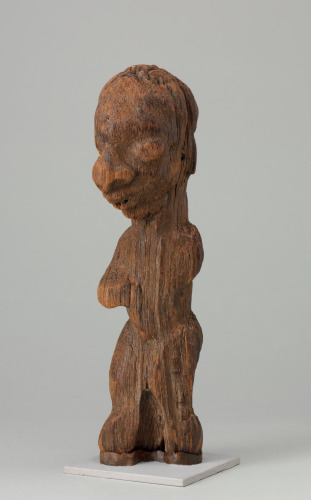
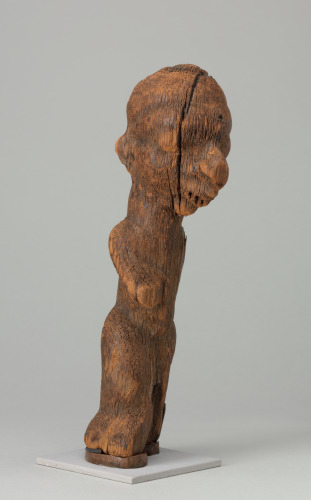
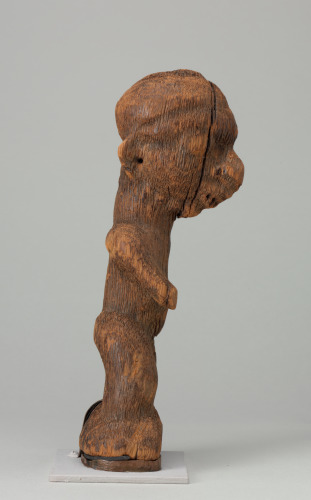
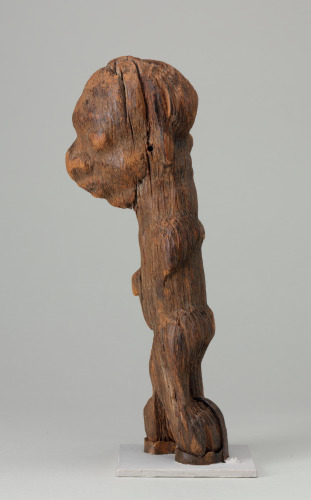
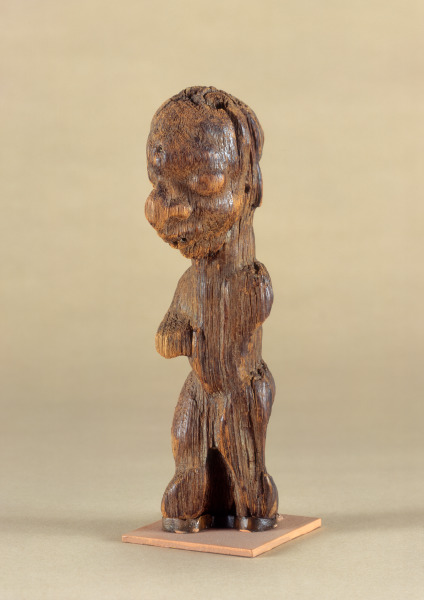
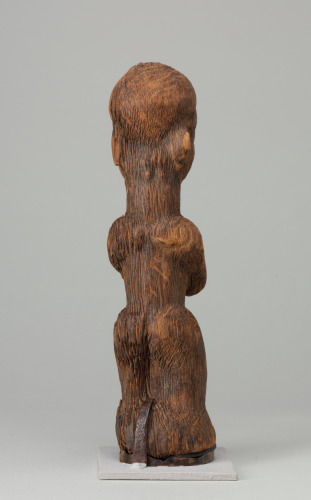
Sapi
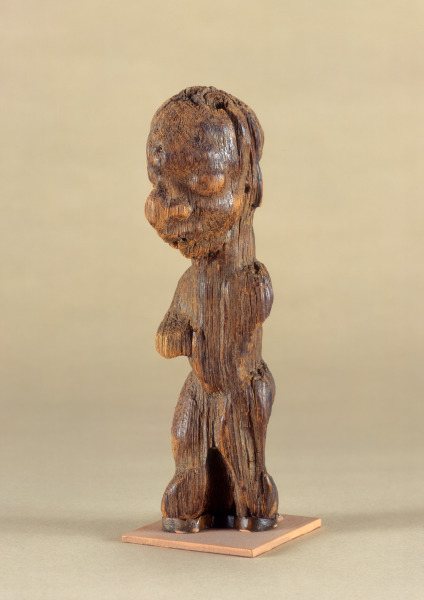
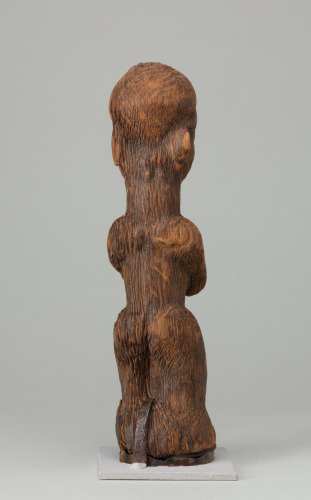
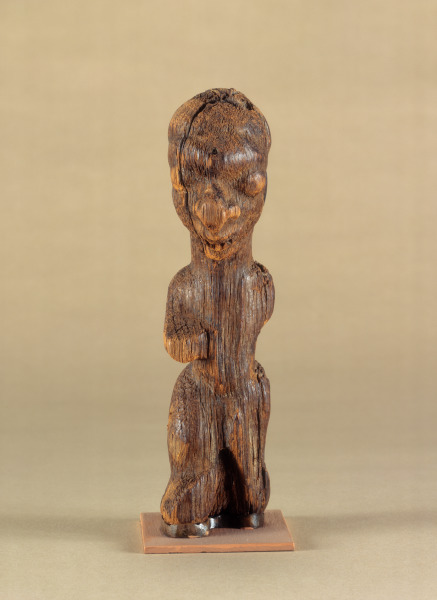
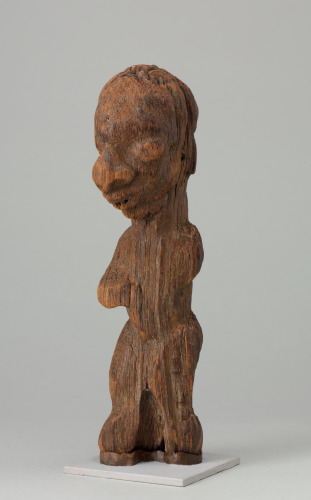
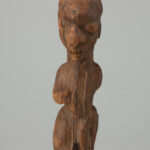
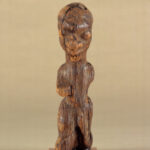
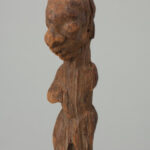
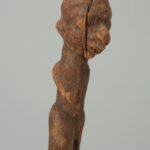
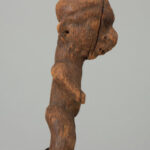
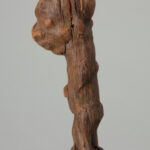
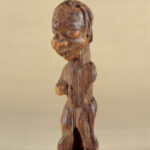
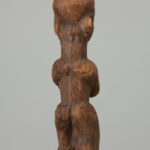
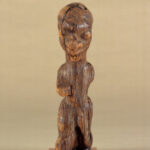
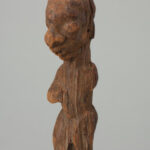
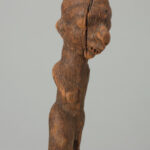
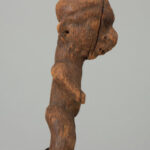
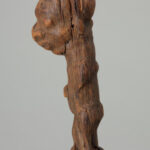
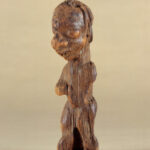
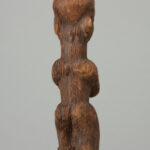
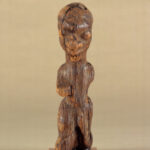
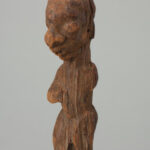
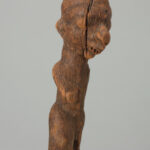
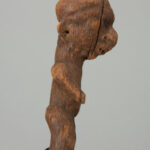
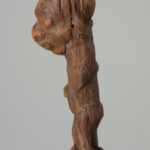
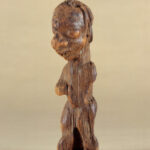
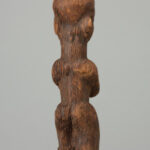
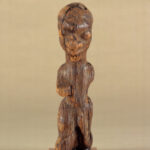
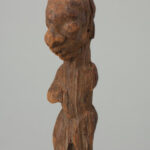
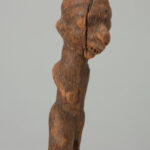
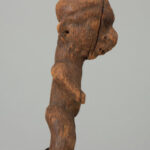
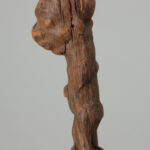
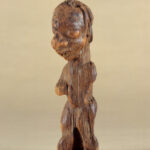
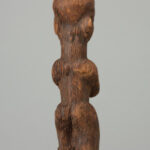
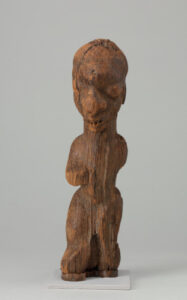
Male Figure
1189-1393
Scroll
Sapi
Male Figure
1189-1393
Physical Qualities
Wood, 7 5/8 x 1 15/16 x 2 9/16 in. (19.4 x 4.9 x 6.5 cm.)
Credit Line
Gift of Elliott and Marcia Harris, Pikesville, Maryland
Object Number
1991.85
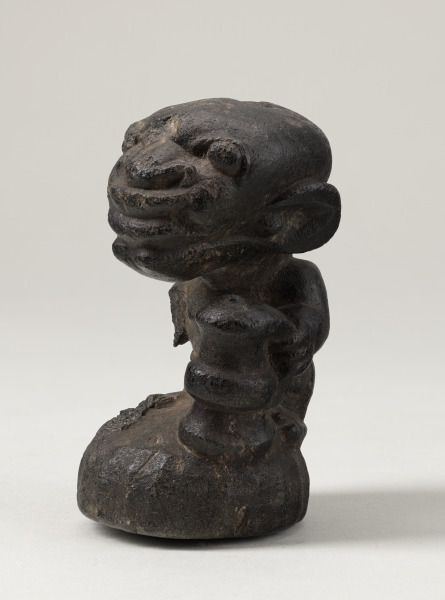
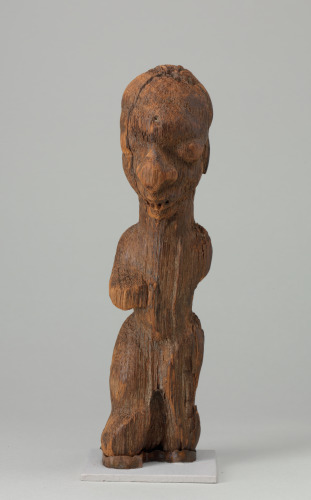
With straight backs and level gazes, the men and women represented in these wood and stone sculptures are confident and self-assured. Between 1200 and 1700, Sapi men and women along West Africa's Guinea Coast commissioned artists to carve portraits of their loved ones.
Artworks like these provide insight into life in this early modern period. Note the male figure on your right. The tankard in his hand comes from the Netherlands. People along thte Guinea Coast bought luxury goods from Portugese traders, who first arrived on the coast 1465. Its inclusion in this portrait sculpture tells us that the man depicted was wealthy, well-connected, and potentially worked as a merchant or trader.
Purchased from Jeremiah Cole, Freetown, 1985; ex Father Victor Mosele, Makeni, Sierra Leone; excavated by a previous owner in mining operation near village of town of Yafe Sewafe, vicinity of Sefadu, Eastern Province, Sierra Leone
African Mini-Installation
African Gallery Rotations 2021
African Gallery Rotations 2022
African Gallery Rotations 2023
African Wing Rotations 2025
Lamp, Frederick John. "Ancestors in Search of Descendants: Stone Effigies of the Ancient Sapi." Bayside, New York: QCC Art Gallery Press, 2018. p. 25, ill.
Lamp, Frederick John. "See the Music Hear the Dance: Rethinking African Art at the Baltimore Museum of Art." New York: Prestel, 2003, p.195,ill.
Lamp, Frederick John. "Ancient Wood Figures from Sierra Leone: Implications for Historical Reconstruction." African Arts 23.2 (Apr. 1990): 48-59, 103, p. 49 ill.
Lamp, Frederick John. "Ancestors in Search of Descendants: Stone Effigies of the Ancient Sapi." Bayside, New York: QCC Art Gallery Press, 2018.
Lamp, Frederick John. "Ancient Wood Figures from Sierra Leone: Implications for Historical Reconstruction." African Arts 23.2 (Apr. 1990): 48-59, 103.
Lamp, Frederick John. "Ancient Wood Figures from Sierra Leone: Implications for Historical Reconstruction." African Arts 23.2 (Apr. 1990): 48-59, 103.
 On View at the BMA