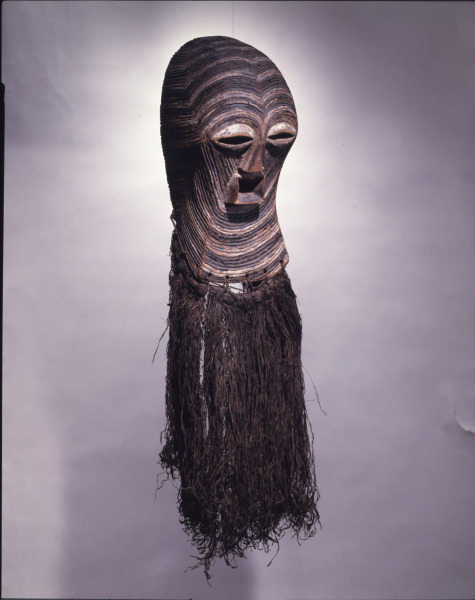
Songye
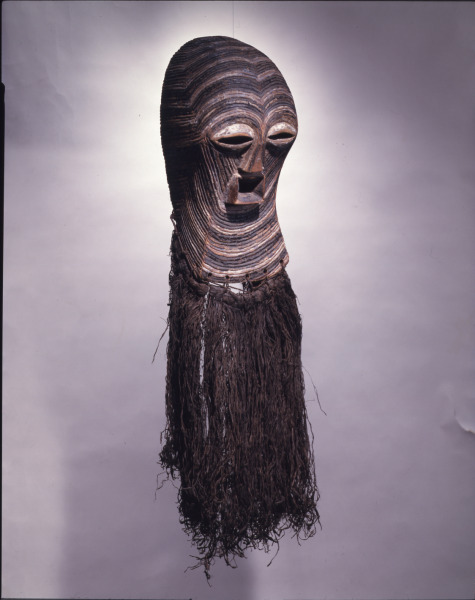
Male Mask (Kifwebe)
Songye, 1899-1919
Scroll
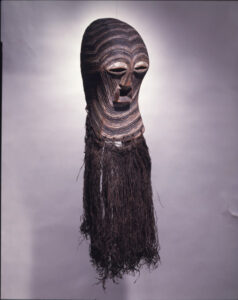
Songye
Male Mask (Kifwebe)
Songye, 1899-1919
Physical Qualities
Wood, raffia, polychrome, 19 in. (48.3 cm.)
Credit Line
Gift of Robert and Nancy Nooter, Washington, D.C.
Object Number
1984.84
Gallery Rotation, Feb 2006:
Each feature of this mask contains coded references. Its black and white stripes connect it visually to the zebra, a rare animal considered mysterious by Songye. Likewise, its colors identify it as female. Male masks are predominately red; female, white. Although this mask appears primarily black, it is classified as white, the color of goodness, purity, health, fecundity, joy, peace, wisdom, and beauty. The presence of black alludes to its supernatural capabilities. Narrow carved grooves give this mask a radiating effect and suggest that it came from western Songye territory. Western masks are characterized by taut contours whereas their eastern counterparts exhibit bold, exaggerated forms.
** Eastern Songye Male Kifwebe. Photograph by Dunja Hersak.**