




Igbo
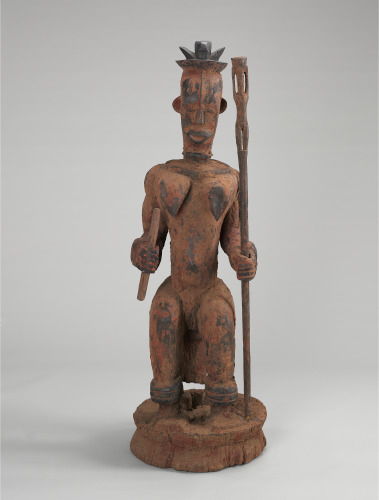
Male Shrine Figure (Alusi)
Igbo, 1800-1899
Scroll

Igbo
Male Shrine Figure (Alusi)
Igbo, 1800-1899
Physical Qualities
Wood, kaolin, camwood, 44 1/8 × 11 9/16 × 9 1/4 in. (112 × 29.3 × 23.5 cm.)
Credit Line
Gift of Barry and Toby T. Hecht, Bethesda, Maryland
Object Number
1990.158
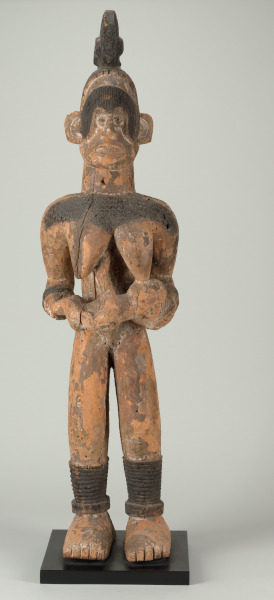
The striking lines that define the forehead of this sculpture are marks of status, signaling the import of the figure. Historically, titled Igbo men had lines, or ichi, cut into the skin of their foreheads, serving both as a test of their courage and as a visual expression of success. The pattern of vertical lines framed by diagonals may refer to “eagle wings,” an idea that was amplified when such figures were adorned with feathers during public displays. Ichi also refers to the squares, lozenges, and other incised linear designs that adorned the shrines and domestic architecture of notable men. The ichi patterns cut into this figure of a deity are complemented by colors and gestures that convey additional messages about its prestige and benevolence. Likewise, the blackened incisions along the figure’s torso extend the message of power and illustrate the individuality of Igbo arts.
William and Robert Arnett, Atlanta, Georgia
Karen Milbourne, BMA, "Meditations on African Art: PATTERN," March 12-August 17, 2008
Wittmer, Marcilene A., and William Arnett. "Three Rivers of Nigeria: Art of the Lower Niger, Cross and Benue from the Collection of William and Robert Arnett." Atlanta: The High Museum of Art, 1978, pp. 14, ill. 26.